
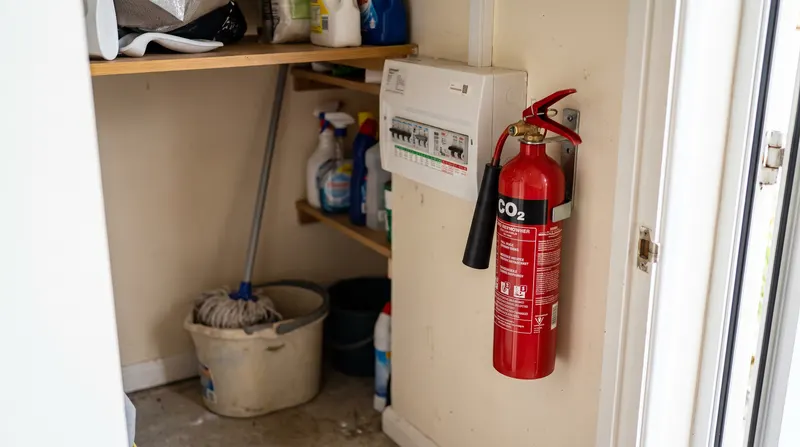
For a fire involving live electrical equipment, the extinguisher to use is CO2 or dry powder. Both work without conducting electricity back through the jet to whoever is holding it. Water and foam are the two to rule out immediately — either can carry a current straight back up the stream.
Isolate first, if you safely can
If the fault is on a single appliance and the socket is within easy, safe reach, switching off and pulling the plug removes the reason it is an electrical fire in the first place — after that, it can be treated like any other fire. If isolating means going anywhere near the flames, reaching into smoke, or you are not certain it is safe to approach, do not attempt it. Get out, call 999, and let the fire service make that call.
CO2 versus dry powder
- CO2 — leaves no residue, which is why it is the usual choice near computers, servers and other equipment worth protecting. It displaces oxygen rather than cooling, so ventilate the room afterwards.
- Dry powder — covers a wider range of fire types and is a reasonable all-rounder, but the powder itself is corrosive to electronics and hard to clean up.
What belongs in a home
A small CO2 extinguisher kept somewhere accessible — a kitchen or utility cupboard rather than inside one — covers most domestic electrical scenarios without needing a cabinet full of different types. A fire blanket alongside it covers the kitchen fires that are not electrical.
What a commercial premises is expected to hold
A business has a duty to assess its own fire risk and provide extinguishers suited to what is actually on the premises, which in most offices and shops means a water or foam extinguisher for general fires plus a CO2 unit near anything electrical — server rooms, comms cabinets, the area around the distribution board. What is adequate depends on the premises, so this is worth getting right in a proper fire risk assessment rather than guessing at numbers.
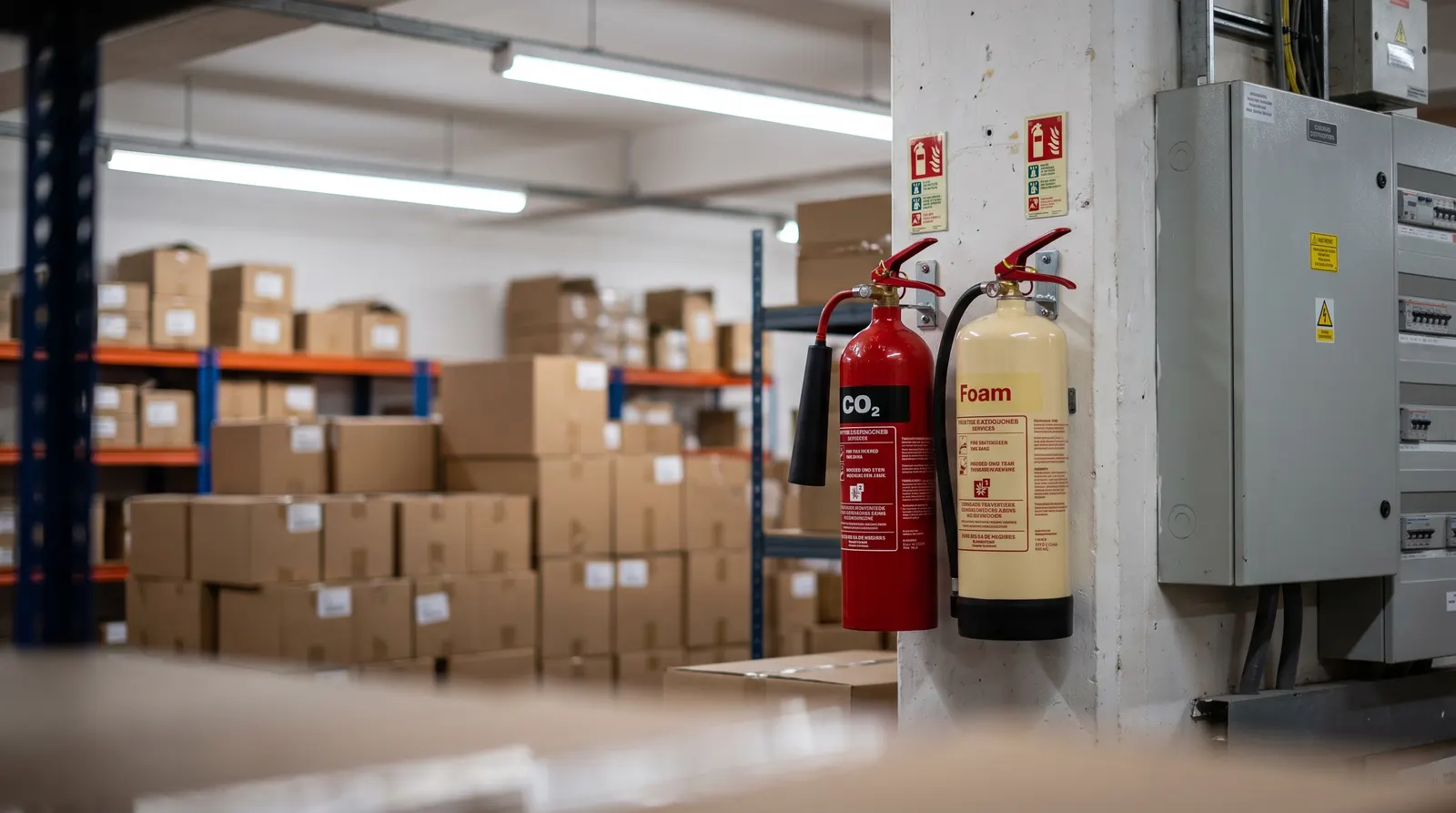
We work on commercial electrical installations, including the distribution boards and panels that sit near where extinguishers get sited, across London, Essex and north Kent.
If you are unsure, it is always cheaper to ask than to guess. Give us a call and we will tell you straight.