
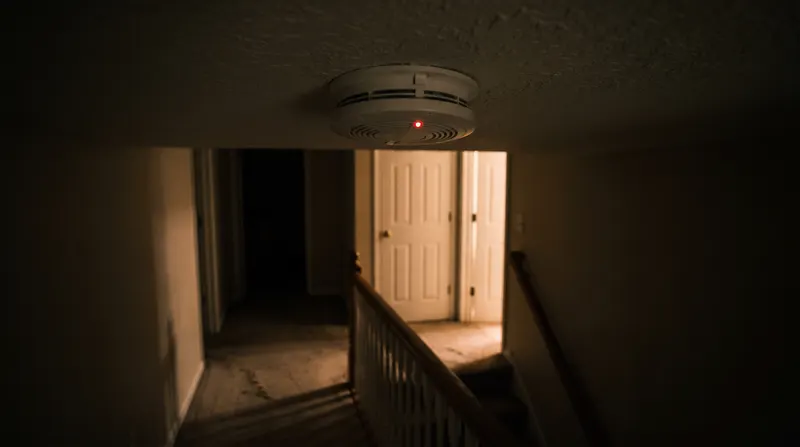
There is a real difference between an alarm sounding and an alarm chirping, and it is worth being clear about which one you actually have before doing anything about it. A continuous, loud alarm means smoke has been detected and should be treated that way. A single short chirp, repeated at intervals, is the unit trying to tell you something else.
A single chirp every thirty seconds or so
This is almost always a low battery, on units that have a replaceable one. Mains-wired alarms with a battery back-up chirp for the same reason when the back-up is running low, even though the mains supply is fine — the chirp is about the battery specifically, not the whole alarm failing.
The chirp that only ever happens at night
A low-battery chirp that seems to only ever happen in the small hours, rather than during the day, is a genuinely common pattern rather than a coincidence. A battery already close to the end of its useful life reads weaker as the temperature drops overnight, and it tips over the warning threshold exactly when the house is at its coldest — which for most homes is somewhere around two or three in the morning.
A different pattern altogether
Some alarms use a distinct chirp pattern — often faster, or paired with a flashing light — to signal that the unit itself has reached the end of its working life rather than simply needing a battery. The exact pattern varies between manufacturers, so it is worth checking the leaflet that came with the alarm, or searching the model number printed on the case, before assuming a new battery will solve it.
Steam, dust and false triggers
A kitchen or bathroom too close to an ordinary smoke alarm will set it off on steam alone — that calls for a heat alarm in that room instead, not for the smoke alarm to be disabled. Dust from building work, or a dusty loft hatch, can do the same thing to a sensor that is otherwise perfectly sound.
If you are unsure, it is always cheaper to ask than to guess. Give us a call and we will tell you straight.