
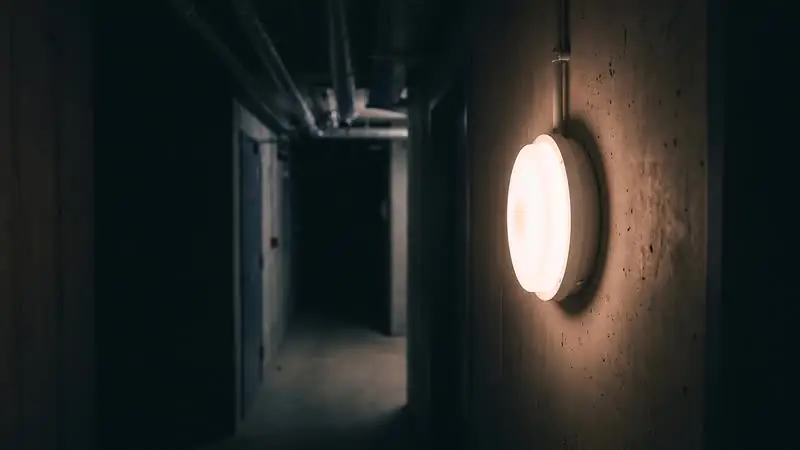
Emergency lighting, installed and certified
Escape route and open area lighting designed and fitted to BS 5266, plus fixed wire testing of the installation behind it.
What we do, and what we don't
Worth ten seconds of your time before you ring. We install and certify emergency lighting; we do not take on the recurring testing that follows.
Work we take on
- Designing and installing escape route and open area lighting to BS 5266
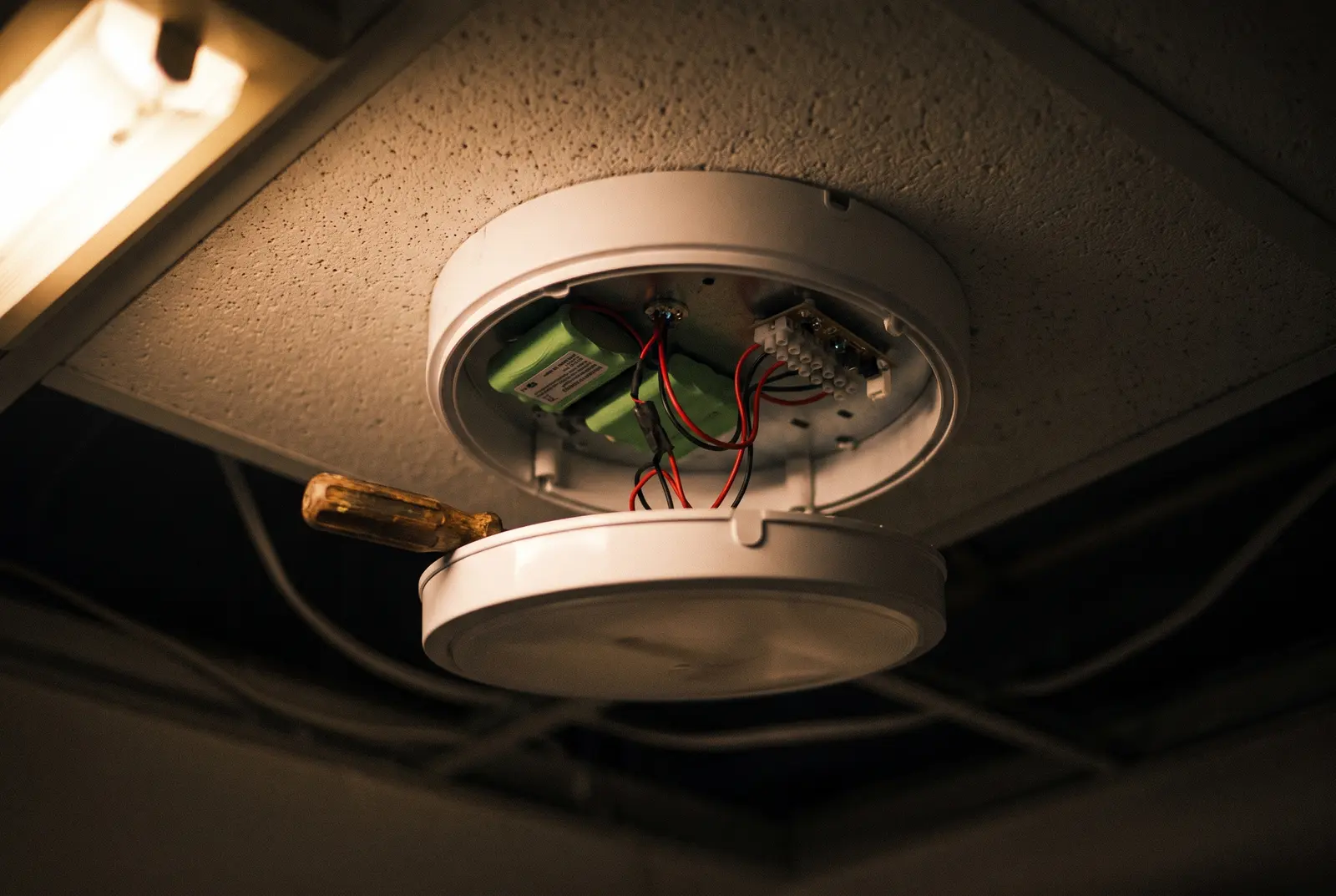
- Replacing failed fittings and dead battery packs
- Certifying the installation work we carry out
- Fixed wire testing — periodic inspection of the installation itself
- Additional circuits, distribution and commercial installation work
Work we don't
- The monthly function test and annual full-duration test
- Holding or maintaining your emergency lighting logbook
- Ongoing scheduled testing contracts
We will happily explain what the regime involves so you know what you are taking on — it just is not a service we provide.
Need fittings installed, replaced or certified? That is squarely our work.
Talk to an electrician07502 396654What the system is for
Emergency lighting exists to get people out when the normal supply fails. Under BS 5266 it is not enough to install it — it has to be tested, and the testing recorded.
Escape route lighting covers the way out: corridors, stairs, changes of level and final exits. Open area lighting covers larger spaces where people need to reach an escape route before they can follow one.
The testing regime is a brief monthly function test, confirming each luminaire illuminates on battery, and an annual full-duration test running the system for its rated period — normally three hours — to prove the batteries still hold up.
Both go in a logbook, along with any faults found and what was done about them. In practice the logbook is what gets asked for during a fire risk assessment, so a system tested but not recorded is treated as a system not tested.
We design, install and certify the system itself. The monthly and annual testing that follows sits with whoever manages the building — we will tell you exactly what it involves, but the ongoing testing is not work we take on.
Fixed wire testing
Periodic inspection and testing of the installation itself — the circuits, the boards and the accessories. This one is ours, and it is the same discipline as a domestic EICR at a different scale.
Every observation is coded, and the report tells you what has to be done rather than merely that something is wrong. The EICR page explains what the C1, C2, C3 and FI codes mean.
- Emergency lighting installation
- Fixed wire (EICR) testing
- Certification for the work we do
5 from 188 reviews on Google.
Emergency lighting to install, or an installation to test?
Tell us the building and what has been flagged. NICEIC approved, fully insured, and charged by the hour.
Emergency lighting & fixed wire testing: common questions
The things people ask us on the phone about this one.
Not covered here? Ring 07502 396654 and ask.
Do you carry out the monthly and annual testing?
No. We design, install and certify emergency lighting systems, but the recurring testing that follows sits with whoever manages the building. It is worth knowing before you commission a system.
Where does emergency lighting have to go?
Escape routes, and anywhere people would otherwise be left in the dark if the supply failed. The layout of the building and its fire risk assessment decide the detail.
How long does emergency lighting have to run for?
Typically three hours on battery, depending on the building and the assessment behind it. That duration is what the annual discharge test exists to prove.
Do I get certification for a new system?
Yes. A new installation is tested, certified and handed over with the documentation, which is what an inspector or an insurer will ask to see.