
Safety
Pull cord light switches: where they are required
By Mizan, Founder and lead engineer4 min read
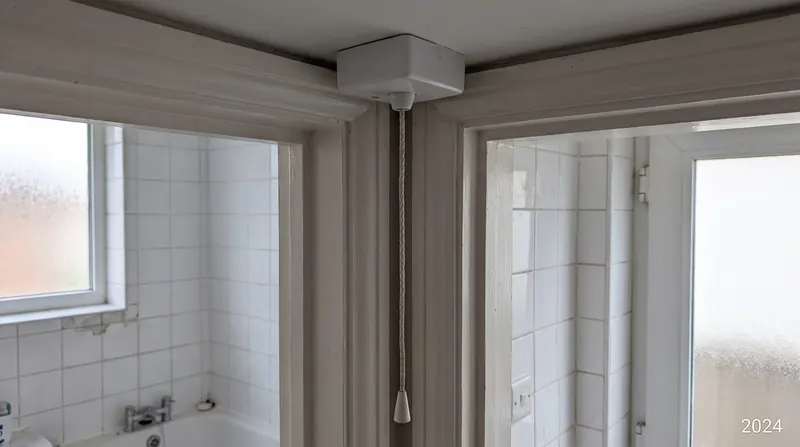
A pull cord light switch is a switch you operate by pulling a cord rather than flicking a toggle, and it exists for one main reason: keeping the switch mechanism itself away from anyone's wet hands. That's why bathrooms are the room everyone recognises them from — we've written separately about the lighting zones that govern a bathroom, and a conventional wall switch generally can't go inside them, which is exactly the gap a ceiling-mounted pull cord fills.
Why the bathroom needs one at all
A standard toggle switch has exposed metal contacts behind the faceplate, close to a hand that's just come out of a bath or shower. A pull cord switch moves the electrical mechanism up onto the ceiling, well clear of the room's wet zones, and the only thing within reach at hand height is an insulated cord. It's a deliberately low-tech solution to a problem that hasn't gone away just because switches have got smarter.
Where else they turn up
Lofts, garages and some airing cupboards use pull cords for a more practical reason than safety zones — the switch sits at the ceiling right by the light it controls, rather than by a door that might be some distance away, which suits a space you walk into briefly rather than live in. A two-way pull cord, operable from two positions, is less common but turns up on staircases up to a loft conversion for the same reason a two-way toggle switch does anywhere else.
What actually wears out
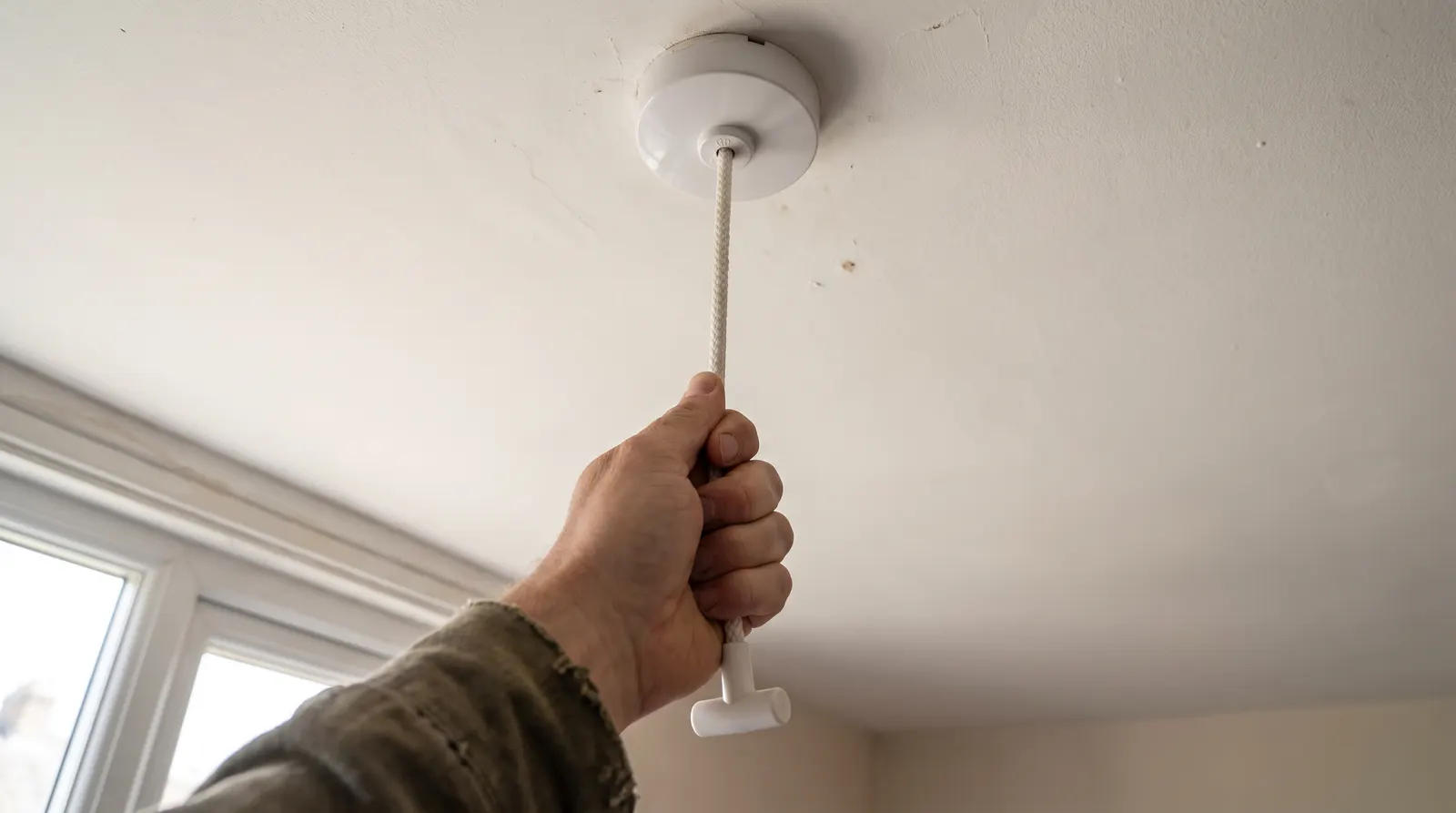
- The cord itself frays or snaps at the join to the pull, which is the most common failure and the cheapest to fix.
- The internal mechanism wears with repeated pulling, eventually failing to make contact reliably even with the cord intact.
- The ceiling rose or switch housing can work loose over years, especially in a bathroom where condensation and expansion cycle more than in a dry room.
We fit and replace pull cord switches as part of general sockets and lighting work across London, Essex and north Kent, including bathroom work carried out to the standards those rooms actually require.
If you are unsure, it is always cheaper to ask than to guess. Give us a call and we will tell you straight.