
Guides
Outside lights: what works through a British winter
By Mizan, Founder and lead engineer5 min read
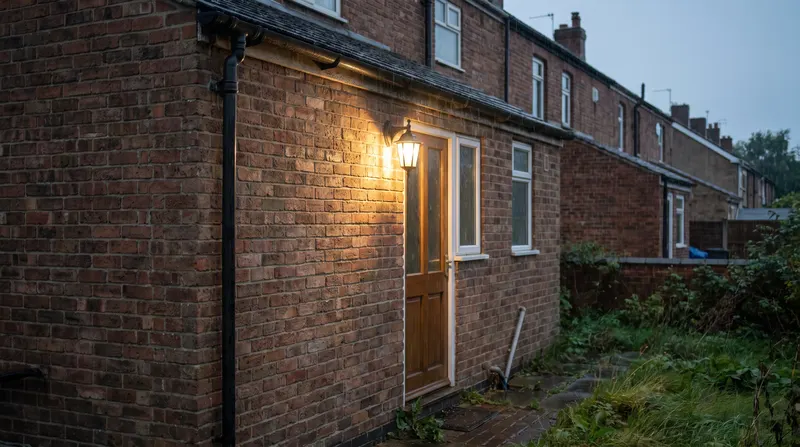
An outdoor light that works fine in September and fails by January has usually been let down by one of three things: the wrong IP rating for where it sits, a cable entry that was never properly sealed, or a fixing that lets water track in behind the fitting rather than run off it. None of those show up until the weather actually arrives.
IP ratings: what the numbers are actually telling you
An IP rating is two digits — the first for solid objects and dust, the second for water. For anywhere exposed to the weather, the second digit is what matters: IP44 copes with splashing rain, which is the minimum for most porches and covered entrances, while a fitting mounted somewhere fully open to driving rain, like a high wall or a gate pillar, wants IP65 or better. A fitting rated for indoor use only, however well made, is not a cheaper version of a weatherproof one — it has no seal at all.
Bulkhead and wall lights: the fittings that actually last
A sealed bulkhead fitting, the half-dome shape seen on so many back doors and side passages, earns its place by having very little for water to get into — no exposed terminals, a gasketed lens, and usually a diecast rather than plastic body that copes better with UK winters over several years. Decorative outdoor wall lights can do the job just as well, but check the IP rating and the seal around the lens rather than assuming a light sold as 'outdoor' automatically means weatherproof in the way a bulkhead is.
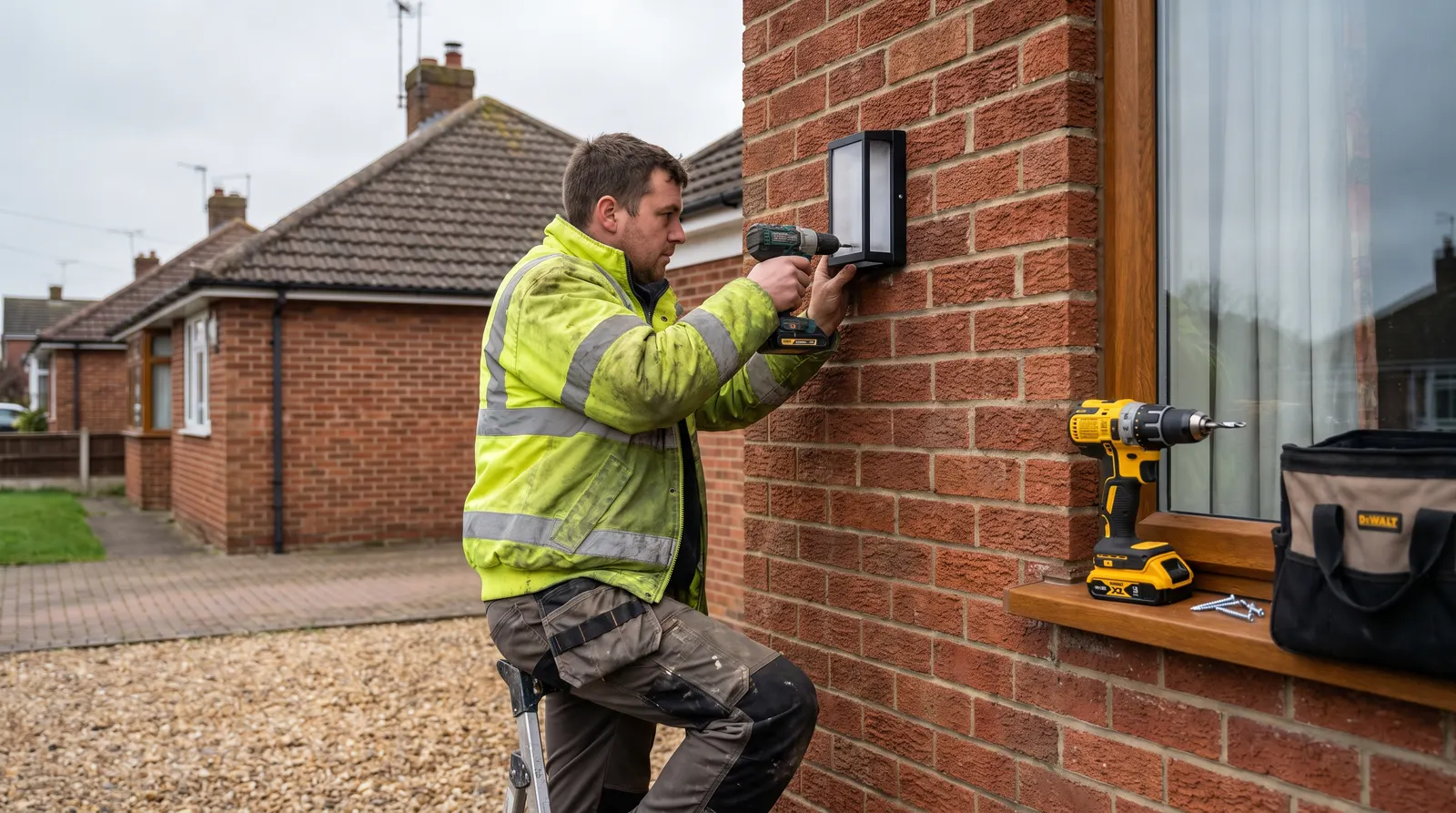
The cable entry is where most outdoor lights actually fail
- Cable should enter a weatherproof fitting through a proper sealed gland or grommet, not through a gap pushed closed with silicone as an afterthought.
- Run the cable so it drops into the fitting from below where possible, rather than rising into it, so any water on the cable runs away from the entry point instead of towards it.
- Outdoor cable runs on a masonry wall need a cable suited to that exposure and to be clipped properly rather than left to sag, which is where a joint can start letting water in over time.
- A fitting that has misted up on the inside of its lens has already let moisture in — that is a fault to deal with, not something to wait out.
Power: a fused spur, not a plug left outside
Outdoor lights should be wired back to a fused spur or connected into the lighting circuit properly, not run off an extension lead or a plug fitting left exposed to the weather. If the light is also meant to come on automatically after dark or when something moves, that is usually a PIR sensor or a photocell rather than a timer, which is its own choice of siting and sensitivity we've covered separately.
We fit and rewire outdoor lighting as part of general sockets and lighting work across London, Essex and north Kent, sited and sealed for the weather it will actually face rather than the weather on the day we fit it.
If you are unsure, it is always cheaper to ask than to guess. Give us a call and we will tell you straight.