
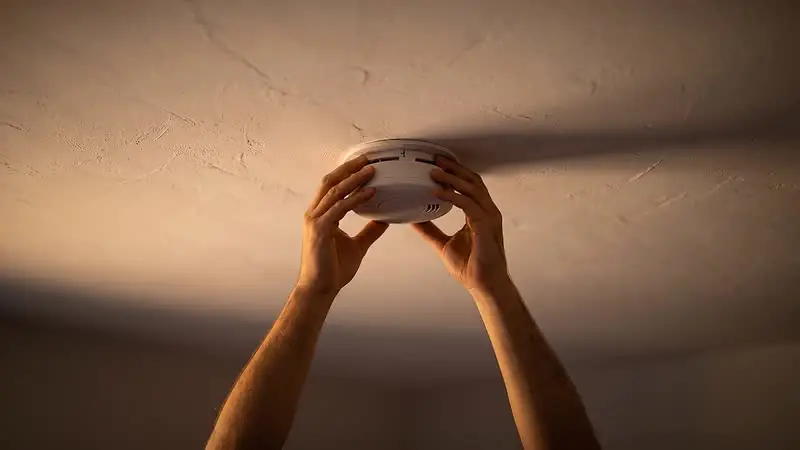
Smoke & heat alarm installation
Mains-powered interlinked alarms on every storey. A legal requirement in rented homes, and well worth it in your own.
- Interlinked mains-wired alarms
- Heat alarm for the kitchen
- Meets landlord obligations
No call-out fee. Charged by the hour, with a rough estimate before we start.
Battery alarms satisfy the regulations in England, which set no requirement to interlink. Mains-wired and interlinked is what BS 5839-6 asks for, and the difference is that every alarm sounds when any one of them detects.
Interlinked: two ways to do it
Interlinking means one alarm detecting sets them all off. England does not require it by regulation, but it is what BS 5839-6 asks for and what HMO licences commonly specify. There are two ways to achieve it, and they are not the same job.
Radio linked
The alarms talk to each other wirelessly. No cable has to be run between them, so there is no chasing and no lifting floors.
Usually done within a day.
Cable linked
An interlink cable is run physically between every alarm. More robust, and often what a specification asks for.
Takes more than a day — the cable has to get there.
Tell us what you are after and we will tell you what it involves.
Speak to an electrician07502 396654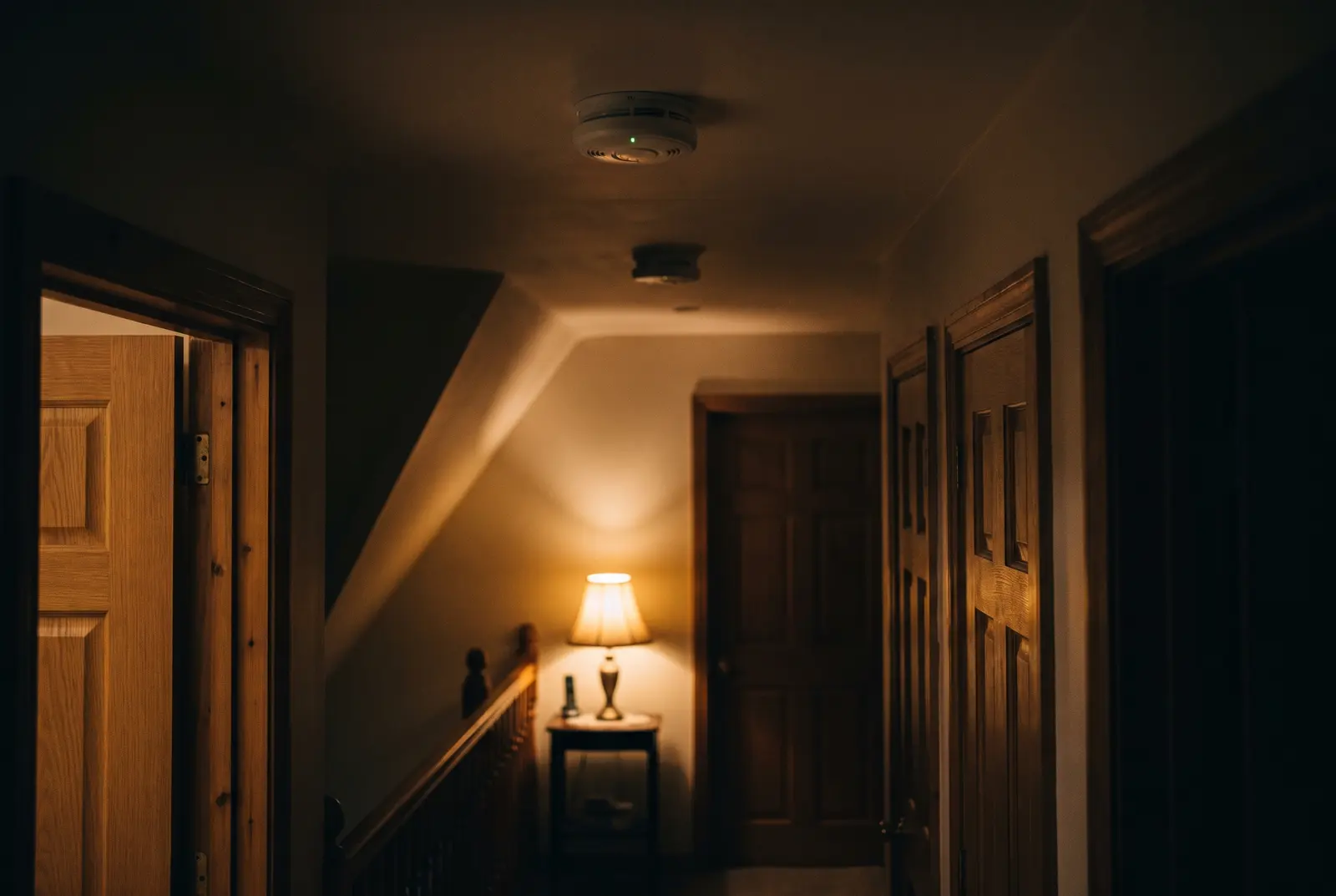
The detail
Domestic alarm systems are graded under BS 5839-6. Grade D1 means mains-powered with a tamper-proof backup battery. The category — LD1, LD2 or LD3 — describes coverage, from every room a fire could start in, down to escape routes only.
Interlinking matters more than most people expect. A fire starting in the kitchen at night is detected by the kitchen alarm, but it is the landing alarm sounding at the same time that wakes anyone upstairs.
Placement is part of the job. Alarms too close to a kitchen or bathroom cause false alarms, and an alarm people disconnect out of irritation protects nobody. Heat alarms rather than smoke alarms are specified for kitchens for exactly that reason.
Want smoke & heat alarm installation doing?
Tell us what you are after and we will tell you what it involves. No call-out fee, and the line is answered whatever the hour.
What people say
Mizan is very professional. He arrived at the time he said and called me 30 minutes before arrival. He done the works very well and cleaned up after himself. Very satisfied and I will use him again.
Nasrin B. — Scheduled work This is the third time I’ve used this gentleman. I would highly recommend him — each time he was here within the hour.
Charles T. — Repeat customer
4.9 from 185 reviews on Google.
One number, answered around the clock.
NICEIC approved, fully insured, and every job tested and certified.
Smoke & heat alarm installation: common questions
The things people ask us on the phone about this one.
Not covered here? Ring 07502 396654 and ask.
Do smoke alarms have to be interlinked?
Not by the regulations in England, which set no requirement to interlink and do not specify the type of alarm. Interlinking is what BS 5839-6 asks for, it is what a lot of councils and HMO licences specify, and it is the difference between one alarm going off downstairs and every alarm going off. There are two ways to do it, radio linked or cable linked, and they are very different amounts of work in an occupied house.
How many alarms do I need?
In rented property in England, at least one smoke alarm on every storey used as living accommodation, and a carbon monoxide alarm in any room with a fixed combustion appliance other than a gas cooker. A heat alarm belongs in the kitchen, and the layout decides the rest.
Can I just use battery alarms?
The regulations in England do not specify the type, so battery alarms can satisfy them. They still rely on somebody replacing the battery, which is the failure mode that takes alarms off ceilings — mains-wired alarms with a backup cell remove it.
Do you fit heat alarms and carbon monoxide alarms too?
Yes. Heat alarms belong in kitchens where a smoke alarm would nuisance trip, and carbon monoxide alarms are required in rooms with a fixed combustion appliance.