
Guides
Smart light switches: what they need behind the wall
By Mizan, Founder and lead engineer5 min read
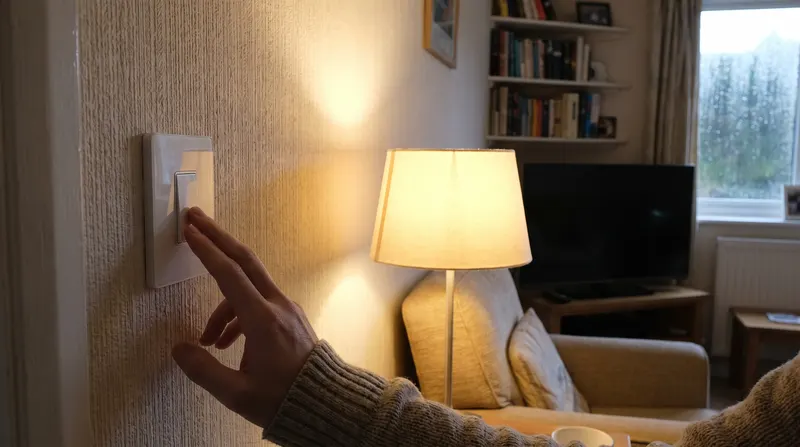
A smart light switch is still a light switch — it just adds a radio chip and, usually, an app — and from the front it looks like any other faceplate swap. What decides whether that swap is straightforward is what's behind it, and the thing that catches most people out is a wire that was never a consideration when the house was first wired: neutral.
The neutral wire most retrofits don't have
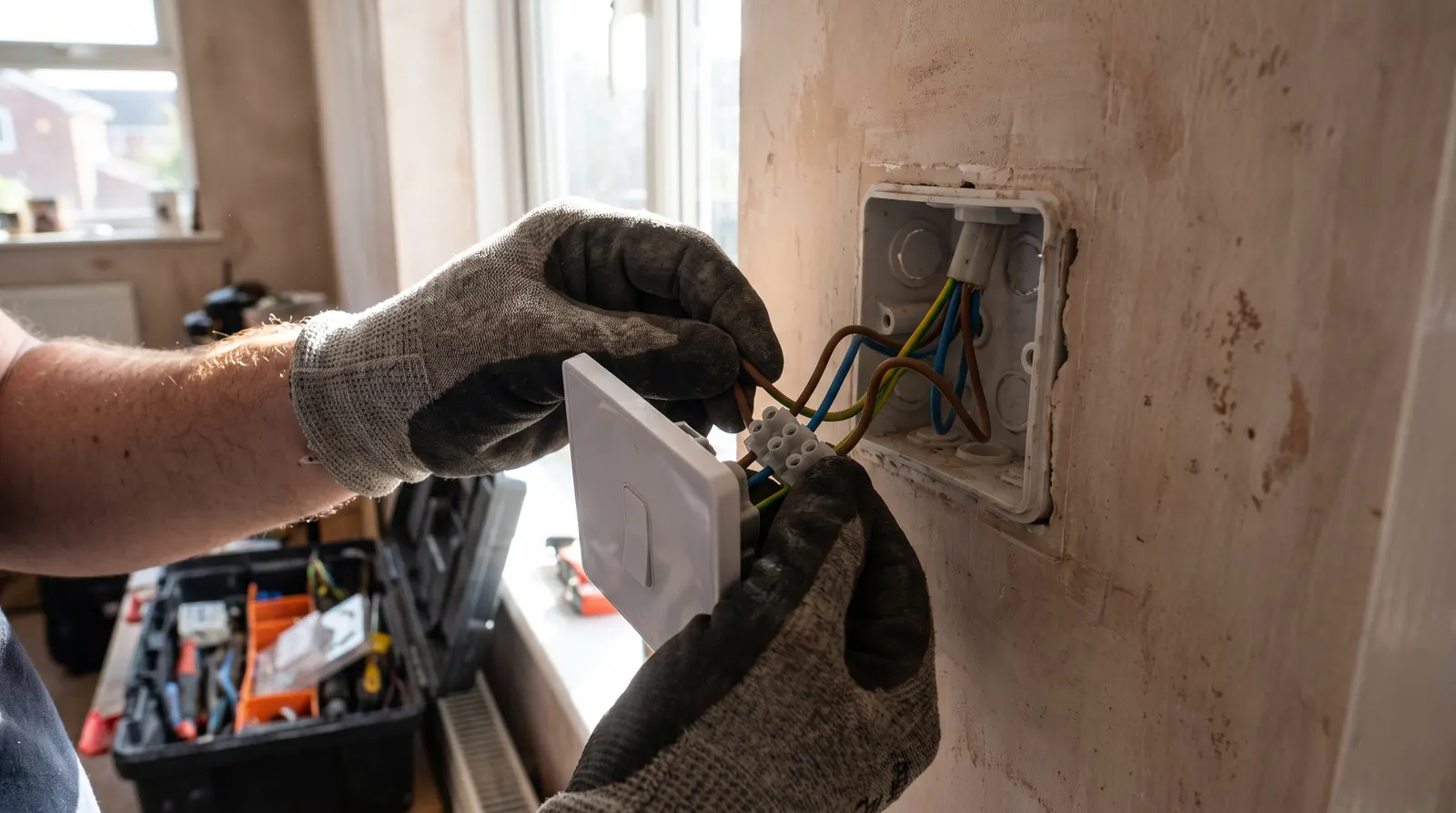
Older lighting circuits are commonly wired on what's called a switch drop — line goes down to the switch, switched line comes back up to the light, and neutral never goes near the switch box at all because a standard mechanical switch has no use for it. A smart switch generally does: its radio and standby electronics need a constant small draw to stay connected, and without a neutral at the box it either won't fit, or it fits but relies on a workaround that borrows a trickle of current through the light fitting itself. Some switches are built for exactly that no-neutral case, but they come with their own trade-offs — a minimum load at the fitting, odd behaviour with some LED bulbs — rather than being a like-for-like substitute.
Hub-based, or on its own
Some smart switches talk directly to your home Wi-Fi and need nothing else. Others use a separate radio standard and need a hub plugged in somewhere to bridge them onto the network, which is one more thing to buy, power and keep updated. Neither is wrong, but it's worth knowing which you're buying before you're halfway through fitting it — a switch that needs a hub you don't own isn't a quick evening job any more.
Fitting one where a dimmer or two-way switch already is
A smart switch replacing a plain one-way switch is usually the simplest case. Replacing a dimmer or one half of a two-way pair adds its own questions — a smart dimmer still needs to suit the bulbs on that circuit the same way any other dimmer does, and a smart switch on a two-way circuit needs to actually support two-way wiring, which not every model does.
- Check there's a neutral conductor in the switch box before you buy, not after.
- Check the back box is deep enough — the electronics inside a smart switch take up more room than a mechanical one.
- Check the model actually supports two-way wiring if that's what's already there.
- Check what it needs to work at all: Wi-Fi only, or a hub you don't yet own.
We fit smart light switches as part of general sockets and lighting work across London, Essex and north Kent, including checking what's actually behind the plate before anything gets ordered. If you haven't replaced a switch before, it's worth reading how to do the basic version safely first.
If you are unsure, it is always cheaper to ask than to guess. Give us a call and we will tell you straight.