
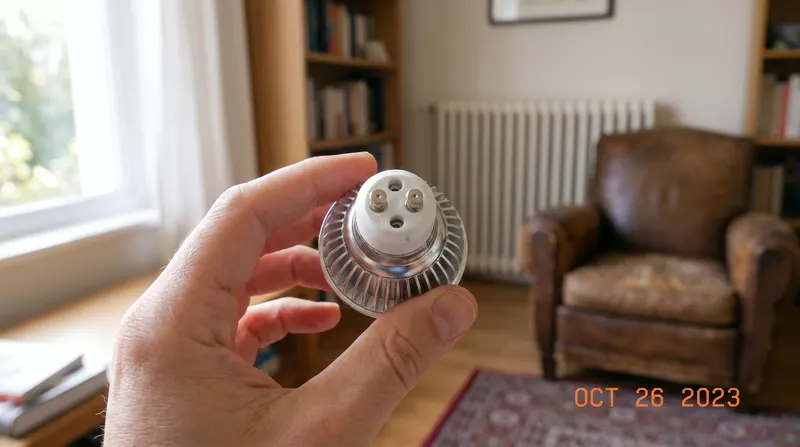
GU10 is the name of the fitting, not the lamp — a twist-and-lock base used in most spotlight and downlight fixtures, distinct from the push-fit MR16 it's often confused with. If your old spotlight bulb twisted a quarter-turn to lock in rather than pushing straight in, GU10 is almost certainly what you have, and it's what to look for when you buy the LED replacement.
Wattage: the LED number and the 'equivalent' number
Every GU10 LED pack carries two wattage figures, and they mean different things. The small number — often 4-6W — is what the LED actually draws. The 'X W equivalent' figure alongside it is how bright an old halogen GU10 you'd need to match it, because people shopping for LEDs still think in halogen watts. Buy on the equivalent figure if you're replacing a halogen like-for-like; buy on lumens if you want to compare LEDs against each other properly.
Beam angle changes how the light actually falls
A narrow beam, typically 30-40 degrees, throws a tight, focused pool of light — useful for highlighting a single object or a kitchen worktop. A wide beam, up to 110 degrees or more, spreads the same lumens over a bigger area with less contrast between light and shadow. Fit a narrow-beam lamp where you need even general room lighting and you'll get bright circles on the ceiling with dim gaps between them.
Kelvin is colour, not brightness
The Kelvin figure on the pack — usually somewhere between 2700K and 6500K — describes colour temperature, not how bright the lamp is. Warm white around 2700-3000K suits a living room or bedroom; a cooler 4000K reads more clinical and suits a kitchen or bathroom better. Mixing Kelvin values across the same room, even with lamps of identical wattage, is the usual reason a refit looks inconsistent from one fitting to the next.
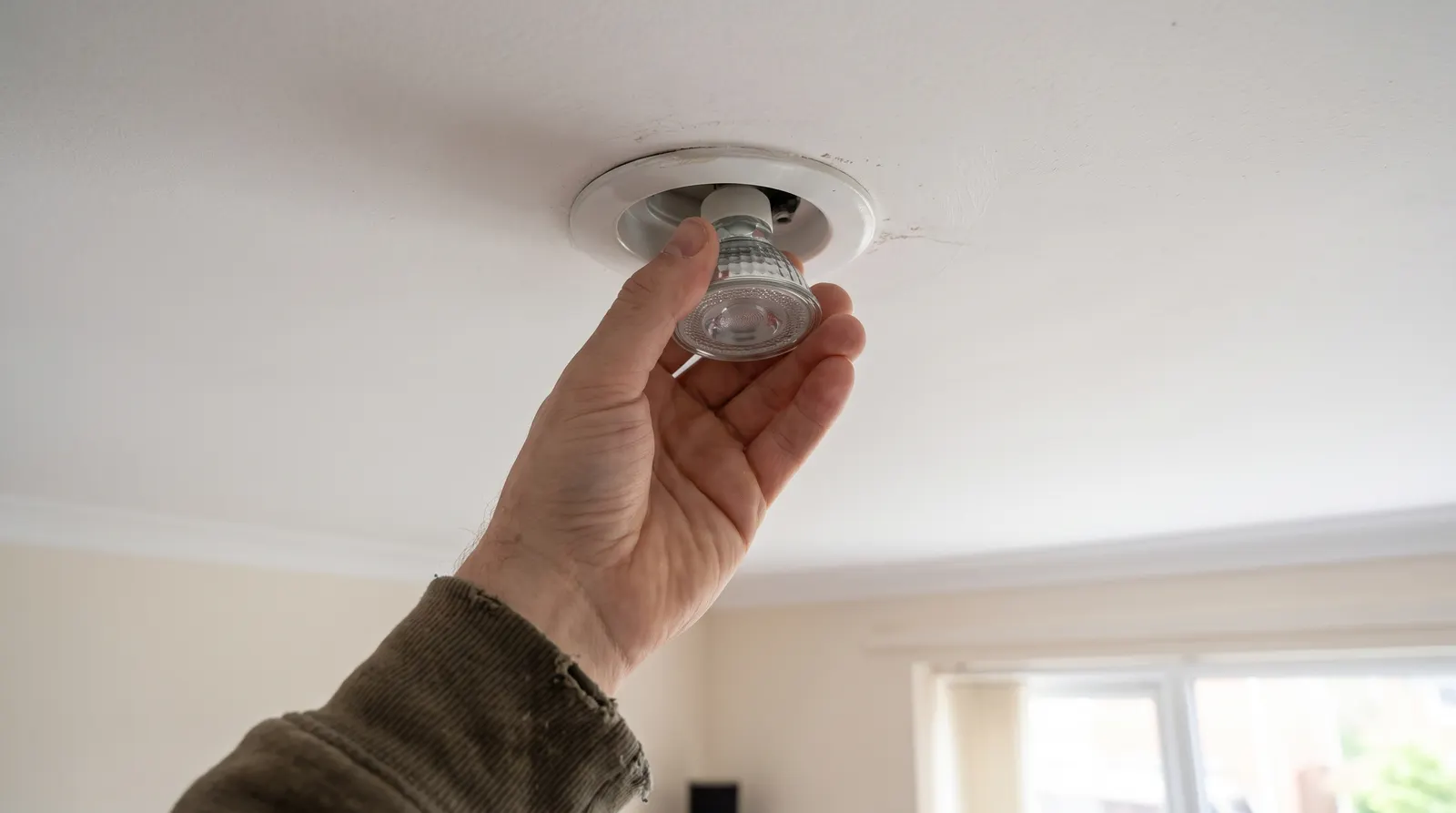
Check it says 'dimmable' before it goes anywhere near a dimmer
Not every GU10 LED is dimmable, and fitting a non-dimmable lamp to a dimmer switch — old or new — can cause exactly the flickering and buzzing we've covered separately for dimmers and LEDs generally. The packaging will say dimmable or non-dimmable; that's the only reliable way to tell before you've bought it.
We fit and rewire spotlight and downlight circuits as part of general sockets and lighting work across London, Essex and north Kent, and we can talk you through which GU10 actually suits the fitting you've got rather than whichever one was cheapest online.
If you are unsure, it is always cheaper to ask than to guess. Give us a call and we will tell you straight.