
Landlords
Emergency lighting: the regulations and the testing routine
By Mizan, Founder and lead engineer5 min read
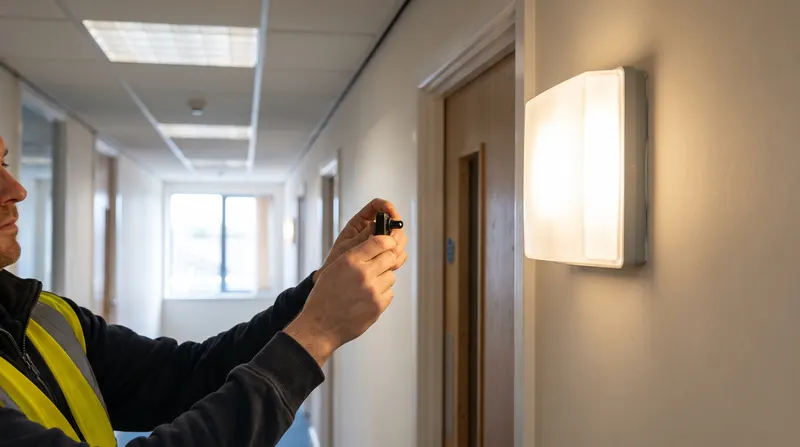
Emergency lighting is the lighting that takes over when the mains supply fails — along escape routes, over fire doors, in windowless areas — and it's only any use if it's tested on a schedule, because the one time it has to work is the one time you can't test it live. The usual regime most commercial and let premises follow is a brief monthly function test and a full annual duration test, both logged.
What counts as emergency lighting
It's the fittings on an independent supply that light up the moment the mains goes off — usually a battery built into the fitting itself, sometimes a central battery system feeding several. Escape routes, stairwells, open areas people need to find their way across, and anywhere firefighting equipment or a fire alarm call point needs to stay visible are the places it's expected.
The monthly test
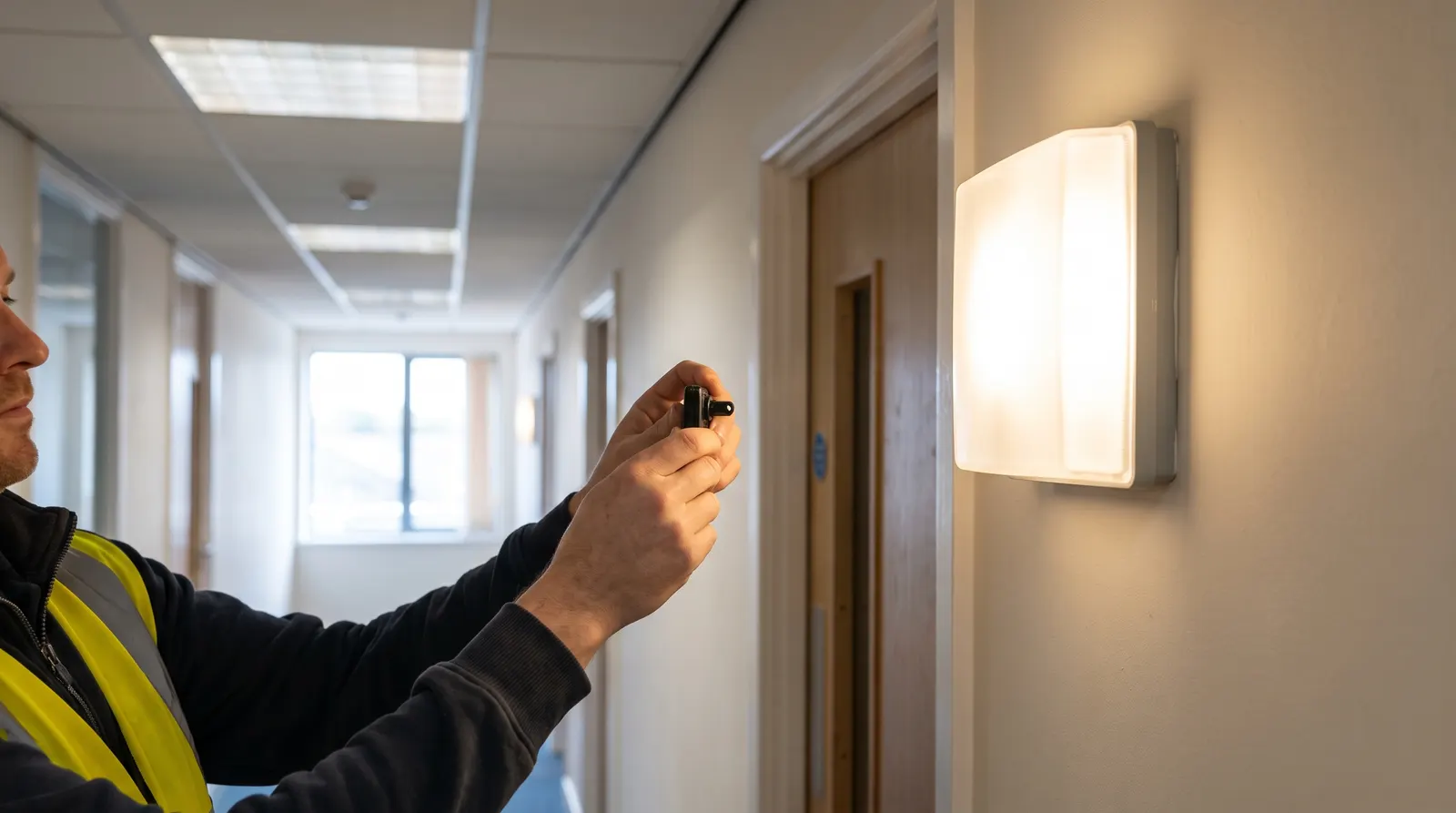
A short functional test, usually done with a test key switch or by briefly isolating the lighting supply, to confirm every fitting comes on and the indicator shows it's charging afterwards. It's quick, and it's the test that catches a dead battery or a failed lamp long before anyone needs the light for real. Each test gets logged — date, who did it, and what, if anything, failed.
The annual duration test
Once a year, the fittings are run on battery for their full rated duration to confirm they actually hold it, not just switch on. This is normally scheduled for a quiet period or out of hours, since the lighting it's testing will genuinely be unavailable for that stretch. A fitting that cuts out early on this test has failed it, whatever the monthly check showed.
The log book is not optional
Fire safety law puts the duty on whoever is responsible for the premises — commonly the landlord, the managing agent, or the employer in an occupied building — to keep these tests happening and keep a record open for inspection. An inspector or insurer asking for the log and finding gaps is a worse conversation than a fitting that's actually failed and been noted.
Who carries the duty in a let commercial building
In a multi-let building, the landlord usually carries the duty for shared escape routes and common areas, while a tenant is normally responsible for fittings inside their own demise — but the lease is what actually says so, not assumption. It's the same split in responsibility we cover for a commercial EICR, and it's worth checking both at once rather than separately.
We carry out emergency lighting testing and certification for commercial and let premises across London, Essex and north Kent, and we can set up a routine that matches your building rather than a generic schedule. Get in touch and we'll tell you straight what your premises needs.
If you are unsure, it is always cheaper to ask than to guess. Give us a call and we will tell you straight.