
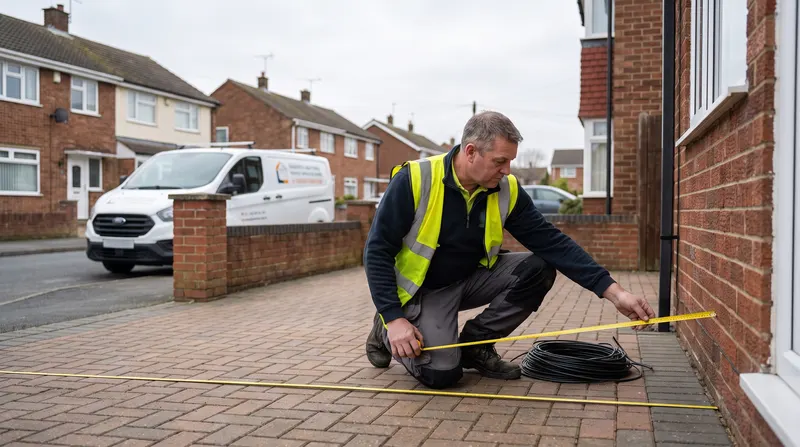
If you're planning to install ev charger at home, there's a short list of things that have to be right before the unit goes up — not just the charger itself, but where the car actually parks, how the property is earthed, whether your consumer unit has room, and whether anyone else needs telling the work is happening. A proper survey is what turns that list into a yes or no for your house, rather than a guess from a product page.
Off-street parking is the starting point
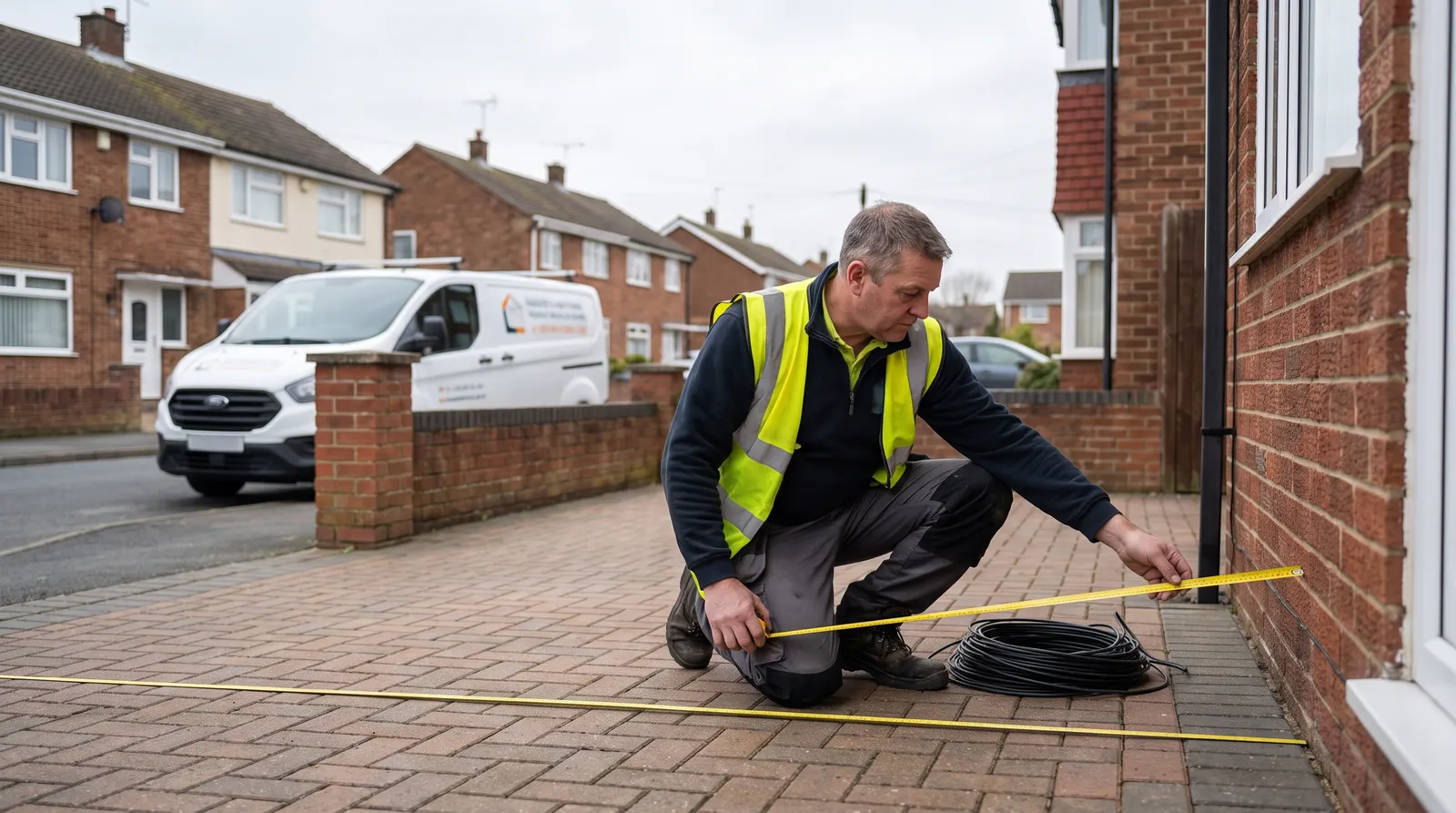
The charger has to reach the car without its cable running across a public footpath or pavement, so a driveway, carport or private parking space is the usual starting point. Funding schemes for home chargers have generally required off-street parking for exactly this reason, and the trip hazard is the same whether a grant is involved or not. If your parking is on-street or shared, that's worth raising before you order anything, because it changes where the charger can go, not just whether it's funded.
The earthing arrangement decides what extra protection you need
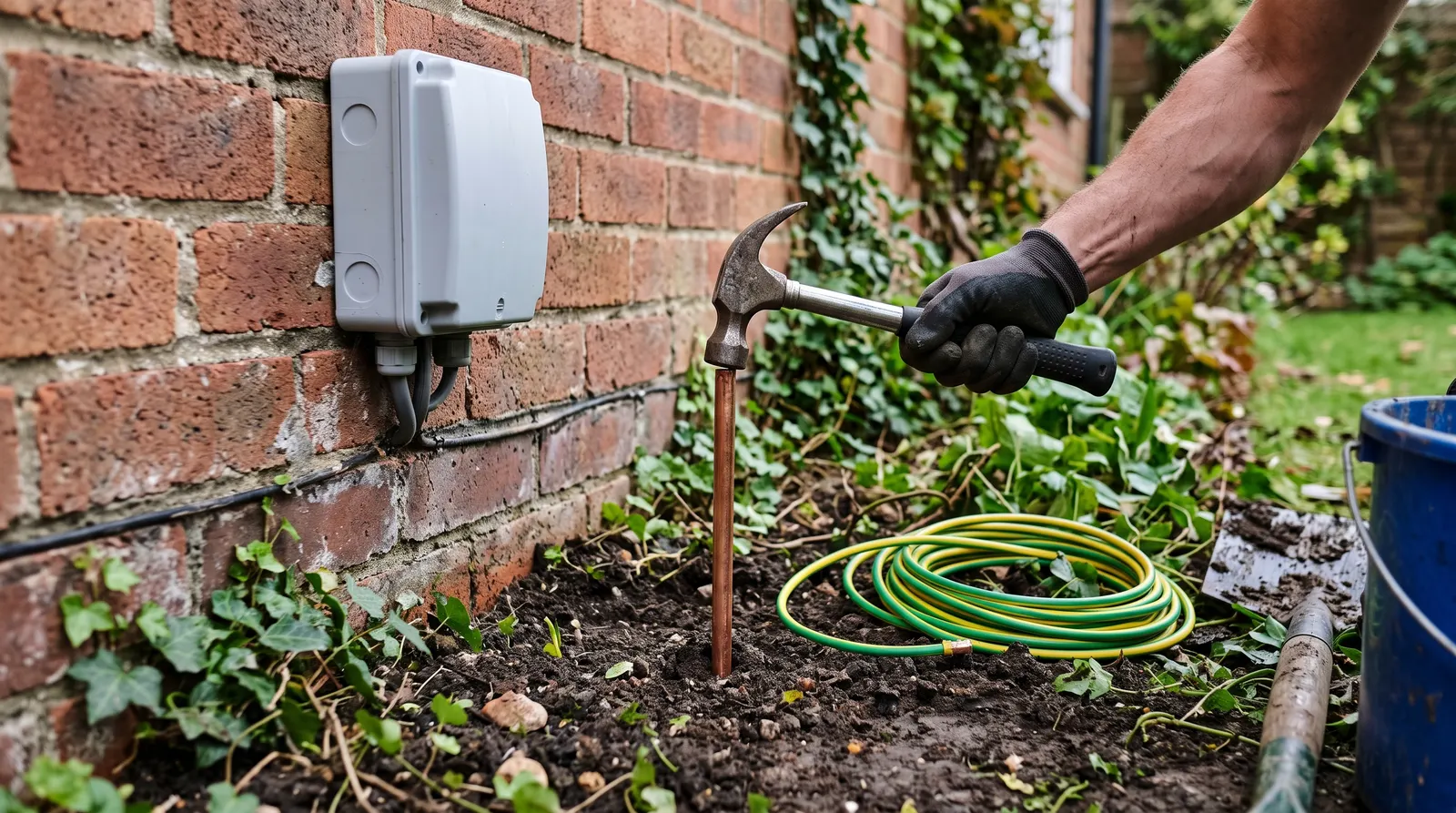
How a property is earthed affects what protection an EV charging point needs to be fitted safely. Some supply arrangements need an additional earth electrode at the charger itself, or protection built into the charging unit, before it can be connected. This isn't something to guess from the meter cupboard or the age of the house — it's checked at the supply during the survey, and it's one of the main reasons a fixed online price for an EV charger can't be the final figure.
Your consumer unit needs room, and your supply needs headroom
An EV charger needs its own way at the board, wired and protected on its own circuit rather than shared with anything else. A board with a spare way and a supply with capacity to spare is the straightforward case. Where either is tight, the installation can sometimes use a load management device to share capacity safely, or it can mean work at the board first — we've written separately about what a consumer unit replacement costs if your survey turns into that conversation. See what is a consumer unit for what's actually in the box your electrician is assessing.
Some installations need the network operator told first
Most single domestic chargers only need the local electricity network operator notified after the work is done, which your electrician handles as part of the job. Higher-power installations, multiple chargers at one property, or commercial sites can need the network operator's agreement before work starts rather than after — your survey will flag which applies, so it's never something to assume either way.
If you rent, or you're not the freeholder
A charger fixed to an external wall is an alteration to the building, not just an appliance. If you're a tenant, or the property is leasehold with a shared driveway or a management company, you'll need their agreement before work starts. It's worth raising it early — waiting for sign-off is the most common reason an EV installation takes longer than the electrical work itself.
We install home and workplace EV chargers across London, Essex and north Kent, and if your board needs attention first, we can fold that into the same job. Our charges page has our current rates — get in touch for a survey and we'll tell you what your property actually needs rather than what a generic form assumes.
If you are unsure, it is always cheaper to ask than to guess. Give us a call and we will tell you straight.