
Safety
Earth bonding: what it is and why yours may be missing
By Mizan, Founder and lead engineer4 min read
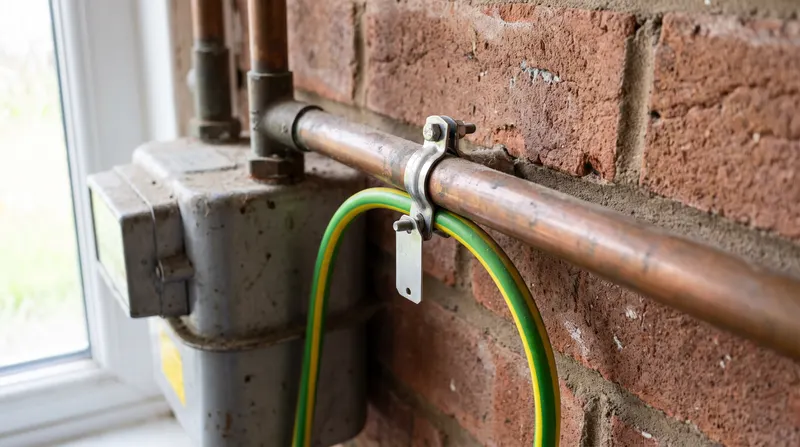
Earth bonding is one of those things that does its job silently for decades and only gets noticed when an inspection goes looking for it. It connects the metal pipework running through a property to earth, and it is one of the more common things an inspection finds missing, loose or no longer doing its job properly.
What main bonding is actually doing
Main protective bonding connects the incoming gas and water pipework — and oil pipework, where there is any — to the main earthing terminal, close to where each service enters the building. The point of it is to keep that metal pipework at the same electrical potential as everything else that is earthed, so that if a fault did somehow make the pipework live, there is no dangerous voltage difference between it and, say, a tap you are touching while standing on a wet floor.
Where supplementary bonding fits in
Supplementary bonding is the extra step of connecting exposed metal parts directly to each other as well as to earth, historically fitted in bathrooms and other higher-risk areas on top of main bonding. Whether a particular bathroom still needs it depends on what other protective measures are already in place, and the regulations set out when it is required and when it genuinely is not — worth having an electrician confirm for your own bathroom rather than assuming either way.
Why it turns up so often on an inspection
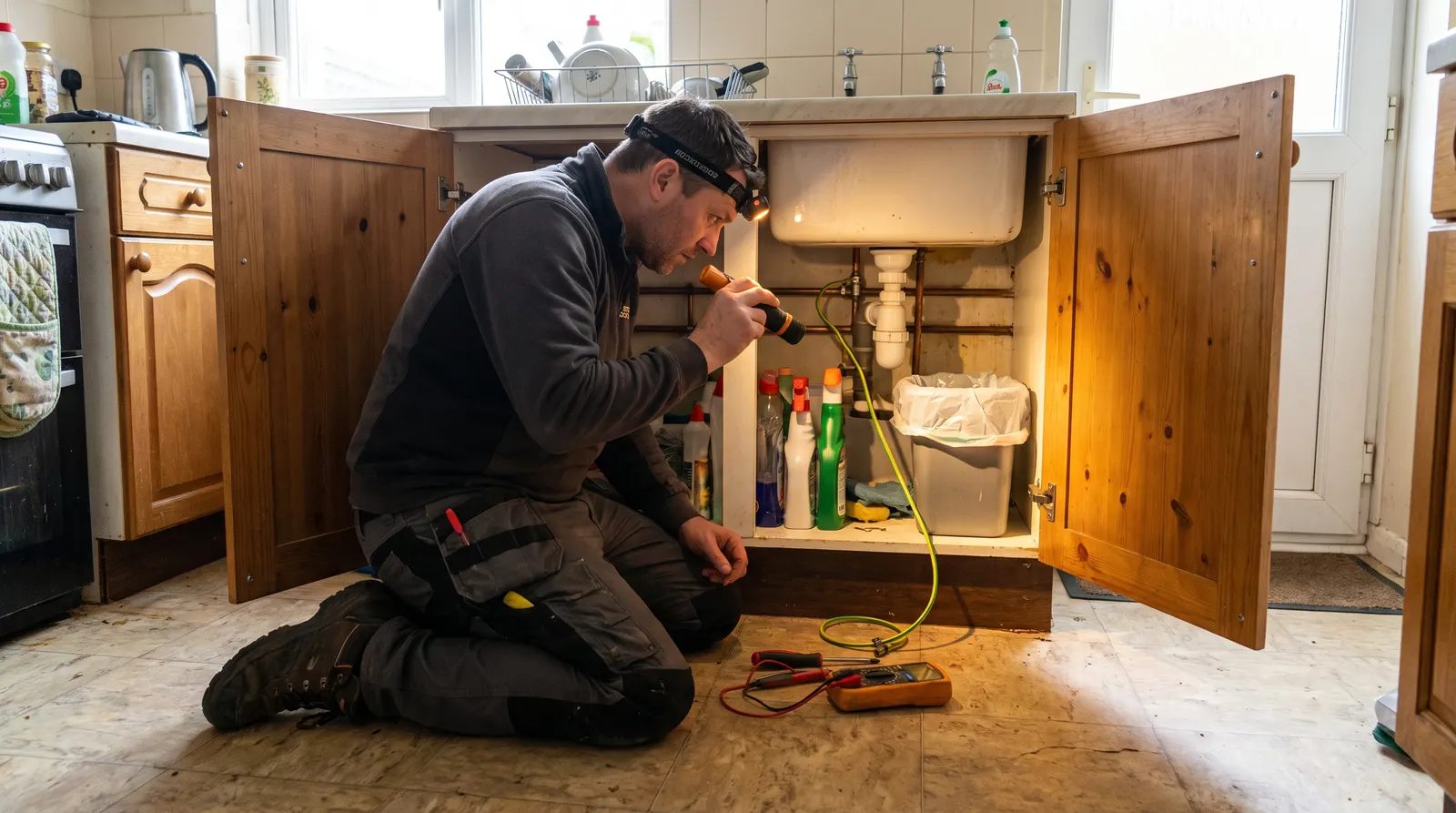
Missing or inadequate bonding is a frequent finding on an EICR, and it tends to get coded as a fault that needs addressing rather than just noted — the report explains what the specific code on yours means for the timescale. It shows up this often because it is easy to disturb without anyone meaning to: a plumber isolates pipework to work on it and the bonding clamp does not always get reconnected afterwards, or a connection fitted decades ago has simply corroded or been painted over until it no longer makes a clean contact. A boiler swap, a new kitchen or a bathroom refit are all common moments for it to quietly disappear.
What it looks like when it's there, and when it isn't
A proper bonding connection is a green-and-yellow sleeved cable ending in a labelled clamp, usually near the gas meter or the water stopcock. No clamp at all, one sitting loose in your hand rather than fixed to the pipe, or a cable that has been cut and never reconnected are all worth asking about.
We check and correct earth bonding as part of every EICR we carry out across London, Essex and north Kent.
If you are unsure, it is always cheaper to ask than to guess. Give us a call and we will tell you straight.