
Safety
Outdoor extension leads: why most are being misused
By Mizan, Founder and lead engineer4 min read
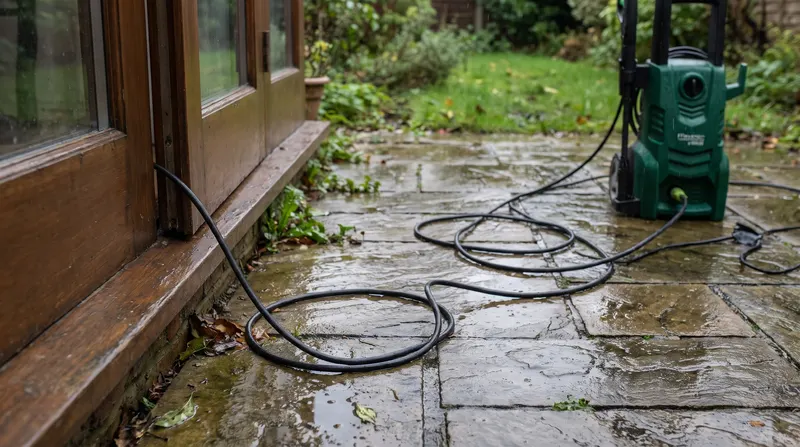
An outdoor extension lead has to cope with water, not just carry current. A lead rated for use indoors has no splash protection on its connectors, and running one across wet grass or paving to reach a mower, a pressure washer or outdoor lights is one of the more common ways we see leads fail — not because they were overloaded, but because water got into a connection never built to keep it out.
What the rating on a proper outdoor lead means
A lead sold for outdoor use carries an IP rating on its casing and connectors, not just an amp rating. That figure tells you how well sealed the plug and socket ends are against dust and moisture when closed — it says nothing about how safe the lead is once that connection is lying open on wet ground, which is the point most people miss. The protection only works while the coupling is actually made and the covers are seated.
Running one through a door or window is the usual mistake
Trailing a lead through a gap left in a closed window or under a door to reach a shed or garden office pinches the cable at a hard edge every time the window or door moves, and it is the kind of damage that happens slowly, out of sight, inside the insulation rather than on the surface. A lead run this way for a season is a different object from the one that went in new.
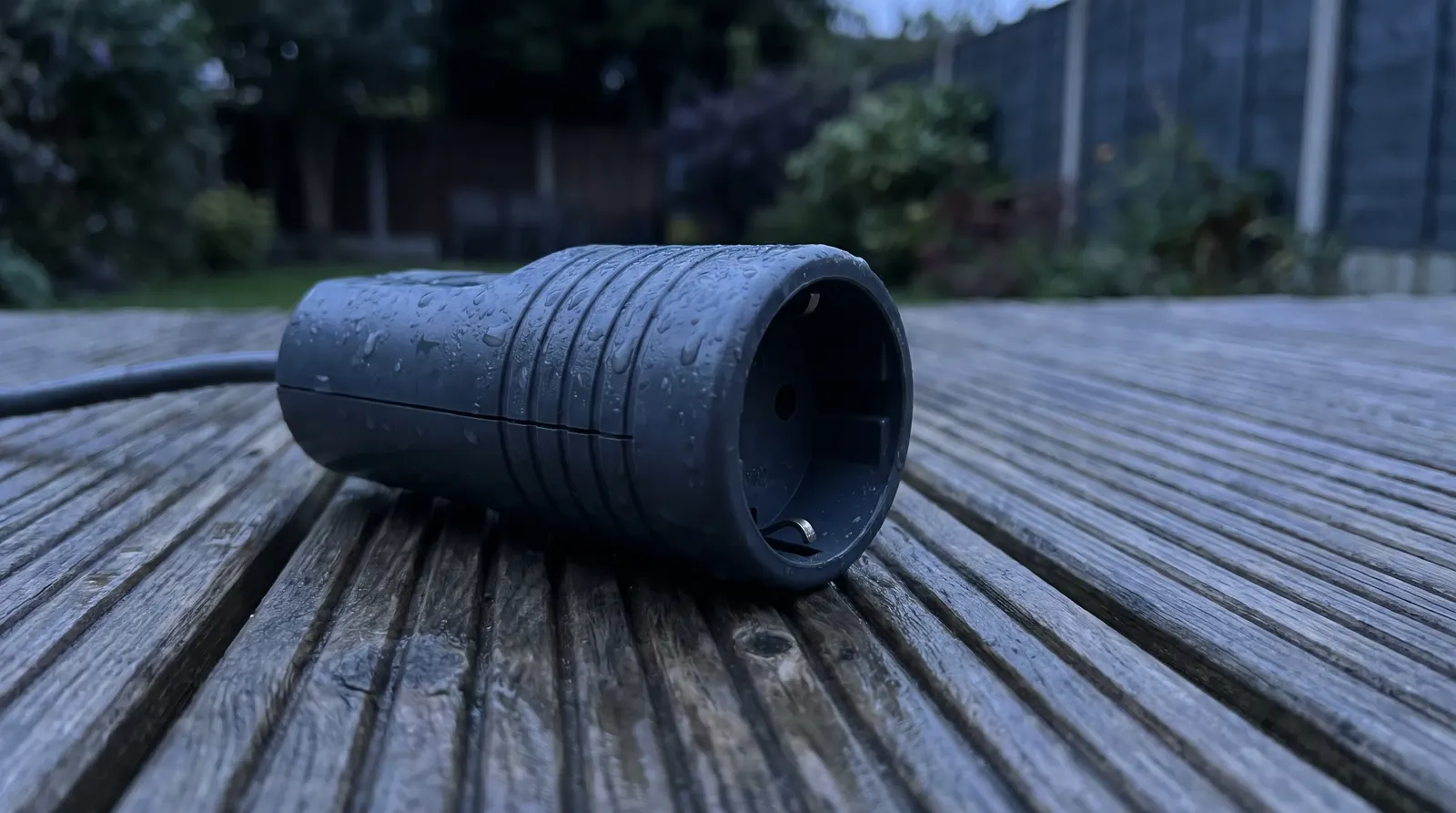
The ground it sits on matters as much as the lead itself
A lead left coiled on wet grass, lying in a puddle after rain, or run underneath a plant pot to keep it out of the way sits in the one place water collects. The connector itself can be IP-rated and still end up sitting in standing water if the run is not planned to keep it clear of where water settles and drains.
What a safer setup actually looks like
- Use a lead rated and sold for outdoor use, with its IP rating still legible, not whatever indoor lead was nearest the back door.
- Run the cable clear of doorways, windows and anywhere it will be pinched, trodden on or driven over.
- Keep the connector raised off the ground where you can — hung on a hook or resting on a dry surface rather than left in grass.
- Plug it into a socket protected by an RCD, and never into another extension lead to make up the length.
If you keep reaching for an extension lead to get power to a shed, a garden office or a patio, that is usually a sign you need a fixed outdoor socket rather than a longer lead — we fit those as part of our sockets and lighting work across London, Essex and north Kent.
If you are unsure, it is always cheaper to ask than to guess. Give us a call and we will tell you straight.