
Guides
Electric boilers: what the electrics have to cope with
By Mizan, Founder and lead engineer4 min read
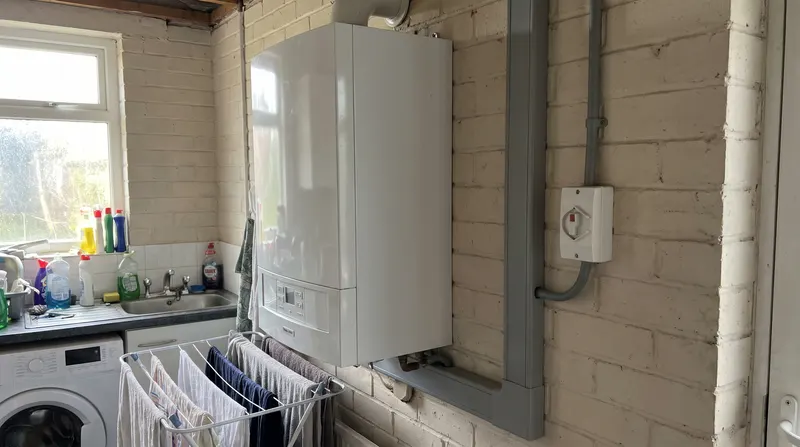
An electric boiler does the same job as a gas combi — heating water for the taps and the radiators — without a flue, a gas line, or an annual gas safety check. What it asks for instead is a serious amount of electricity, delivered through a circuit built specifically to carry it, not borrowed from whatever spare capacity happens to be going.
The load is heavier than almost anything else in the house
A kettle or a toaster draws a lot of current for a couple of minutes. An electric boiler can draw a similar amount for as long as the heating or the hot water is calling for it, which in a cold spell can mean hours at a time. Domestic units commonly sit somewhere in the region of a few kilowatts up to the high teens for a larger house, and that figure is the one that decides everything about how it gets wired — not the size of the box on the wall.
Why it almost always needs its own circuit
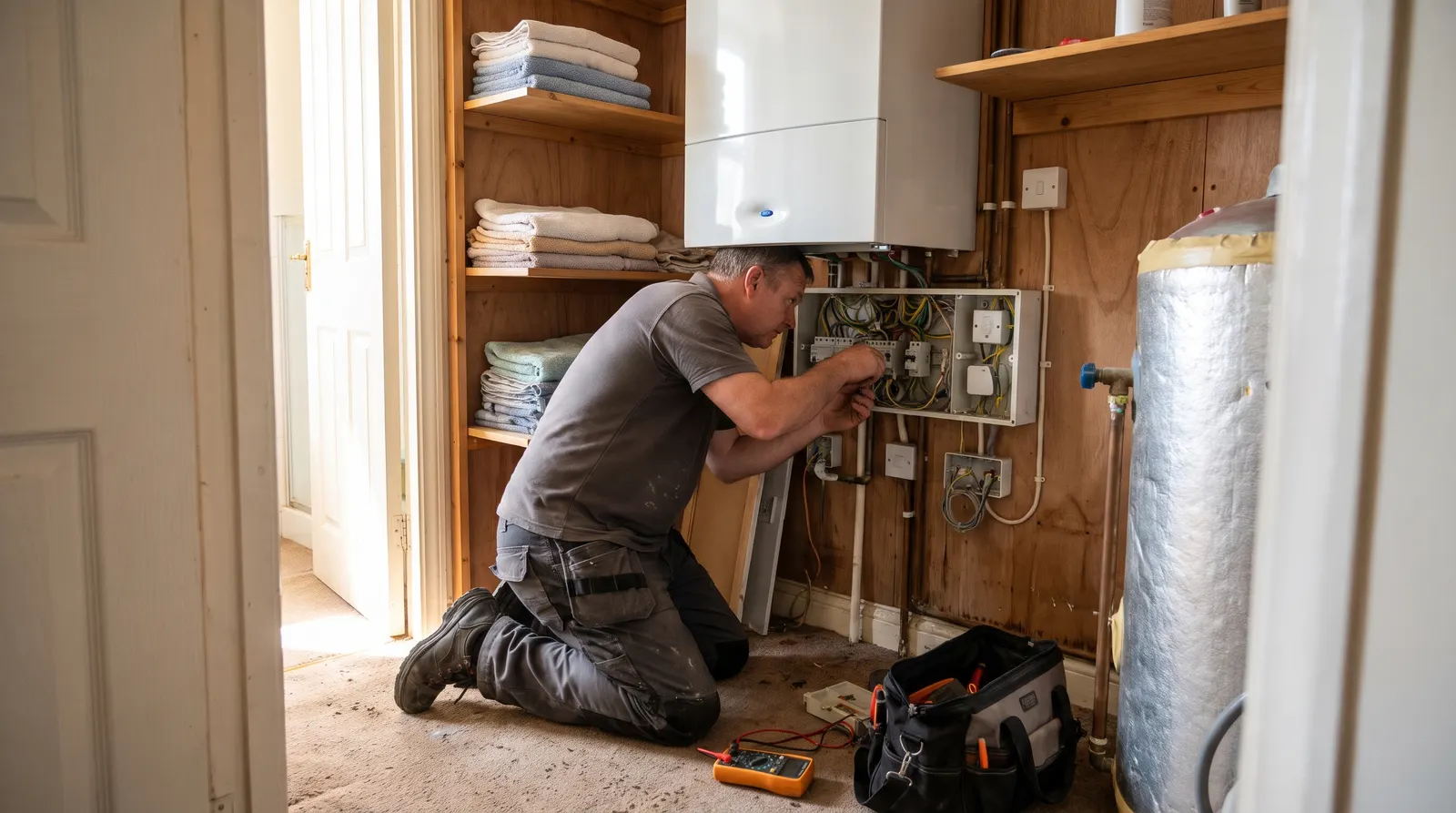
Because the load is both large and sustained, an electric boiler is wired on a dedicated circuit, with cable and a breaker sized specifically for its output, run straight from the consumer unit rather than tapped off something that already feeds other things. Trying to share that kind of continuous draw with an existing circuit — even one that looks like it has room on paper — is a different proposition to a shower that only runs for ten minutes.
Checking the incoming supply can actually give it
A few kilowatts is a meaningful addition to what a property already draws, and for a larger electric boiler it is worth having whoever quotes the job check that the consumer unit has the headroom for it and, for the bigger end of the range, whether the incoming supply itself needs anything looking at before one goes in. That is a survey question specific to your property and the boiler's output, not something to assume either way from a product description.
Isolation you can reach without opening a panel
An electric boiler needs a local isolator switch mounted near it, reachable without going anywhere near the consumer unit, so it can be safely switched off for servicing or in a fault. It is the same principle as the isolators we have written about for other fixed heating equipment: a switch you can actually get to, sited for the job rather than tucked out of reach once the boiler is on the wall.
Whether the work needs notifying
Fitting a new dedicated circuit is the kind of fixed electrical work that Part P can apply to. Whether a particular installation needs notifying depends on the detail of the job, so don't assume either way — ask whoever does the work to tell you plainly before they start, and get the right certificate at the end regardless of the answer.
- Check the boiler's rated output before anything else — that figure, not the box size, decides the cable and breaker.
- Expect a dedicated circuit run from the consumer unit, not a tap off something that already feeds other equipment.
- Ask for the incoming supply to be checked against the boiler's output on a larger installation, not assumed adequate.
- Make sure the local isolator switch is somewhere you can actually reach without moving anything.
We wire the dedicated circuits electric boilers need and check a property's existing capacity honestly before one goes in, as part of general heater installation work and consumer unit upgrades across London, Essex and north Kent.
If you are unsure, it is always cheaper to ask than to guess. Give us a call and we will tell you straight.