
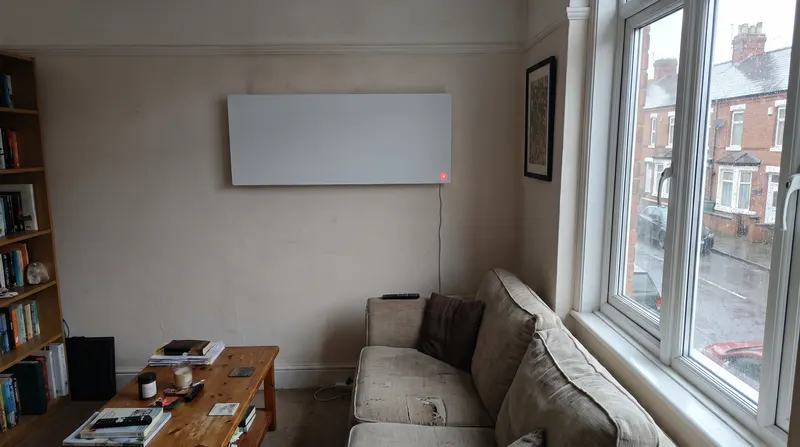
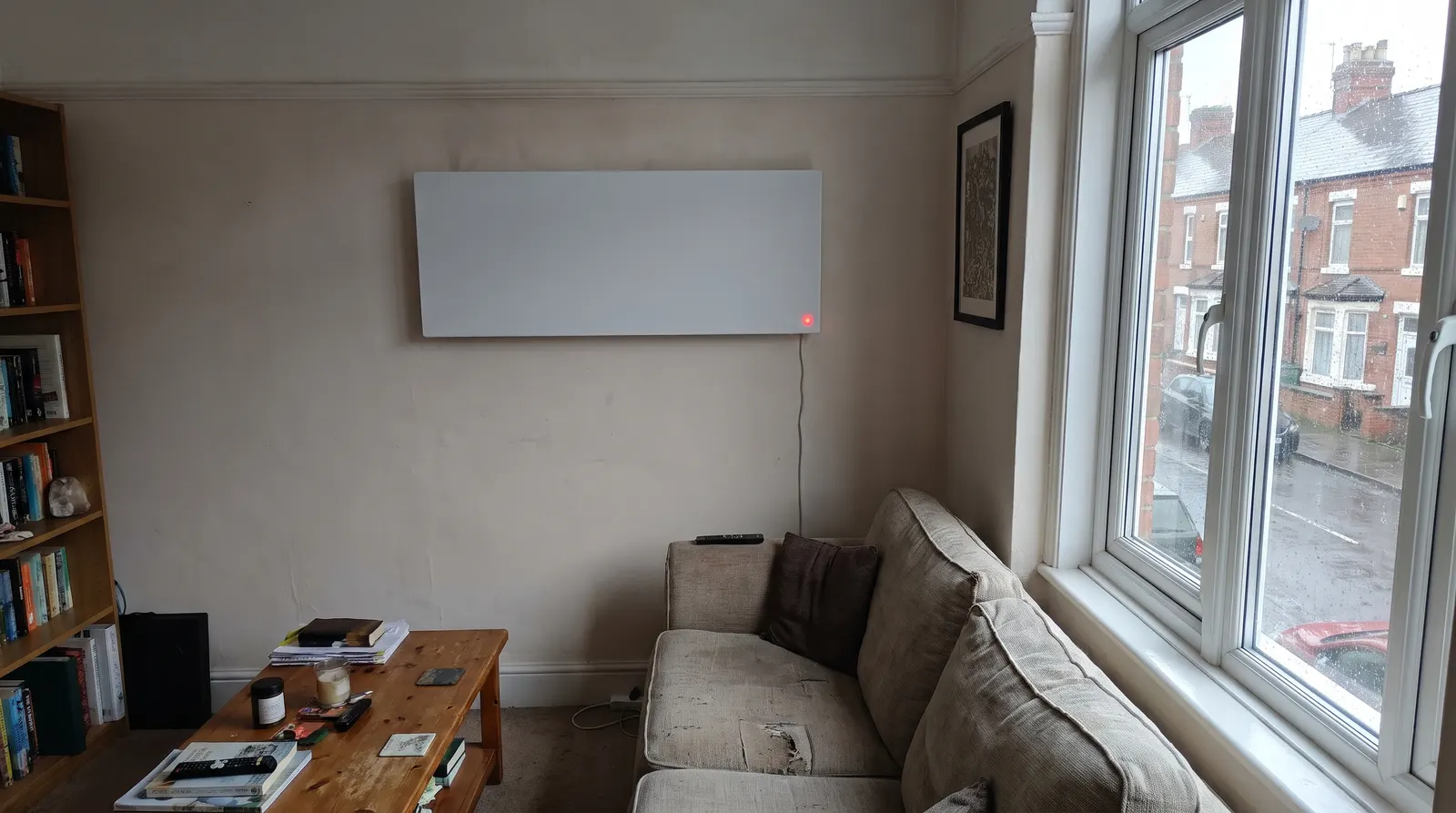
An infrared heating panel looks like a flat sheet mounted on a wall or ceiling, with none of the fins or visible element of a normal electric radiator. What it is doing underneath is genuinely different. Instead of warming the air in the room and letting that warm air carry heat to you, it radiates heat directly, the same way the sun warms your skin on a cold day before it warms the air around you.
Where that difference actually helps
That matters most in a room where warming the air is a losing game: high ceilings, a draughty conservatory, a garage or workshop with a door that opens often, or a room that is only occupied for part of the day. Heating the people and surfaces directly works even where the air keeps escaping or never gets a chance to build up heat. In a small, well-insulated room that already holds its warmth, the advantage is smaller, and a panel is just another way of running a resistive electric heater.
Wired in, not plugged in
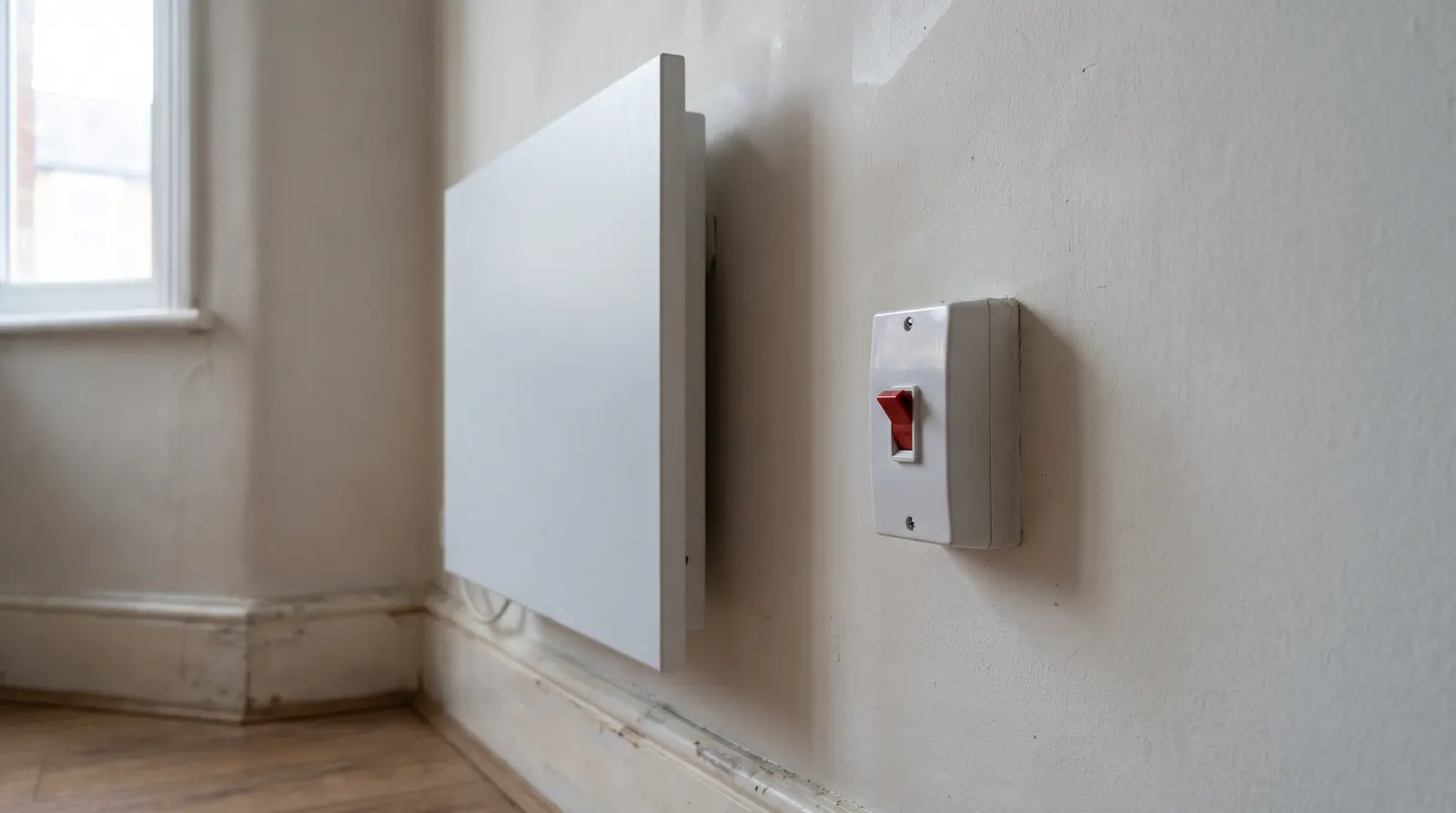
Most panels worth fitting permanently are wired to a fused spur rather than run off a plug, with a local isolator switch so the panel can be worked on or taken off the wall without needing to find the right socket to pull. Some smaller panels are sold with a plug for a genuinely portable setup, but a panel that is going to live on one wall or ceiling for years is better served by a fixed connection sized correctly for its wattage.
Mounting height and clearance
Because the panel's whole job is to radiate heat outward, what sits in front of it and how far away matters more than it does for a normal radiator. Keep furniture, curtains and anything that can scorch clear of the face of the panel, and follow the manufacturer's minimum mounting height and clearance figures rather than guessing — they vary by panel wattage and are there for a reason.
What else is on the circuit, and running cost
An infrared panel is still a resistive electric heater underneath, so it costs the same to run per unit of electricity as any other heater of the same wattage — it is not inherently cheaper. What it can do is waste less of that electricity heating air that then leaks out of a draughty or high-ceilinged room, which is a real saving in the right room rather than a property of the panel itself. As with any fixed heater, it is worth having the circuit it will run from checked before adding one, particularly where more than one panel is going in.
- Check the room actually suits infrared before assuming it will save money — a small, already-warm room gains little from it.
- A fused spur and local isolator, not a plug, is the normal way to connect a panel that is staying put.
- Follow the manufacturer's clearance and mounting height figures for that specific panel.
- Have the circuit checked before adding a panel, especially where more than one is planned.
We wire infrared heating panels onto properly sized fused spurs with a reachable isolator, and we'll tell you honestly whether a room actually suits one, as part of general electrical work across London, Essex and north Kent.
If you are unsure, it is always cheaper to ask than to guess. Give us a call and we will tell you straight.