
Safety
Electric fires: the load your sockets are carrying
By Mizan, Founder and lead engineer4 min read
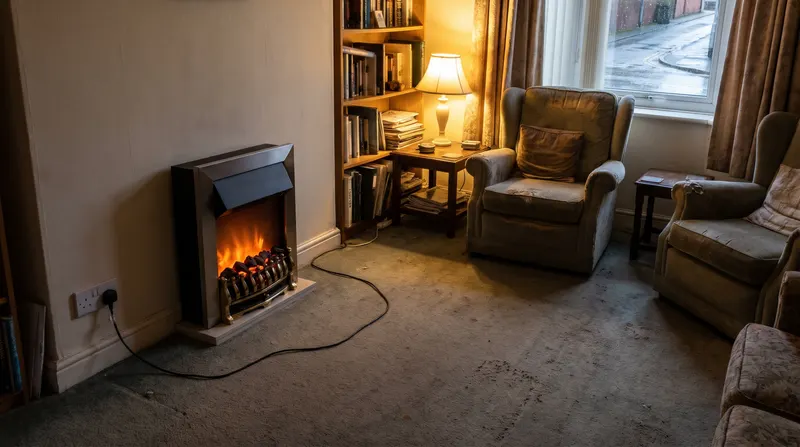
An electric fire draws more current than almost anything else people plug into a wall socket without a second thought. A typical freestanding or wall-mounted electric fire sits close to the top end of what a standard socket is rated for, and that changes what it's safe to plug in alongside it.
What the load actually looks like
A UK wall socket on a ring final circuit is generally rated at 13A, which works out at a little over 3,000 watts. Most electric fires run somewhere between 1kW and 3kW, often with a boost setting that pushes towards the top of that range. Plugged in on its own, that's comfortably within what the socket and circuit are built to carry. Plugged in alongside something else drawing serious current — a tumble dryer, a second heater, a kettle on the same circuit — and the combined draw can get close to the limit far faster than most people expect.
Why that matters more for a fire than a lamp
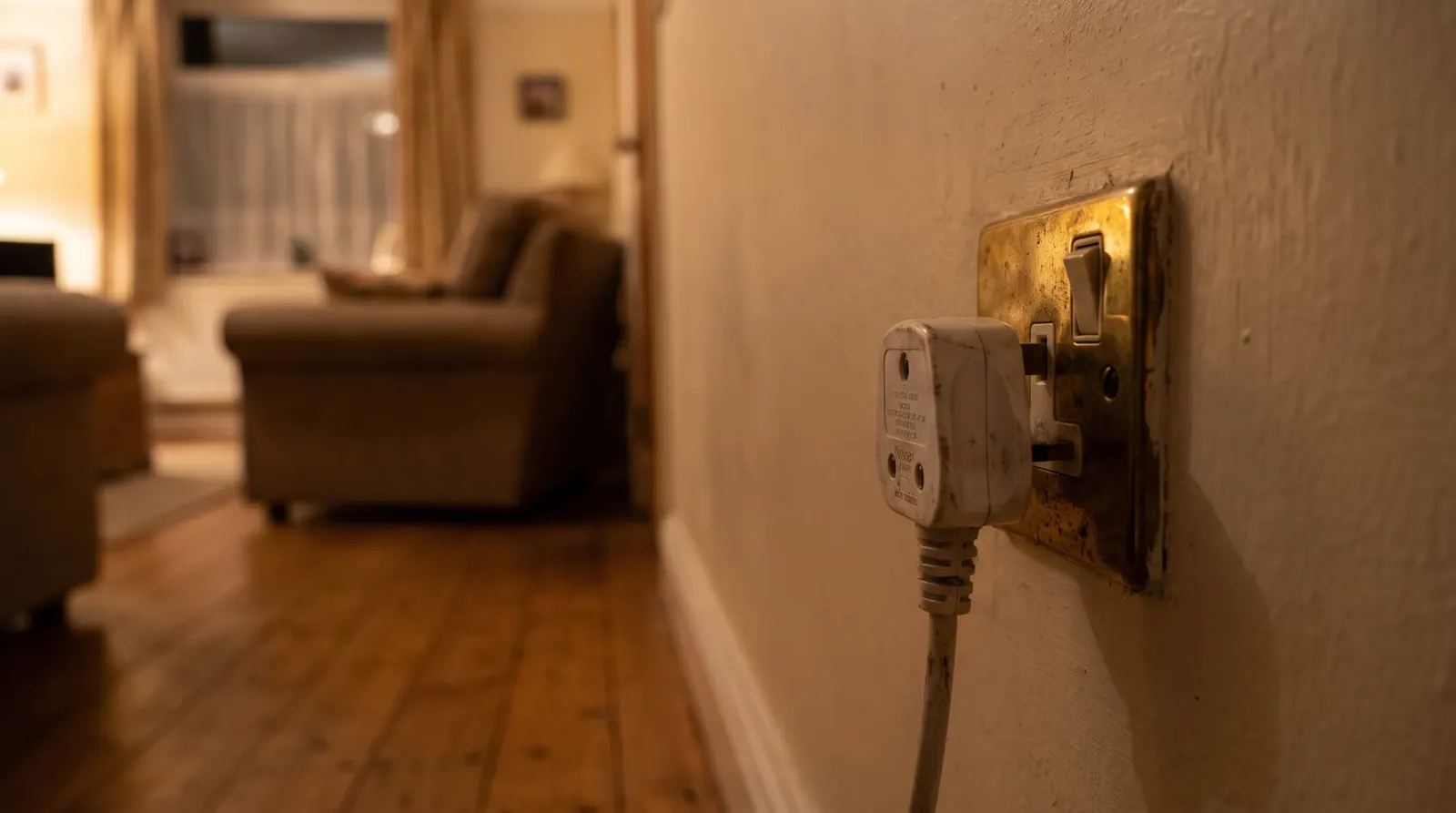
An electric fire is usually left running for hours at a stretch, not switched on and off in seconds like a kettle. A connection that's slightly loose, a socket worn from years of use, or a plug that doesn't seat quite as firmly as it should will heat up under that kind of sustained load in a way it might never show under a brief one. That's the mechanism behind most of the socket damage we get called out to — ordinary wear meeting hours of continuous current, not a single dramatic fault. If a circuit trips every time the fire goes on, it's worth reading what that's usually telling you before resetting it and carrying on regardless.
Keep it off the extension lead
The same rule we've written about for fan heaters and halogen heaters applies here: an electric fire belongs on its own wall socket, not run through an extension lead or a multi-way adaptor that's already carrying something else. Most extension leads are rated well below a socket's own 13A, and a fire left running on one for an evening is exactly the kind of sustained load that catches a lead out.
- Plug an electric fire straight into a wall socket on its own, never through an extension lead or adaptor.
- Check the socket and plug occasionally while the fire has been running — warmth around the socket plate, a scorch mark, or a plug that feels loose in the socket are all reasons to stop using it and have it looked at.
- Keep anything that can burn — curtains, furniture, clothes left to dry — well clear of the heat coming off the front.
- Don't leave an electric fire running unattended for long periods, and never overnight.
We deal with worn sockets, tripping circuits and tired wiring across London, Essex and north Kent, and a dedicated, properly rated socket is a cheap fix next to the alternative. If a room relies on an electric fire running for hours most evenings, it's worth having the circuit looked at rather than hoping an older socket keeps coping.
If you are unsure, it is always cheaper to ask than to guess. Give us a call and we will tell you straight.