
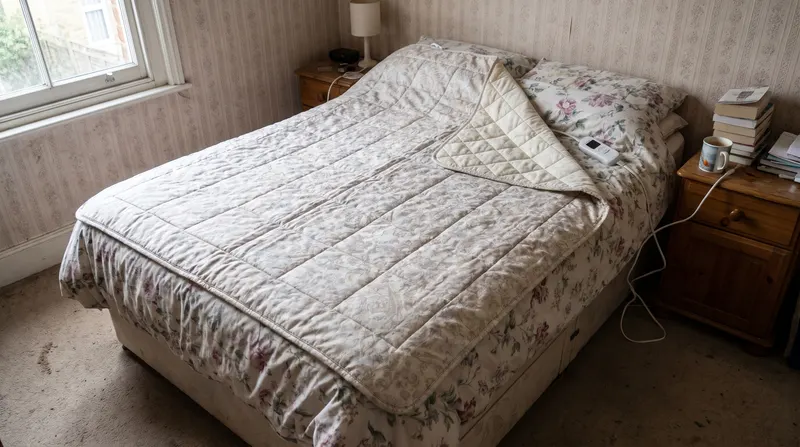
An electric blanket spends most of the year folded up in a cupboard, which is exactly the problem. The wiring running through it is a fine, flexible element designed to lie flat, and folding or creasing it repeatedly over months is what tends to damage it — long before the blanket looks worn from the outside. Checking it properly before the first cold night matters more than checking it still gets warm.
What actually fails inside one
The heating element is a wire running back and forth in a pattern through the fabric, held flat by the quilting or tie tapes that stop it bunching up. Years of folding for storage, or being tucked in tightly under a fitted sheet, can crease or kink that wire at the same points repeatedly. A kinked element can overheat at exactly that spot, and that is where scorching starts — from the inside, often before any mark shows on the cover.
Check it before you put it back on the bed
- Look over the whole surface for scorch marks, discolouration or a worn, shiny patch — any of these means stop, don't test it again, and replace it.
- Feel along the wiring pattern through the fabric for lumps, kinks or a section that feels different from the rest.
- Check the cable and the connector where it plugs into the blanket for fraying, cracking or a loose fit.
- Make sure the tie tapes or quilting holding the element flat are still intact — if the element has come loose and can bunch up, don't use it until that's fixed or the blanket is replaced.
- If it has a separate control unit, check the dial or buttons work smoothly and that the unit isn't cracked.
How old is too old
There is no single legal cut-off, but most manufacturers suggest an electric blanket has a working life of around ten years, and a sealed heating element only gets more likely to have a weak point as it ages. If yours is older than that, or you genuinely don't know how old it is, the safest reading is to treat age itself as a reason to replace it rather than to keep relying on it still switching on.
The same socket rules as any other heater
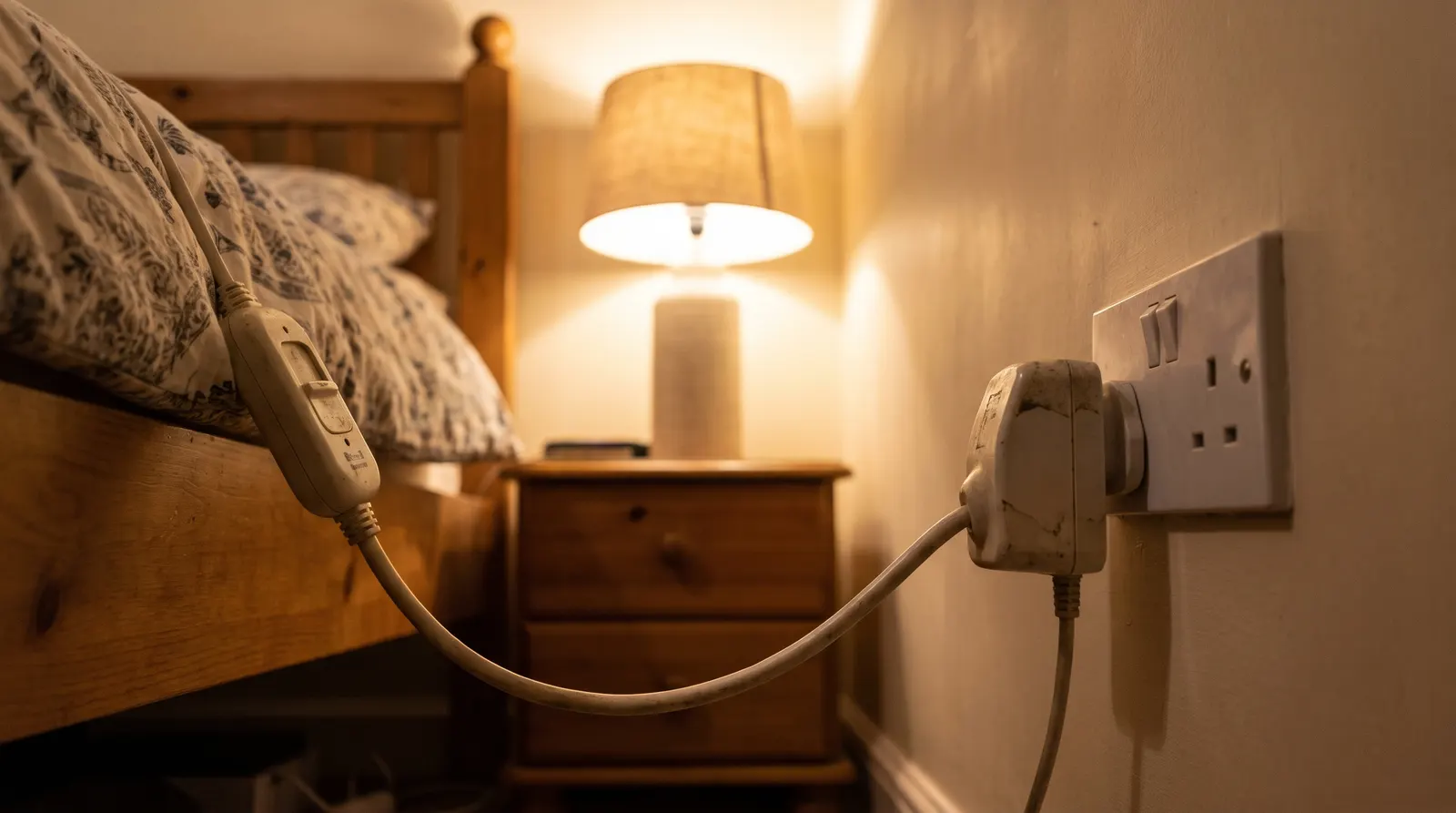
Electrically, an electric blanket is a low-current appliance compared with a fan heater or a halogen heater, but it still deserves its own socket rather than being left on an extension lead or adaptor that's already carrying something else — the same overload habit we've covered for both of those. Plug it in directly, and unplug it at the wall when it's not in use rather than leaving it live.
None of this needs an electrician for a blanket that's in good condition and used sensibly. Where it does matter is everything else on the same circuit — if a bedroom's sockets are old, loose, or already carrying more than they should through extension leads, that's a fault-finding job worth having looked at properly, and it's the kind of general electrical work we do across London, Essex and north Kent.
If you are unsure, it is always cheaper to ask than to guess. Give us a call and we will tell you straight.