
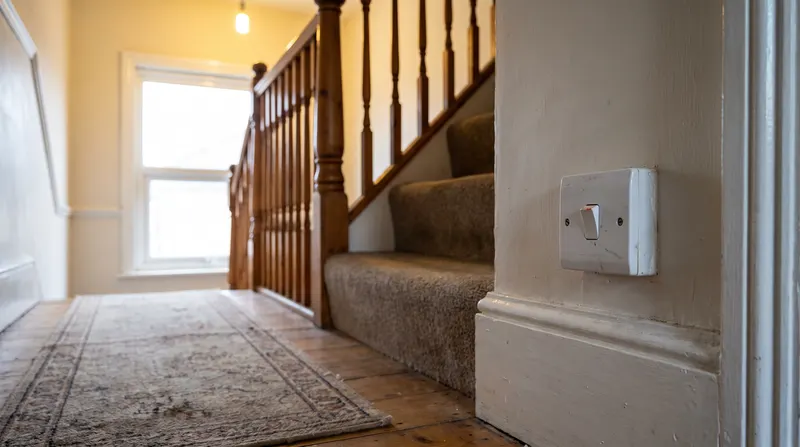
Two-way switching is what lets a single light be controlled from two separate switch positions — the classic example is a landing light you can turn on at the bottom of the stairs and off at the top, or a long hallway with a switch at each end. Either switch can turn the light on or off regardless of the other's position, which is the whole point.
Common, L1 and L2: what the three terminals are doing
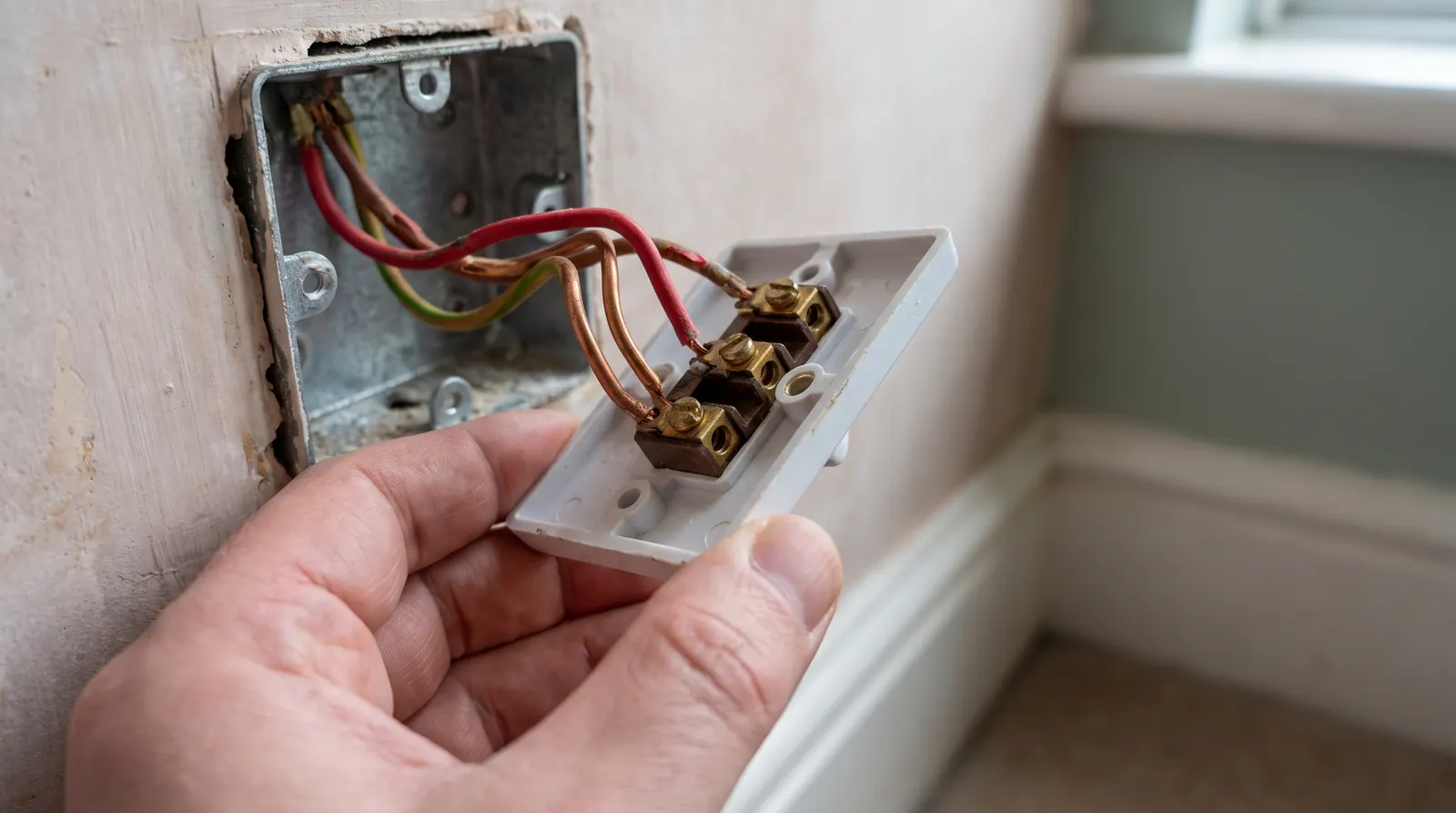
A two-way switch has three terminals rather than the two on a standard one-way switch: common, L1 and L2. The pair of switches is wired together with two "strapping" conductors running between them, carrying L1 and L2, while the common terminal on one switch takes the incoming live and the common on the other feeds on to the light. Flipping either switch changes which strapping wire is carrying the current, which is what lets both positions control the same light.
Why a generic wiring diagram can mislead more than it helps
The principle above is consistent, but the cable colours and exact arrangement behind a specific pair of switches depend on how that circuit was actually wired in that house — older two-wire control methods and newer three-core-and-earth wiring achieve the same result differently. A diagram found online describes one version of that, not necessarily yours. The reliable approach is the one worth repeating from replacing a single switch: photograph what's actually there before you disturb it, and match terminal for terminal rather than by position on the plate.
When two positions aren't enough
A landing with a third switch position — partway up a long staircase, say — needs an extra component called an intermediate switch wired in between the two two-way switches, which is where a simple two-way job turns into one worth having checked rather than guessed at.
- If the wiring doesn't match the common, L1, L2 pattern and you don't recognise what you're looking at, stop.
- If swapping the two switches makes the light stop responding to one of them, the strapping wires have likely been crossed — go back to how it was rather than guessing further.
- A third switch position almost always means an intermediate switch is already there, or needs to be added — it isn't simply wiring a third two-way switch into the pair.
We fit and rewire two-way and multi-way lighting circuits as part of general sockets and lighting work across London, Essex and north Kent. If you're not sure whether what's on the wall is a one-way or two-way switch in the first place, that's covered in how to replace a light switch safely.
If you are unsure, it is always cheaper to ask than to guess. Give us a call and we will tell you straight.