
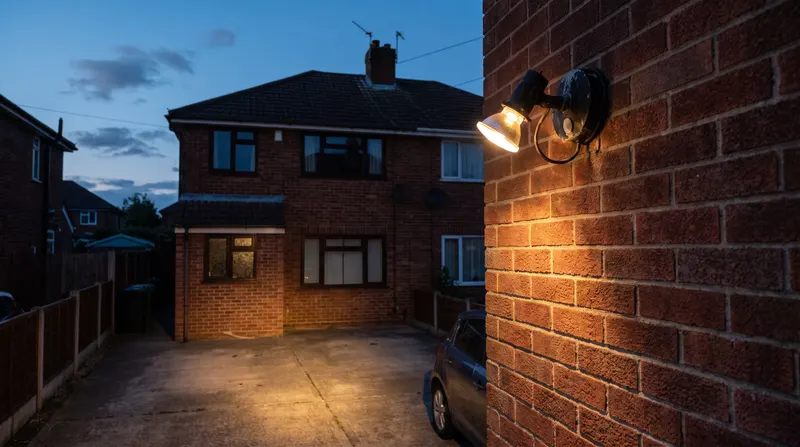
A floodlight is just a light fitting built to throw a wide, strong beam rather than a soft pool — useful over a driveway, a side passage or the back of a garden where you actually want to see something, not just know a light has come on. The trouble starts when the beam is stronger or wider than the job needs, because the excess doesn't disappear. It ends up on next door's bedroom window or washing out the whole street.
Lumens tell you more than watts do
An LED floodlight's wattage tells you almost nothing about how bright it actually is — two fittings rated at the same wattage can put out very different amounts of light depending on how efficient the LEDs inside them are. Lumens are the number worth checking: a modest floodlight for a back garden or side passage is usually somewhere around 1,000-2,000 lumens, while anything well into five figures is closer to what you'd expect lighting a car park, not a patio.
PIR, dusk-to-dawn, or a switch — pick one on purpose
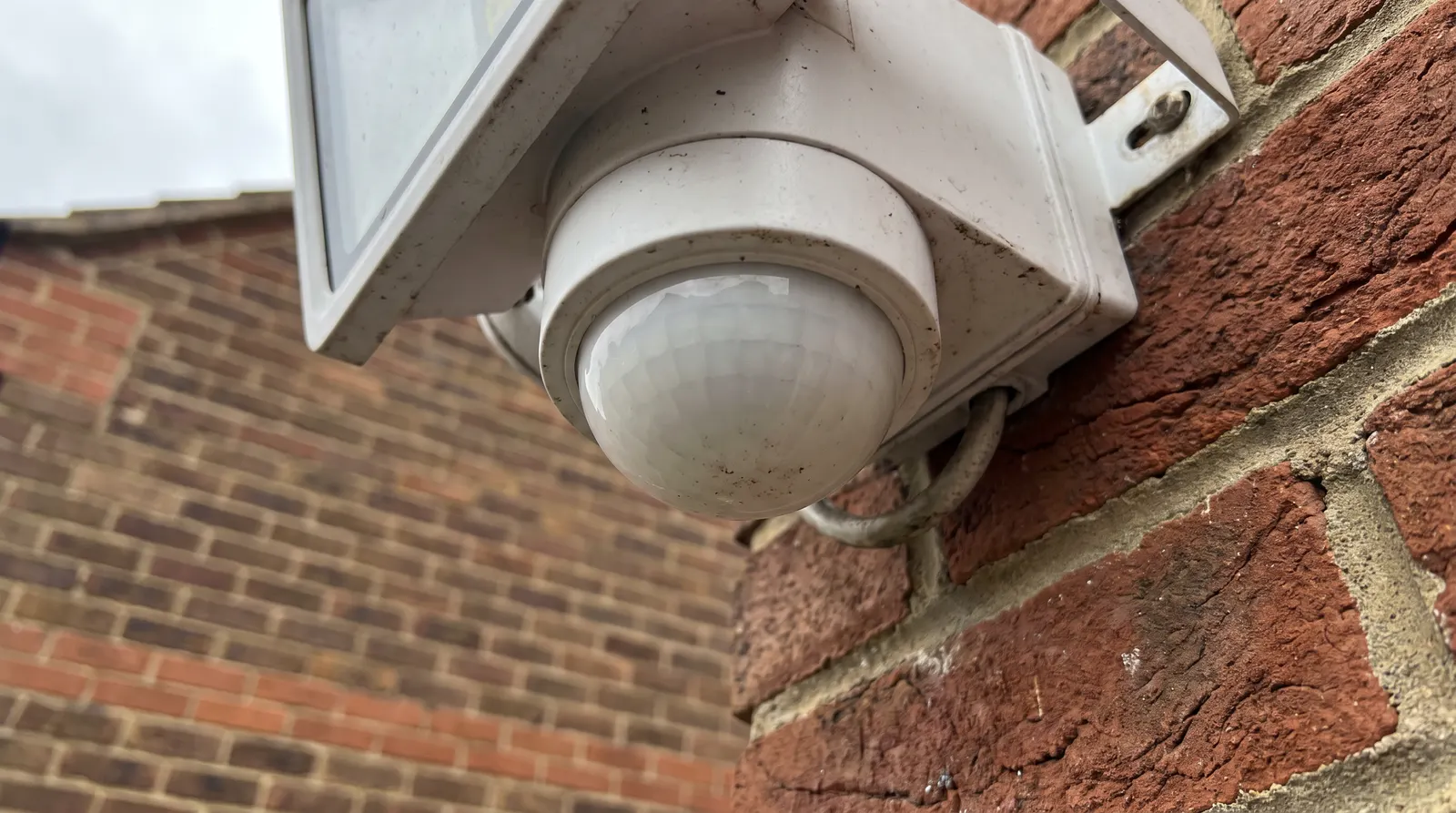
A PIR-sensor floodlight only comes on when something moves in front of it, which is usually what a security light should be doing — it startles anyone approaching the house and leaves the garden dark the rest of the time. A dusk-to-dawn fitting stays lit all night regardless, which costs more to run and is the version most likely to end up as a neighbour's complaint. We've written separately about choosing and siting PIR sensors properly, including the nuisance triggering that puts people off them.
Aim and angle matter more than wattage
- Angle the fitting down towards the ground it's meant to light, not out towards eye level or over a boundary fence.
- Fit it high enough that the beam spreads across the area intended rather than straight into anyone's eyeline walking past.
- Keep the sensor's range and sensitivity tight to your own property — a PIR set to catch movement on the pavement will trigger on every passer-by, not just someone in your garden.
- Where a floodlight faces a neighbour's window at all, lower the wattage and tighten the angle before you assume you need a brighter one.
We fit and site security floodlights as part of our security lighting work across London, Essex and north Kent, aimed and specified for what the space actually needs rather than the biggest fitting on the shelf.
If you are unsure, it is always cheaper to ask than to guess. Give us a call and we will tell you straight.