
A dimmer switch and an LED bulb do not automatically get on, even when both are perfectly good products. The dimmer switch that sat behind that same wall for fifteen years was designed around incandescent or halogen bulbs, and an LED draws power in a different enough way that the old electronics inside the dimmer can struggle to read it properly.
What it looks like when they clash
- Flickering, especially at the low end of the dial rather than at full brightness.
- A buzz or hum from the dimmer module itself, sometimes from the bulb.
- A light that won't dim below a certain point, or jumps straight from dim to off.
- Bulbs that flicker in groups rather than smoothly, where several LEDs share one dimmer.
Leading-edge and trailing-edge, in plain terms
Older dimmers are generally what's called leading-edge, built for incandescent and halogen loads. Trailing-edge dimmers switch the power differently and tend to suit LED drivers better, with a smoother dimming curve and less of the buzz leading-edge dimmers are prone to on light loads. Many trailing-edge dimmers also need a neutral conductor present at the switch, which not every lighting circuit has — so it isn't always a straight swap, and that's worth checking before you buy one.
Minimum load: the spec nobody reads
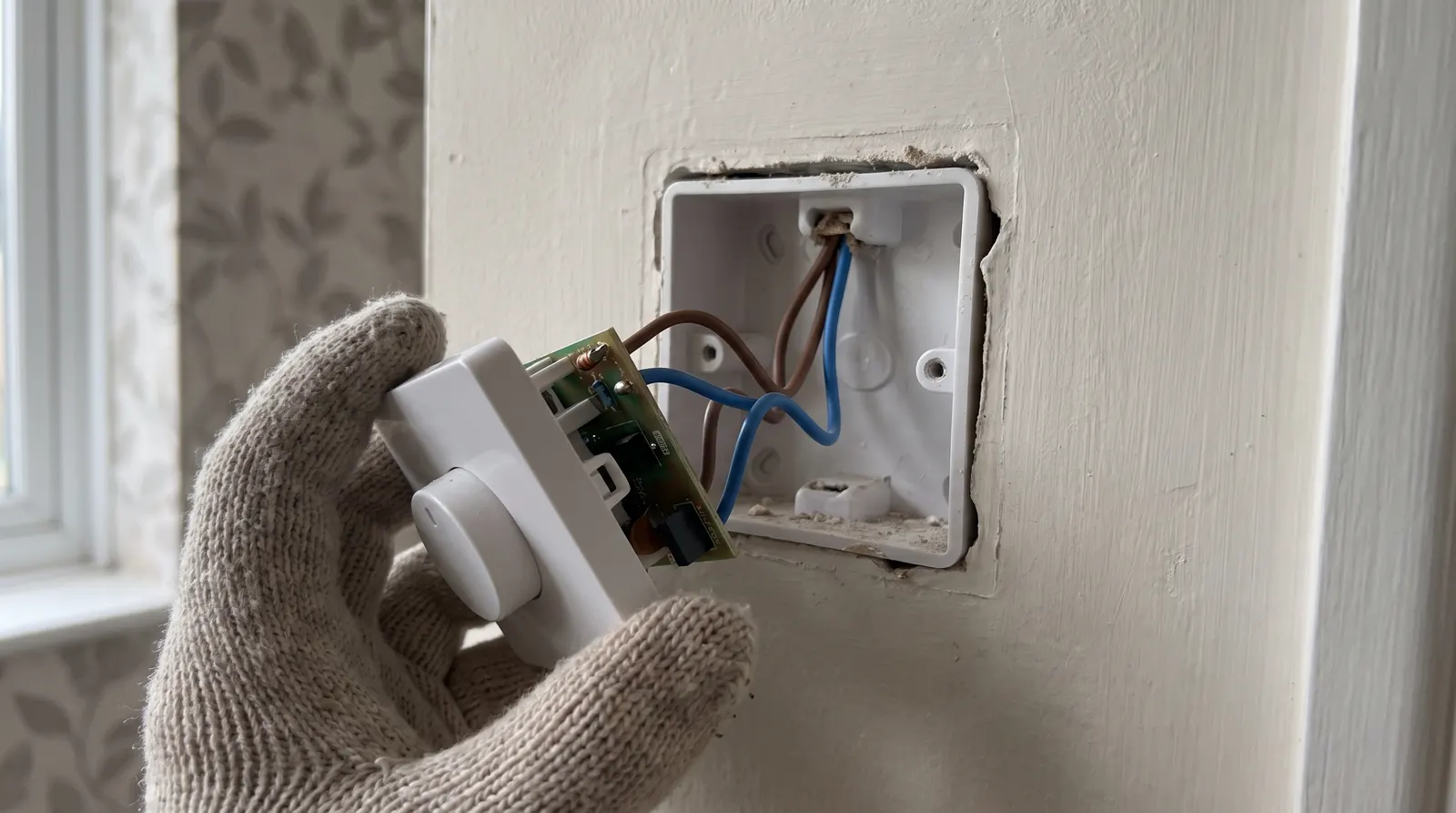
Dimmers built for incandescent bulbs were designed around a minimum load matched to what those bulbs actually drew. LED bulbs use a fraction of that, so a handful of LEDs on an old dimmer can sit well under the minimum it needs to work cleanly — which is exactly what produces the flicker and the buzz rather than a smooth dim. The fix is a dimmer rated for LED loads, not a different bulb.
Fitting a dimmer rated for LEDs
The wiring side of swapping in a new dimmer is the same job as replacing any other light switch — isolate the circuit at the consumer unit, test it's dead, and match the new terminals to the old rather than guessing from position. Where it differs is the bit before you buy anything: check the dimmer is rated for the total LED wattage on that circuit and for the kind of LED driver the bulbs use, since a dimmer that suits one brand of dimmable LED does not automatically suit another.
We fit LED-compatible dimmers as part of general sockets and lighting work across London, Essex and north Kent, matched to the bulbs actually going in rather than whatever was already on the wall. If you haven't replaced the switch itself before, it's worth reading how to do that safely first.
If you are unsure, it is always cheaper to ask than to guess. Give us a call and we will tell you straight.