
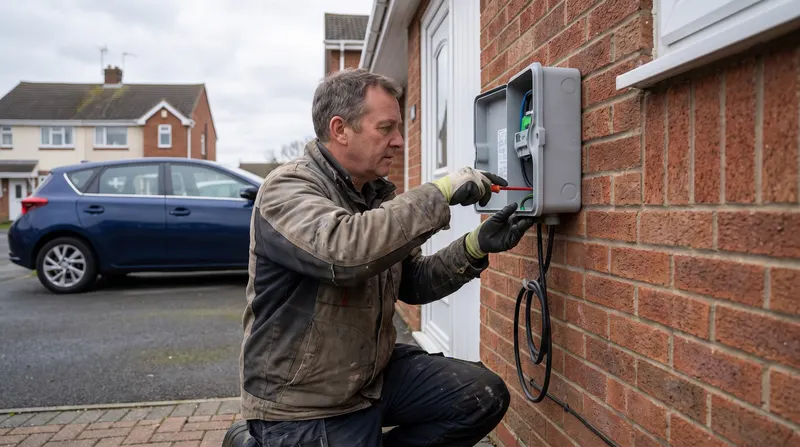
There isn't one figure for an EV charger installation, because what you're paying for is the job behind the wall, not the charger on it. A short cable run to a board with spare capacity is a different job from a long run to a board that's already full — and that's before the earthing arrangement at the property has even been checked. Our charges page has our current rates; what follows is what actually moves the price from one house to the next.
What's in the job
- A site survey, to see where the charger will go and what the route back to the consumer unit involves.
- A dedicated circuit, wired and protected on its own way at the board rather than shared with anything else.
- A check of the earthing arrangement at the property, which decides what extra protection the installation needs.
- The charge point itself, fitted and commissioned.
- Testing and certification for the new circuit, since this is notifiable work.
Leave any one of those out of a quote and the number you're comparing against someone else's isn't for the same job.
Cable run length is the first thing that moves the price
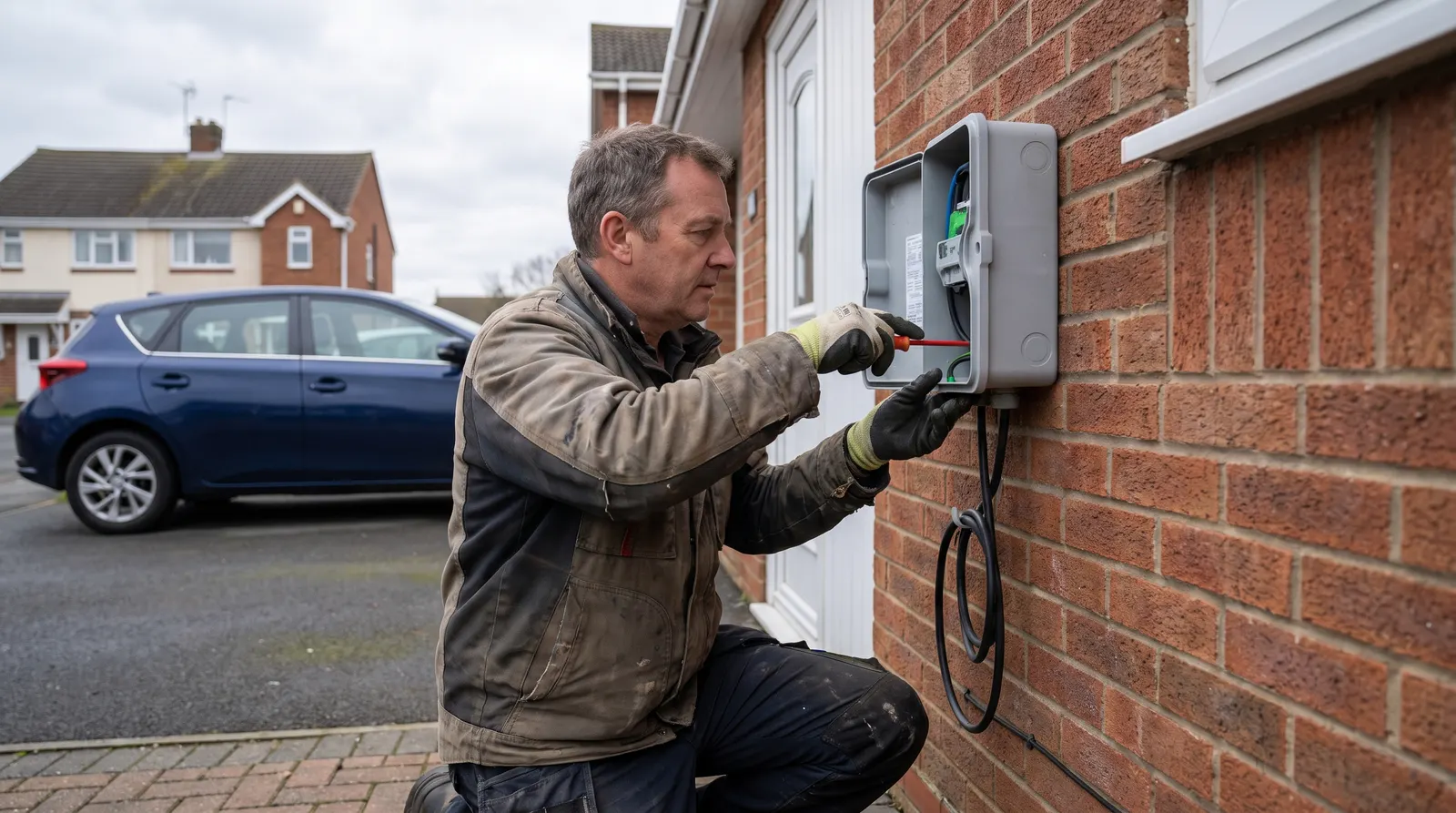
The distance from the consumer unit to wherever the charger is going to be mounted — on the house wall by a driveway, on a detached garage, at the far end of a garden — decides most of the labour. A short run that can be clipped along a wall costs less than one that has to be chased into brickwork or taken underground across a driveway. If the cable has to cross a path or drive, that usually means ducting or a trench, and it's worth knowing at survey stage rather than finding out on the day.
What your consumer unit already has
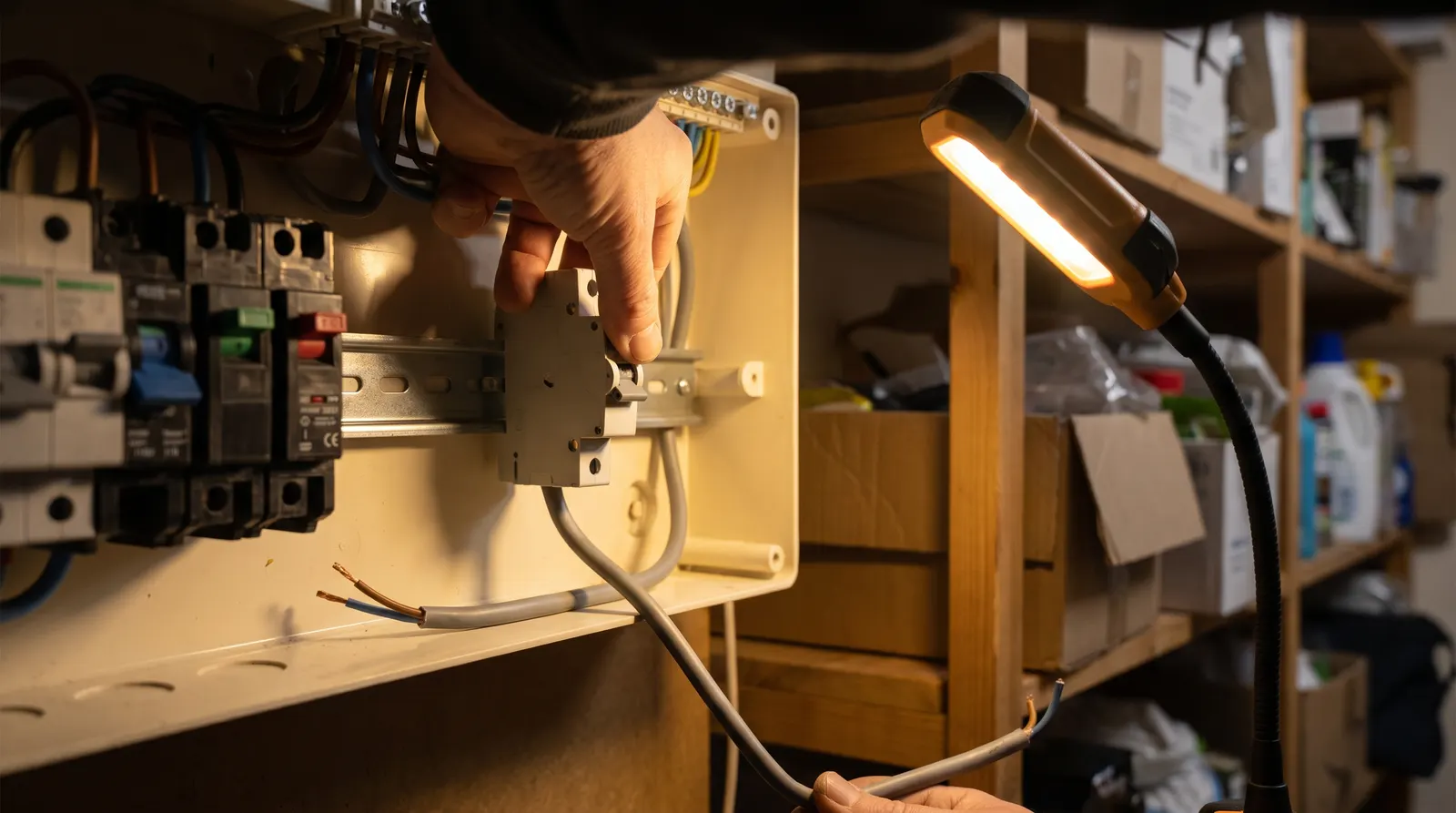
An EV charger needs its own way at the board, with its own protection. A modern board with a spare way is a straightforward addition. An older board that's already full, or one that predates the kind of protection an EV circuit needs, usually means some work at the board before the charger goes in — sometimes no more than adding a device, sometimes a case for replacing the board. We've written separately about what a consumer unit replacement costs, if that's the conversation your survey turns into.
The earthing arrangement matters more than it sounds
Properties are earthed in a few different ways, and which one yours is affects what protection an EV charging point needs to be installed safely — in some cases that means an extra earth electrode at the charger, in others the supply's own arrangement is already enough on its own. This isn't something to guess from the street or the age of the house. It's checked at the supply during the survey, and it's one of the main reasons a fixed online price for "EV charger installation" from a few photos is a guess rather than a quote.
Why the survey decides the price, not the postcode
National installers often quote a flat figure before anyone has seen the property, then add to it once a surveyor turns up and finds the board is full or the run is longer than the online form assumed. A local electrician who already knows the terraced houses, 1930s semis and converted properties round here tends to price closer to the real job the first time, because the housing stock isn't a surprise.
We install home EV chargers across London, Essex and north Kent, and if your board needs attention first, we can do that as part of the same job. Our charges page has our current rates — get in touch for a survey and we'll give you a straight figure rather than an online guess.
If you are unsure, it is always cheaper to ask than to guess. Give us a call and we will tell you straight.