
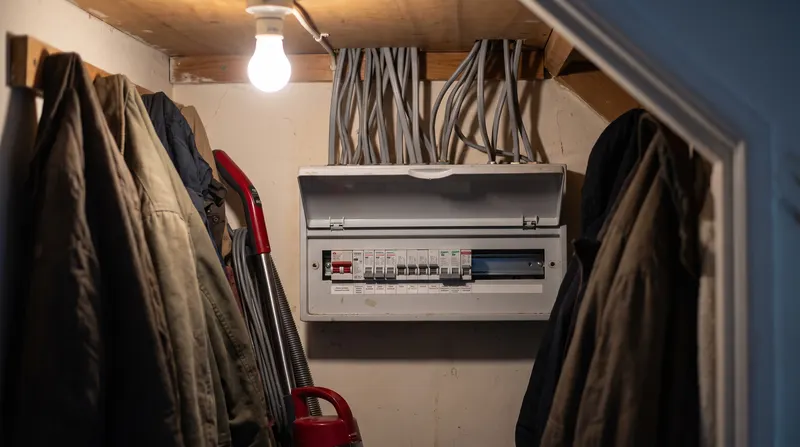
A consumer unit is the proper name for the box most people still call the fuse box — usually in a hallway cupboard or under the stairs, with a row of switches behind a plastic cover. It is where the electricity supply coming into the property splits into the separate circuits that run to each room.
What is actually inside it
- The main switch — isolates the whole supply in one go, usually a larger switch at one end of the row.
- RCDs or RCBOs — trip fast if current is leaking somewhere it shouldn't, such as through a damp cable or, worse, a person. This is what is protecting you, not just the wiring.
- MCBs — one per circuit, sized to that circuit's own cable, tripping if it is overloaded or short-circuited.
Fuse box or consumer unit — is there a difference?
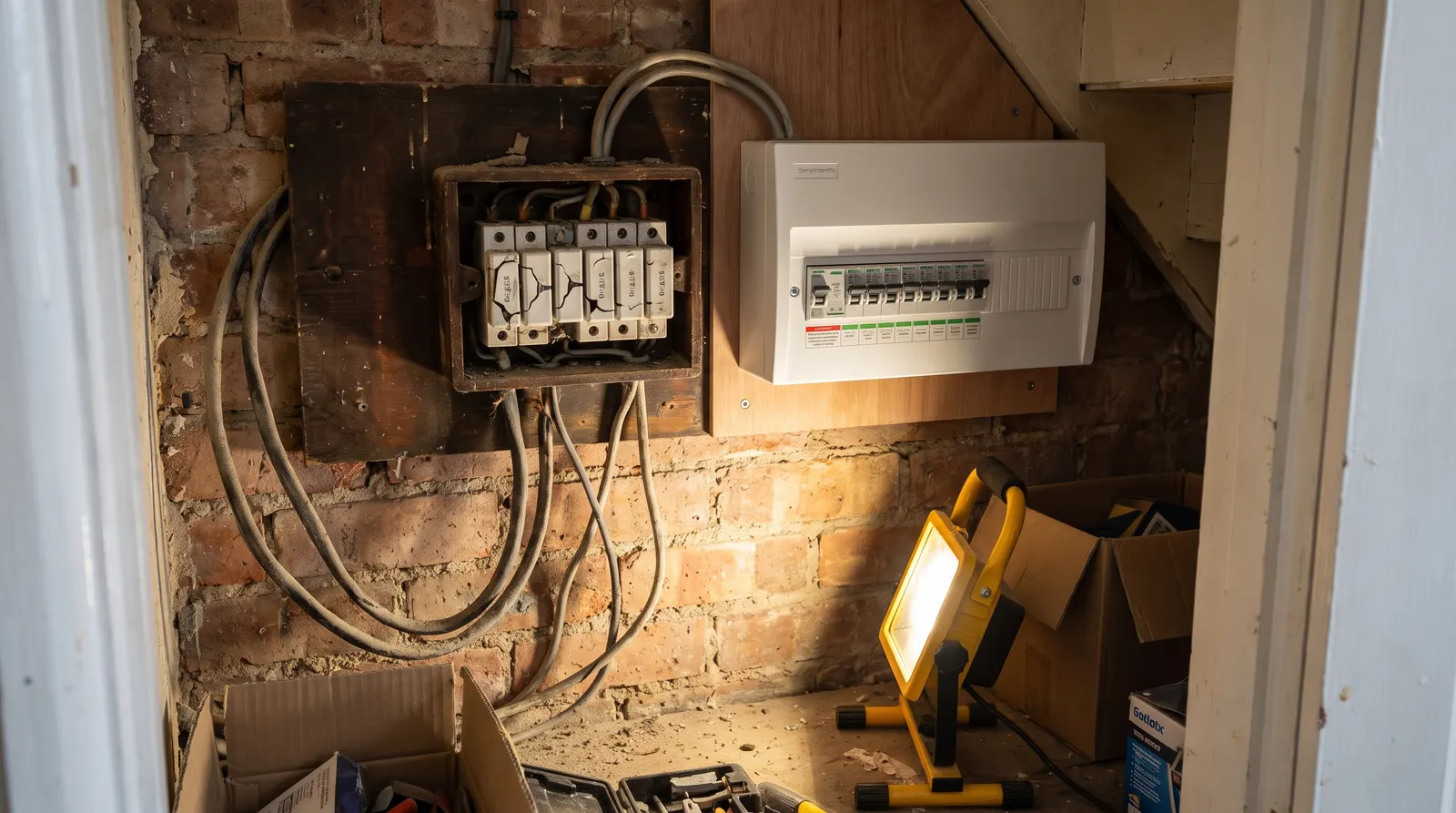
Not really, beyond the name. Older boards used rewireable fuse wire or cartridge fuses that had to be physically replaced by hand once they blew. Modern boards use circuit breakers that just need resetting with a flip of a switch, and "consumer unit" became the standard term once that changeover happened — though plenty of people, us included on the phone, still say fuse box out of habit.
What the RCD protection is actually doing
An MCB and an RCD are protecting against different things, which is why a board has both rather than one or the other. An MCB protects the cable from carrying more current than it is rated for. An RCD protects you, by comparing the current going out on the live side against what comes back on neutral — if some of it is escaping somewhere it shouldn't, such as through a fault to earth, it trips in a fraction of a second.
Reading yours without touching anything
On a modern board with an RCBO per circuit, a fault on one circuit only takes that circuit out, which makes tracing the problem straightforward. On an older board with one shared RCD covering several circuits, a fault on any one of them can take out half the house at once, which is why that layout is usually one of the first things worth upgrading. If yours still has the older rewireable fuses, or the labels have worn off entirely and nobody in the house can say what's on each way, that is usually a sign it is overdue a look.
We replace, upgrade and certify consumer units across London, Essex and north Kent.
If you are unsure, it is always cheaper to ask than to guess. Give us a call and we will tell you straight.