
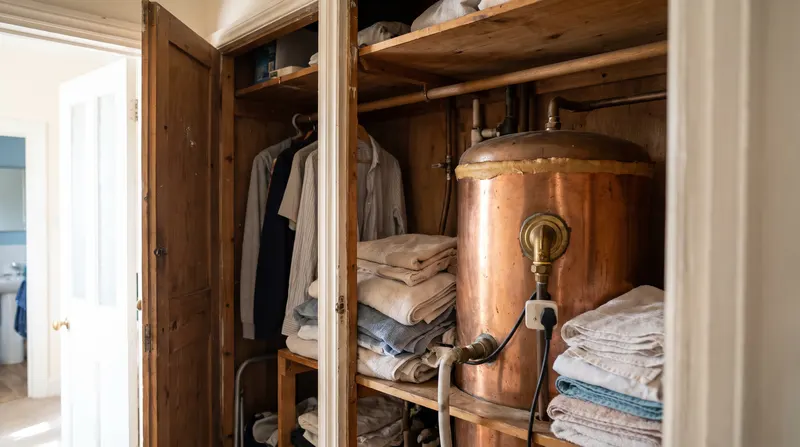
A hot water cylinder stores heated water ready to use, rather than heating it on demand the way a combi boiler does. Most cylinders in the UK are heated by the central heating boiler through an internal coil, but almost all of them also carry an immersion heater as a second, independent way of getting hot water — and in a growing number of homes with no boiler at all, the immersion heater is the only heat source there is.
Where the immersion heater sits in the cylinder
The immersion heater is an electric element that screws into the side of the cylinder and sits directly in the stored water, with its own thermostat controlling how hot it runs. Many cylinders carry two of them, usually called a dual immersion: a shorter one near the top that heats just enough water for a quick wash, and a longer one lower down that heats the whole tank. Running the top element alone costs less and heats faster when a full tank is not needed.
Backup heat source, or the only one
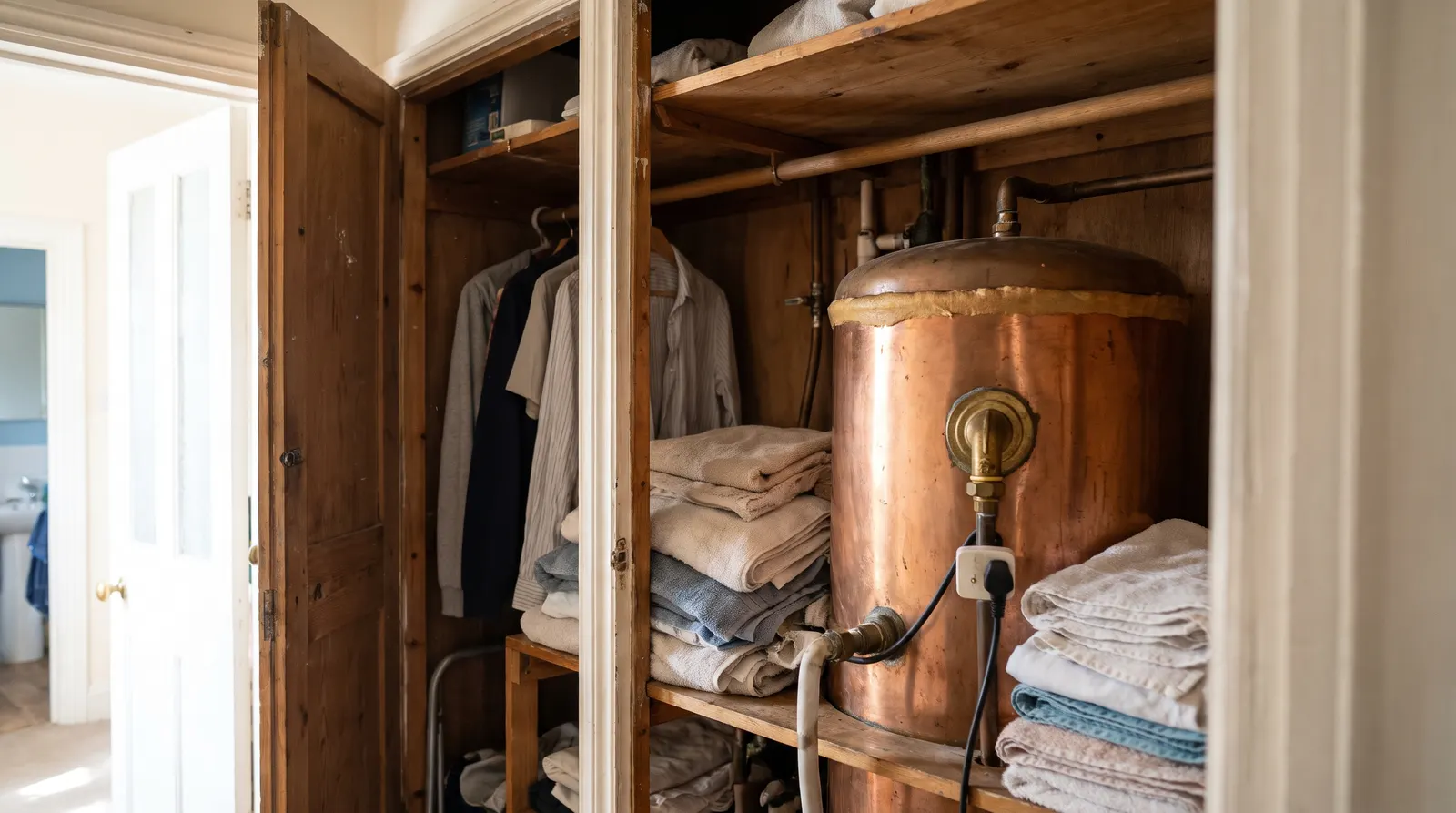
In a boiler-heated home, the immersion heater is there for the day the boiler breaks down or is being serviced, so the house is not without hot water in the meantime. In a property with no gas boiler — common in flats and in homes that have switched to electric heating — the immersion heater does all the work, usually run on a timer through the cheaper overnight hours of an off-peak tariff. Knowing which situation you have changes how much you should expect to rely on it and how often it is actually switching on.
What's electrical, and what isn't
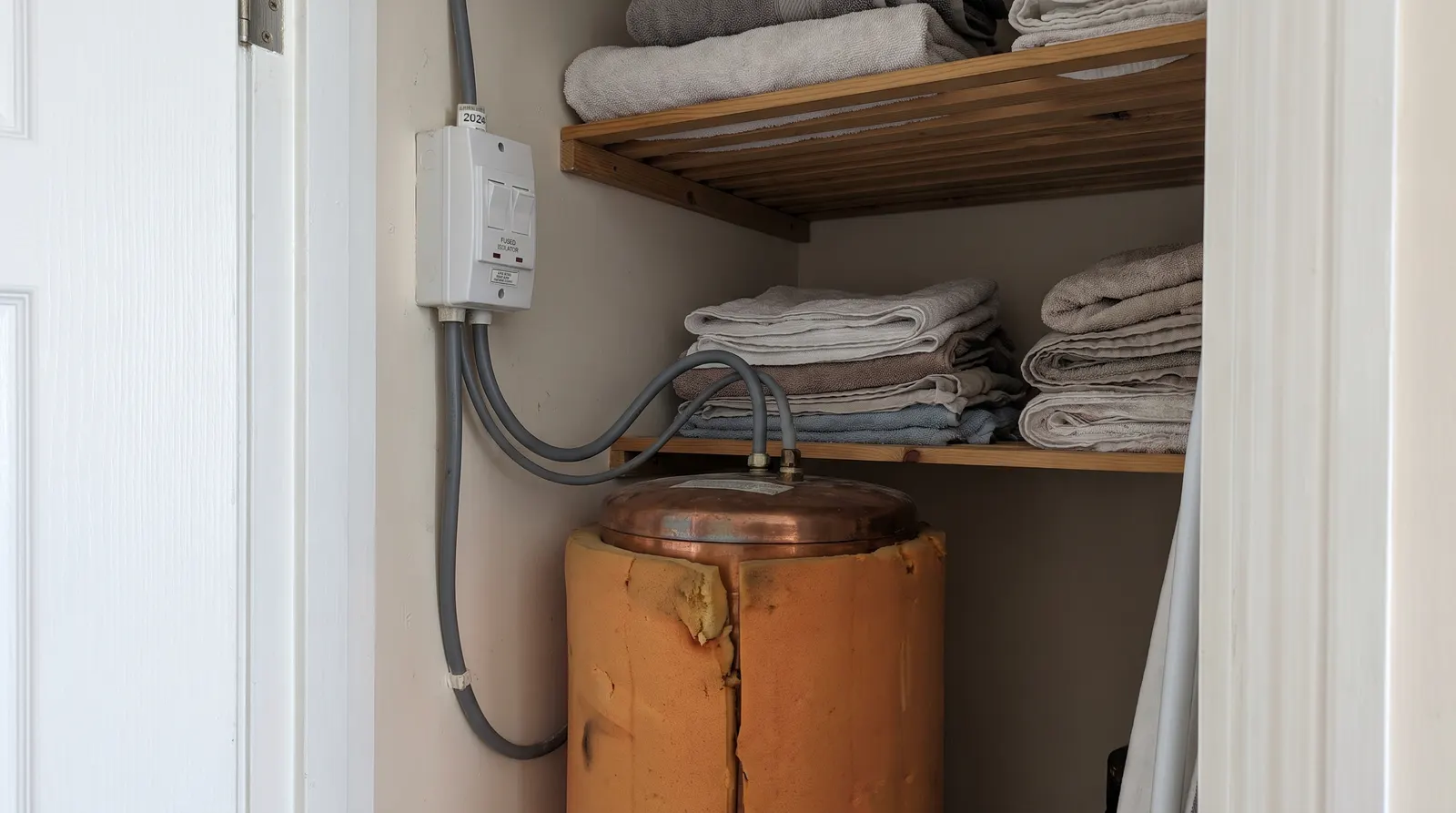
The immersion heater itself — the element, its thermostat, the switch and the circuit feeding it — is electrical work, and that is the part we isolate, test and repair. The cylinder itself, and anything to do with pipework, the expansion vessel on an unvented system, or the pressure and temperature relief valves, sits with a plumber or heating engineer instead. A cylinder that is leaking, or an unvented system that is making noise under pressure, needs that side of the trade, not an electrician.
- A dual immersion lets you heat a small amount of water quickly from the top element, or the whole tank from the lower one.
- An immersion-only cylinder with no boiler backup usually runs on a timer through off-peak hours to keep the cost down.
- The element, thermostat, switch and circuit are electrical work; the cylinder, pipework and relief valves are not.
- A tripped circuit, no heat at all, or scalding water are reasons to have the immersion side tested rather than guessed at.
We isolate, test and repair the immersion heater side of a cylinder — the element, the thermostat, the switch and the circuit feeding it — as part of general heater repair work across London, Essex and north Kent.
If you are unsure, it is always cheaper to ask than to guess. Give us a call and we will tell you straight.