
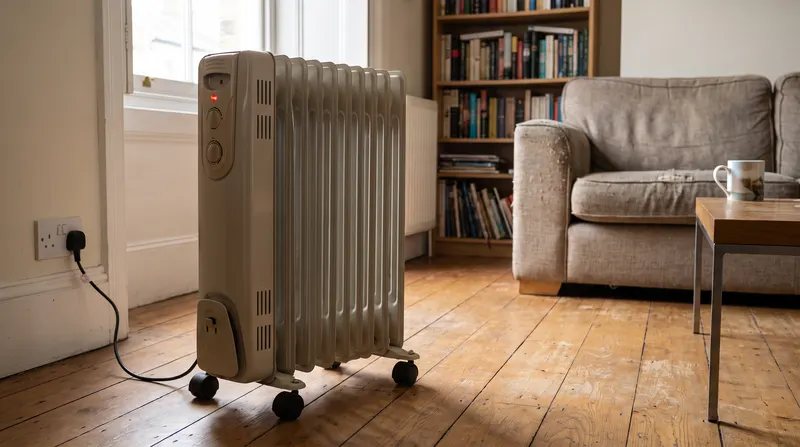
An oil-filled radiator is a sealed metal column filled with thermal fluid, usually mineral oil, warmed by an element sitting inside it. We've covered how that compares to a dry panel heater and a smart-controlled radiator elsewhere — the short version is that the oil is what lets it keep giving off heat for a while after the element switches off, rather than cooling the moment it's turned down.
Same electricity in, a different pattern of use
An oil-filled radiator does not make heat any more cheaply than a dry panel heater of the same wattage — every electric heater turns a kilowatt of electricity into a kilowatt of heat, whatever is inside the case. What the oil changes is the shape of the cycle: the element switches off sooner than a dry panel's would, because the oil keeps radiating warmth afterwards, so it can feel like it's running less than it actually is. Over a full evening the energy used works out close to the same for the same wattage and the same thermostat setting.
Unit rates move, so a specific running-cost figure here would be wrong within months. Check your own tariff against your bill or supplier app, and treat the wattage on the radiator's rating plate — not the oil inside it — as the number that actually drives the cost.
The weight and stability most people don't think about
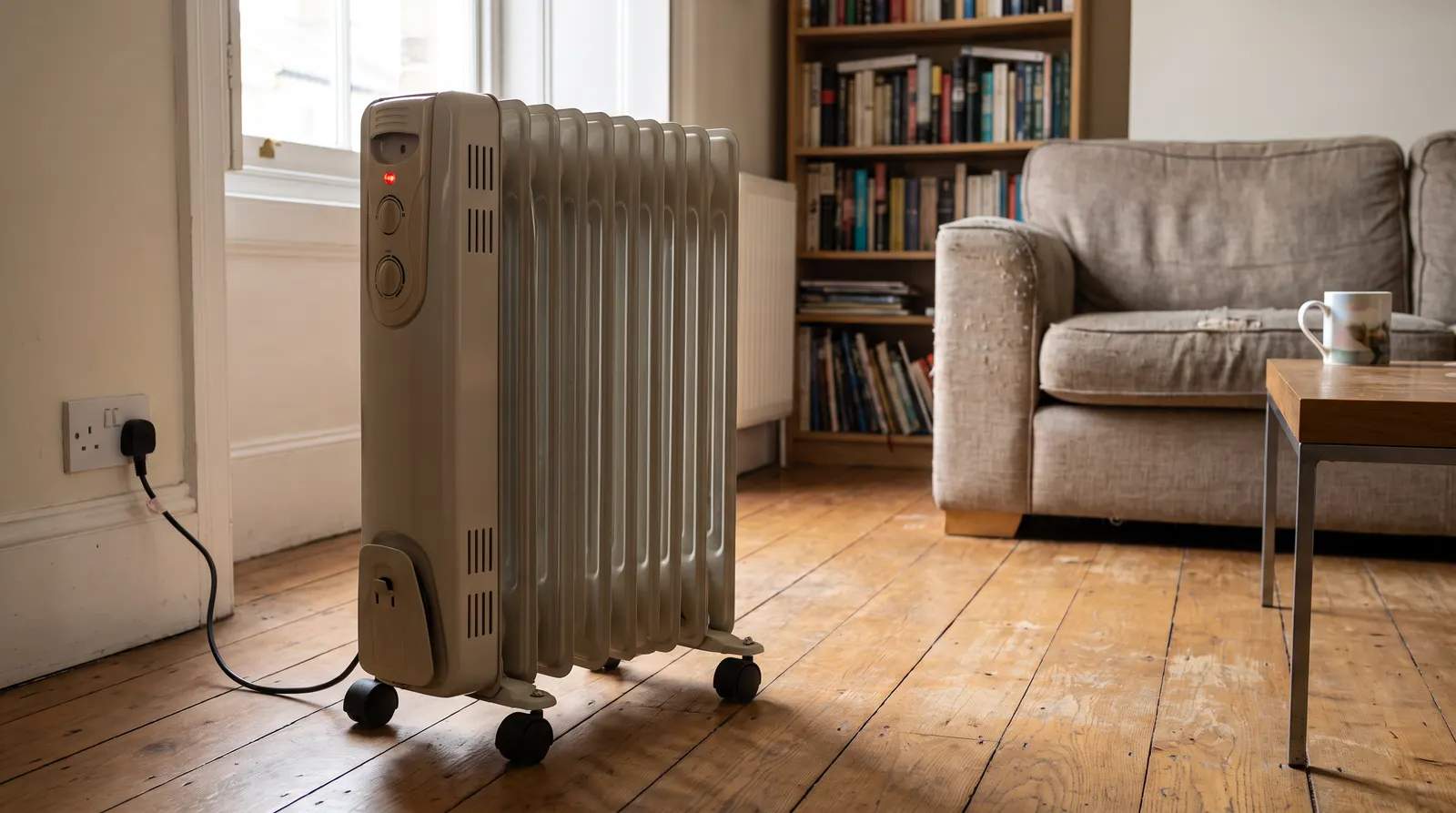
A column radiator full of oil is considerably heavier than a dry panel heater of the same output, and that weight is usually carried on a narrow set of castors. Stand it on a hard, level floor rather than a thick rug or carpet where it can rock, and keep it clear of anything it could be knocked into or tipped against, including trailing leads it could catch on.
Never pierce, drill into, or try to bleed one
The column is a sealed, pressurised unit — there's no air to bleed the way there is in a wet central heating radiator, and no reason to open it. A radiator that's leaking oil, visibly dented, or making a knocking sound from inside should be switched off and replaced rather than opened up or patched; a damaged sealed unit is not something to repair at home.
The same socket rules as any other portable heater
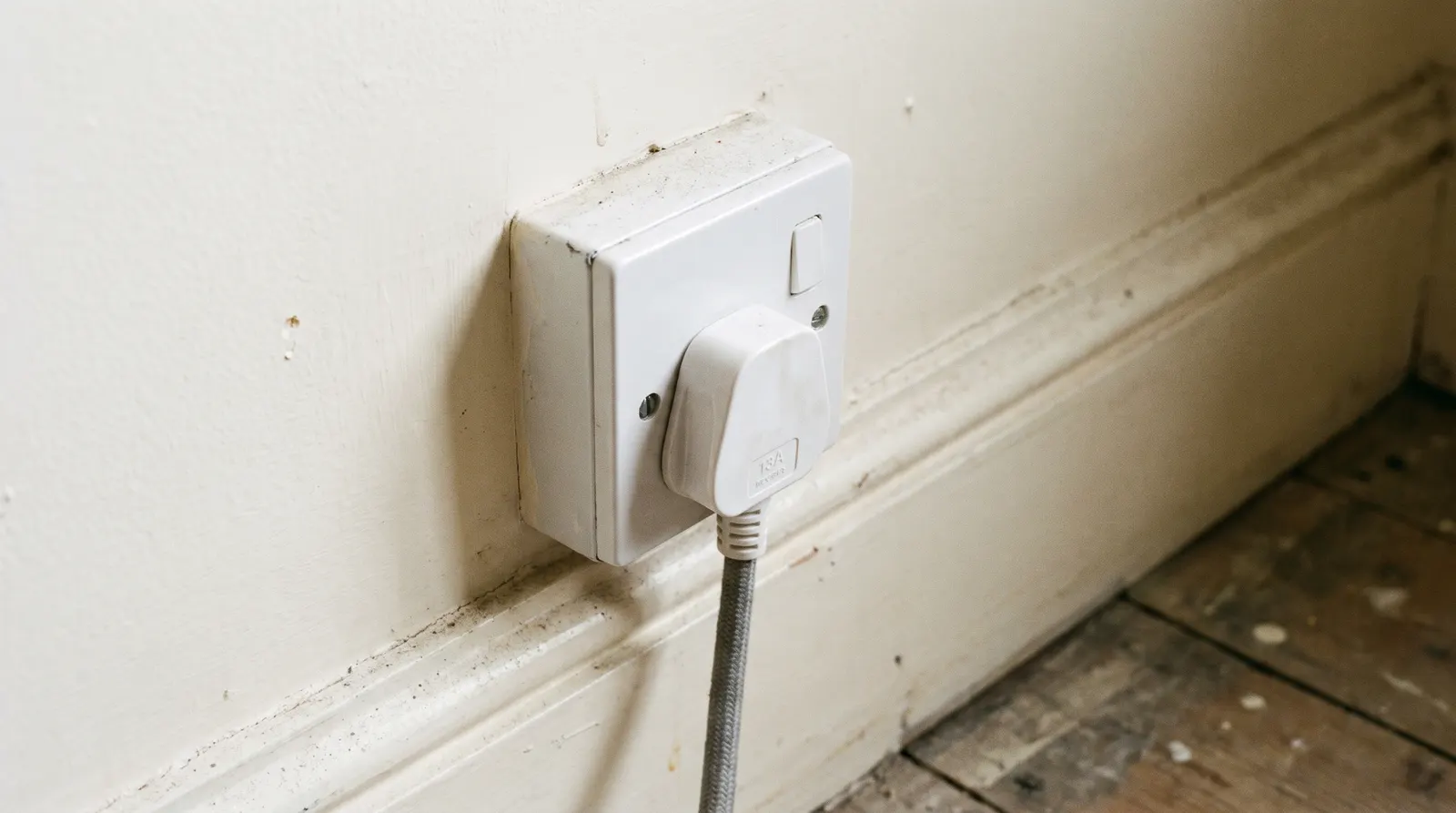
Electrically, an oil-filled radiator draws a similar current to a fan heater, so the same loading rules apply: plug it straight into a wall socket on its own, not through an extension lead or a multi-way adaptor that's already carrying something else. We've covered that overload risk in more detail for fan heaters, and a radiator run for hours at a time through a cold evening is, if anything, a heavier and more sustained load than a fan heater run in short bursts.
- Check the wattage on the rating plate, not the branding, before comparing running cost against another heater.
- Stand it on a hard, level floor, clear of rugs, trailing leads and anything it could be knocked into.
- Plug it straight into a wall socket on its own — never through an extension lead already carrying another appliance.
- Stop using it and replace it if it leaks oil, is dented, or makes a knocking sound — do not open or drill into the column.
We wire dedicated fused spurs for electric heating that's going to run for hours at a time, and we'll say plainly whether a room relying on a portable oil-filled radiator every winter would be better served by something fixed, as part of general heater repair and installation work across London, Essex and north Kent.
If you are unsure, it is always cheaper to ask than to guess. Give us a call and we will tell you straight.