
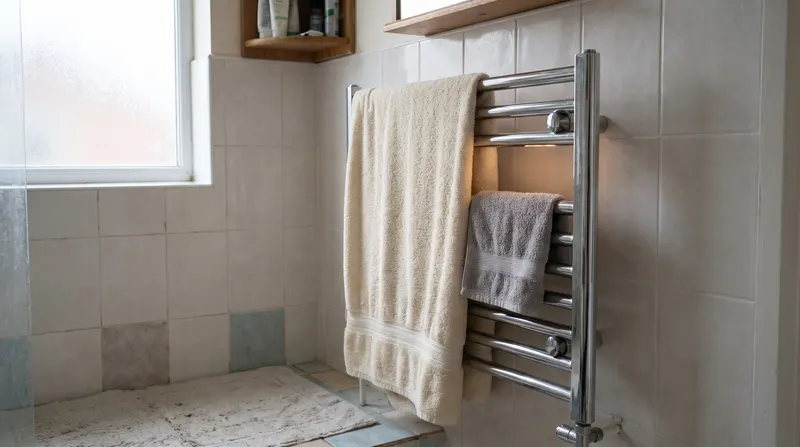
An electric towel rail is a simple appliance on its own — a heating element inside a chrome or white ladder frame. What makes it worth thinking about properly is where it hangs: almost always a bathroom, which is the one room in the house where what's allowed where is tightly controlled.
Which zone is it actually in?
We've covered the bathroom zone rules in detail separately, and they apply to a towel rail exactly as they apply to a light fitting. A rail mounted directly above or beside a bath or shower sits inside a zone, and what's allowed there depends on the fitting's IP rating, not on how it looks in the showroom. Outside the zones the rules relax, but check which zone a planned position actually falls into before assuming it's fine.
Wired in, not plugged in
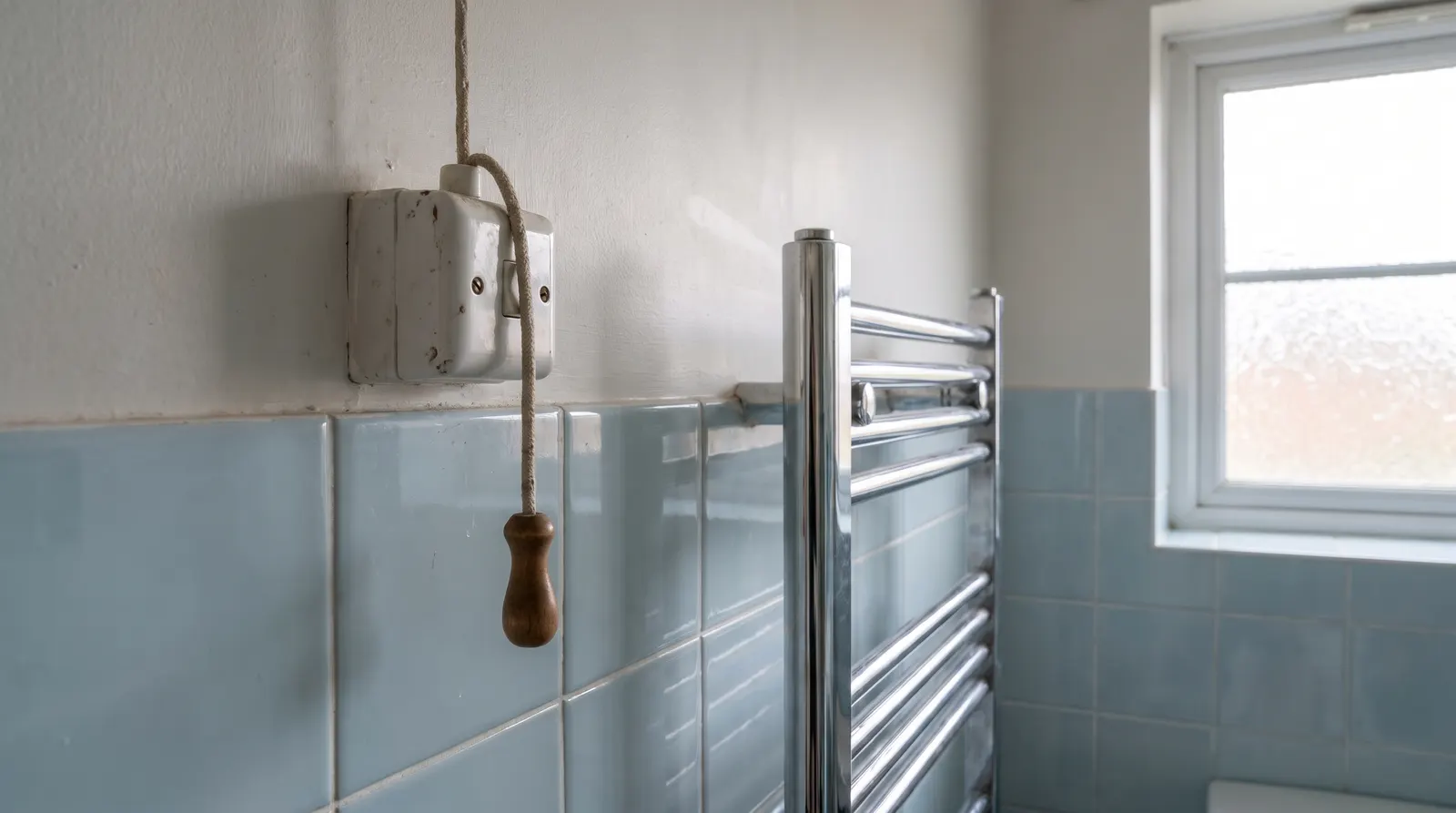
Almost every electric towel rail in a bathroom is run from a fused spur rather than a plug, for the same reason we've given for other fixed bathroom equipment: a plug near a bath or shower is awkward to isolate safely and, inside the zones, generally isn't where a socket belongs at all. Control is usually a pull cord or a switch sited outside the room, following the same logic as the pull-cord light switches we've written about — reachable with wet hands, without a switch plate anywhere near the water.
Why most come with a timer
A fair few electric towel rails run on two elements: a low-level one that can be left on to keep towels dry, and a boost element switched in for a timed spell when you actually want them warm. The timer dial doing that switching is the same basic idea we described for immersion heater timers — a mechanical or digital clock deciding when the extra element comes on, rather than it running flat out all day because nobody turned it off. Running cost is modest next to most of the other things on a bathroom circuit, and the figures that matter to your bill depend on wattage and how long it's actually left on, so check the rating plate on the rail itself and our charges page rather than a number pulled from somewhere else.
Getting the cable to it safely
The cable feeding a towel rail inside a bathroom can't just run exposed across a tiled wall through one of the zones — it needs to be chased in and protected, or routed outside the zone where that's practical. There's a minimum depth and protection standard for cable buried in a wall at all, zone or no zone; ask whoever does the work to confirm it's been met rather than taking it on trust once the tiles go back up.
- Check which zone the planned position is actually in before choosing the fitting, not after.
- A fused spur with a pull cord or remote switch, not a plug, is the normal way to connect one in a bathroom.
- If yours has a timer and it stops holding its setting, that's usually the timer unit rather than the heating element.
- Don't drape wet towels directly over a rail that's also acting as the only thing drying them — airflow matters more than contact.
We wire electric towel rails onto properly sited fused spurs and switches, in the zone they're actually allowed to sit in, as part of general bathroom electrical work across London, Essex and north Kent.
If you are unsure, it is always cheaper to ask than to guess. Give us a call and we will tell you straight.