
Guides
Electric fireplaces: installation and the spur question
By Mizan, Founder and lead engineer4 min read
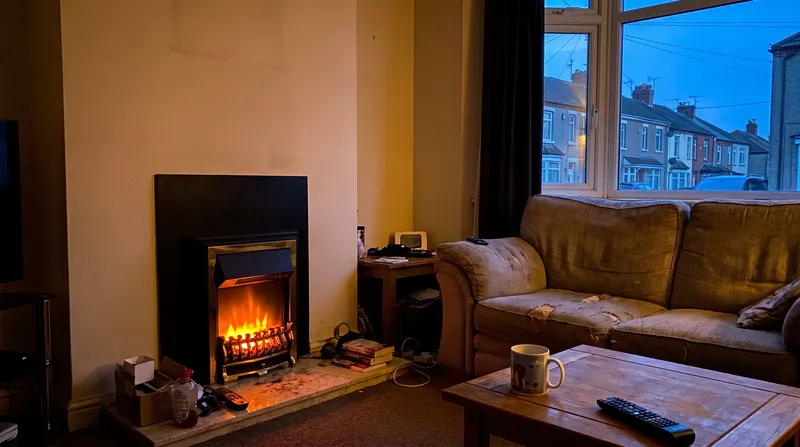
We've already written about the load a freestanding electric fire puts on a socket. An electric fireplace is a different job: a suite built into a chimney breast, recessed into a stud wall, or mounted flush against one, rather than a freestanding box you can pull out and unplug. That difference in how it sits changes how it should be connected.
Plugged in, or wired in properly?
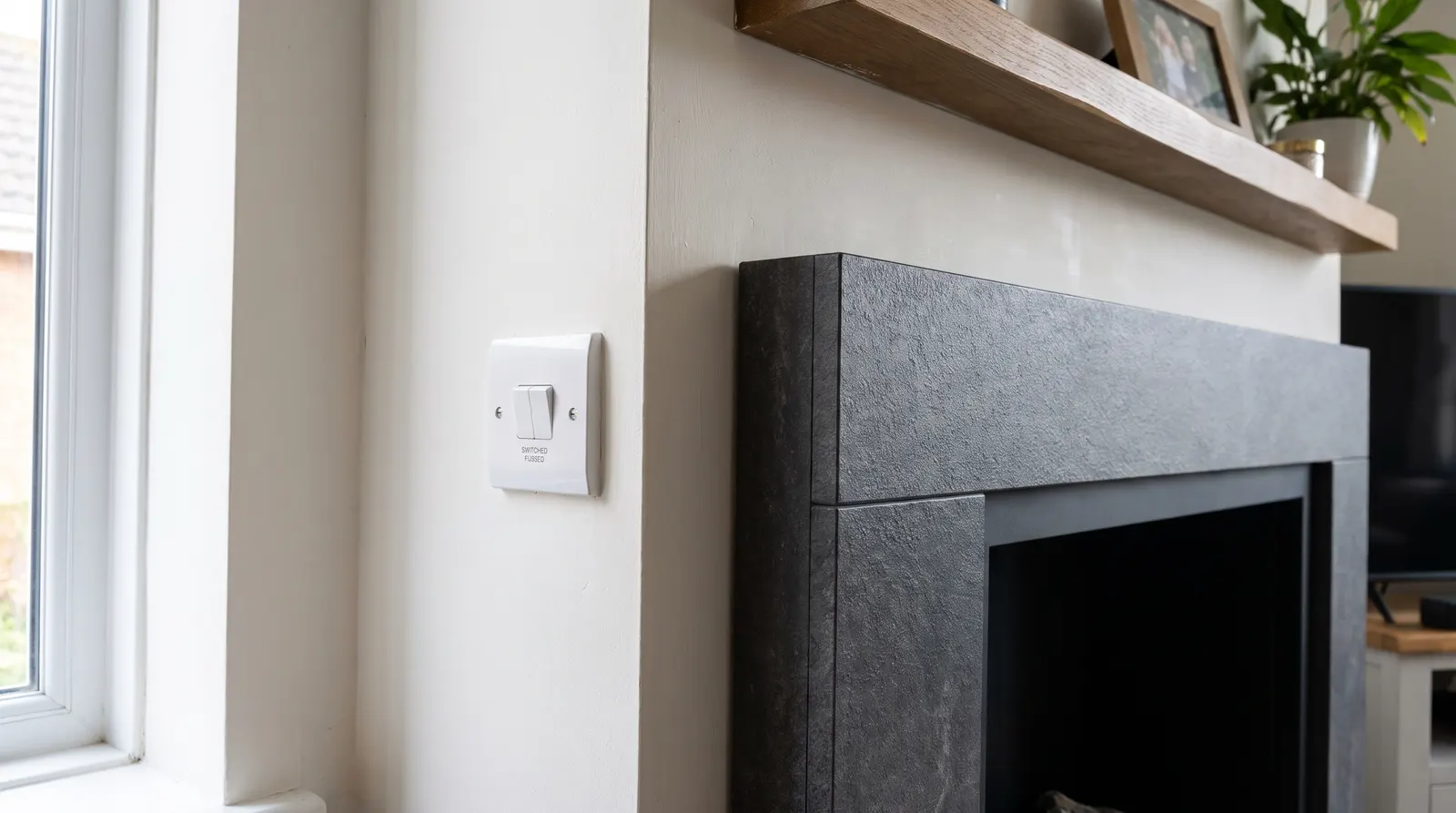
A portable electric fire standing clear of the wall on its own feet is fine on a plug, in a socket you can still see and reach. A fitted suite is not the same case. Once it's built into a chimney breast opening or mounted flush to a wall, the plug behind it stops being something you can get to — you can't isolate it without pulling the whole fireplace back out. That's the point at which it belongs on its own fused spur instead: a fixed connection with a local switch you can actually reach, sized correctly for the fireplace rather than shared with anything else on a general socket circuit.
What's actually behind it
Whether it's going into an old chimney breast or built into new stud work, what's behind the fireplace matters as much as the fireplace itself. An old flue that hasn't been properly capped off is worth checking before anything gets wired in near it. Cabling needs a safe route that doesn't rest against anything that warms up, and a wall-hung suite needs a fixing that can actually carry its weight — into a timber or metal stud, not just into plasterboard and filler.
The load question is the same as any other fire
Fitting one into a chimney breast doesn't change what it draws. Most electric fireplaces sit in the same rough range as the freestanding fire we've covered separately — comfortably within what a dedicated circuit can carry on its own, less comfortable if it's sharing a circuit that's already carrying something else heavy. The fused spur makes the connection permanent and correctly rated; it doesn't change the loading question, so it's still worth knowing what else that circuit carries before one goes in.
Whether it needs notifying
Running a new circuit or fitting a fused spur for a fixed fireplace is the kind of fixed electrical work that Part P can apply to, and whether a particular job needs notifying depends on where in the house it is and exactly what's being done. Don't assume either way — ask whoever does the work to tell you plainly before they start, and get the right certificate at the end regardless of the answer.
Clearance still applies, flame effect or not
- Keep curtains, furniture and anything that can burn clear of the front and sides, even on a flame-effect-only setting — many suites have a genuine heat element that runs separately from the visual effect.
- Check a hearth-mounted or inset suite is actually secured to the wall it sits in, not just resting in the opening.
- Have the fused spur switch somewhere you can reach without moving furniture, not tucked behind the fireplace itself.
- If an old chimney hasn't been checked and capped before a fireplace went in, get that looked at — don't assume a previous owner did it.
We fit the fused spurs and local isolators that a built-in electric fireplace needs, and we'll tell you plainly if what's behind the chimney breast needs sorting out first, as part of general electrical work across London, Essex and north Kent.
If you are unsure, it is always cheaper to ask than to guess. Give us a call and we will tell you straight.