
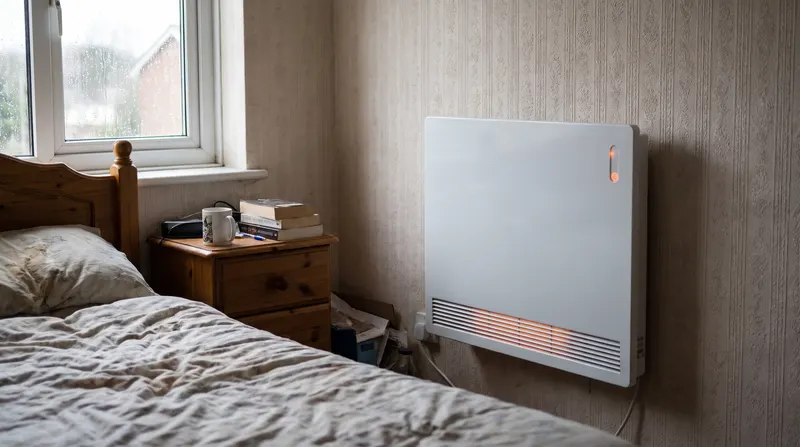
Electric heaters cost more to run than gas central heating per unit of heat delivered, on almost any tariff — that part is a straightforward fact of how the two fuels are priced, not something that changes by brand or model. What varies enormously is how much that difference actually costs you in practice, and that comes down to wattage, how long the heater runs, and how well it's controlled rather than anything printed on the box.
Every electric heater makes heat the same way
A fan heater, an oil-filled radiator, a panel heater and a halogen heater all do the same basic thing: they pass current through a resistance and that resistance gets hot. None of them is more efficient at that conversion than another — a kilowatt in is a kilowatt of heat out, whatever shape the heater is. We've covered the type-by-type differences properly for electric radiators specifically, and the same logic holds for portable heaters generally.
So what actually changes the bill
- Wattage — a 2kW heater run for the same length of time costs roughly twice what a 1kW heater costs, regardless of type.
- Hours run — a heater left on because nobody remembered to turn it off is the single biggest driver of a heater bill coming in high.
- Thermostatic control — a heater that switches itself off once the room is warm costs less than one left on a fixed setting and ignored.
- Room size and insulation — the same heater working against draughts and heat loss runs for longer to achieve the same comfort.
Control is where the real saving sits
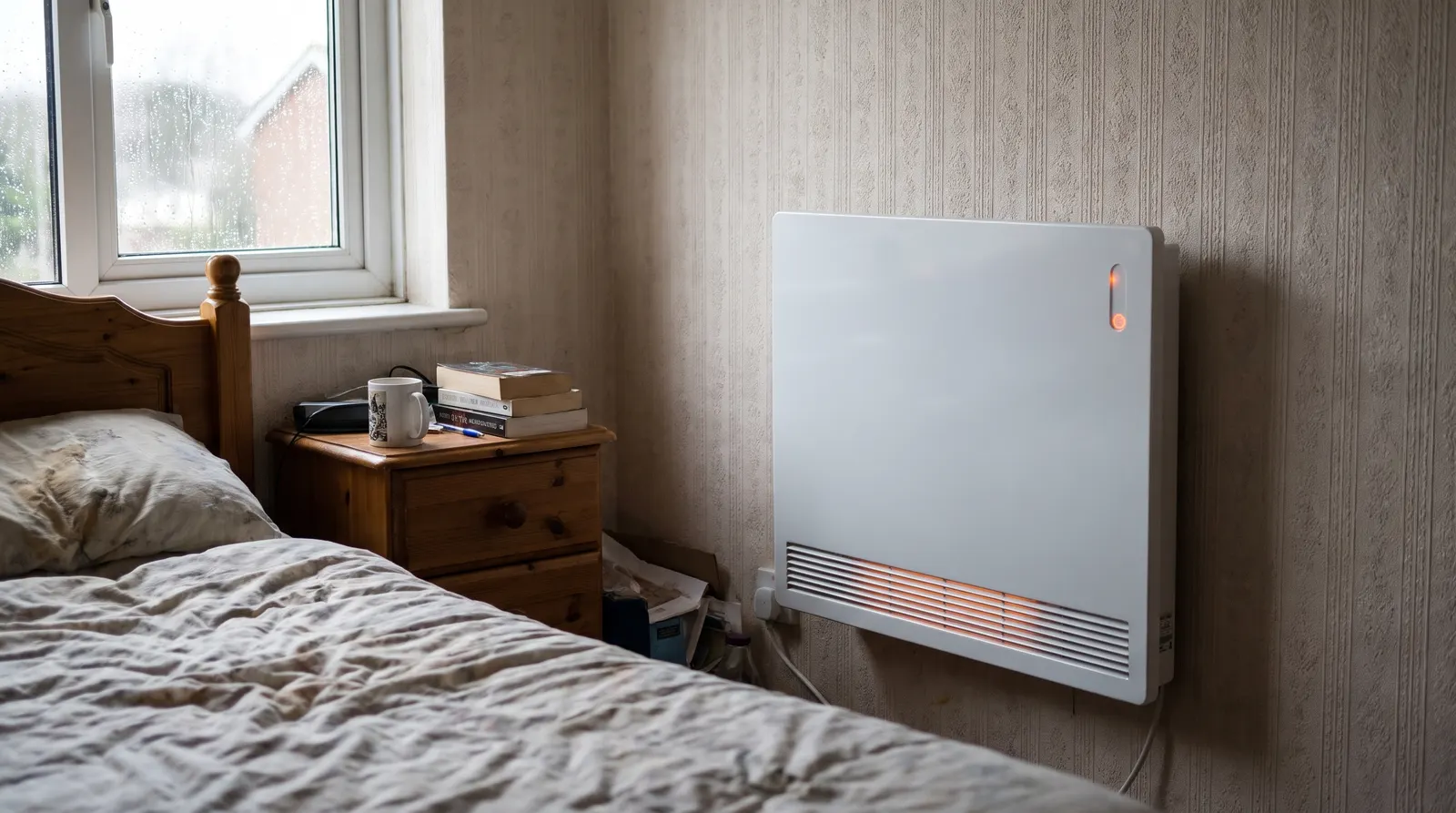
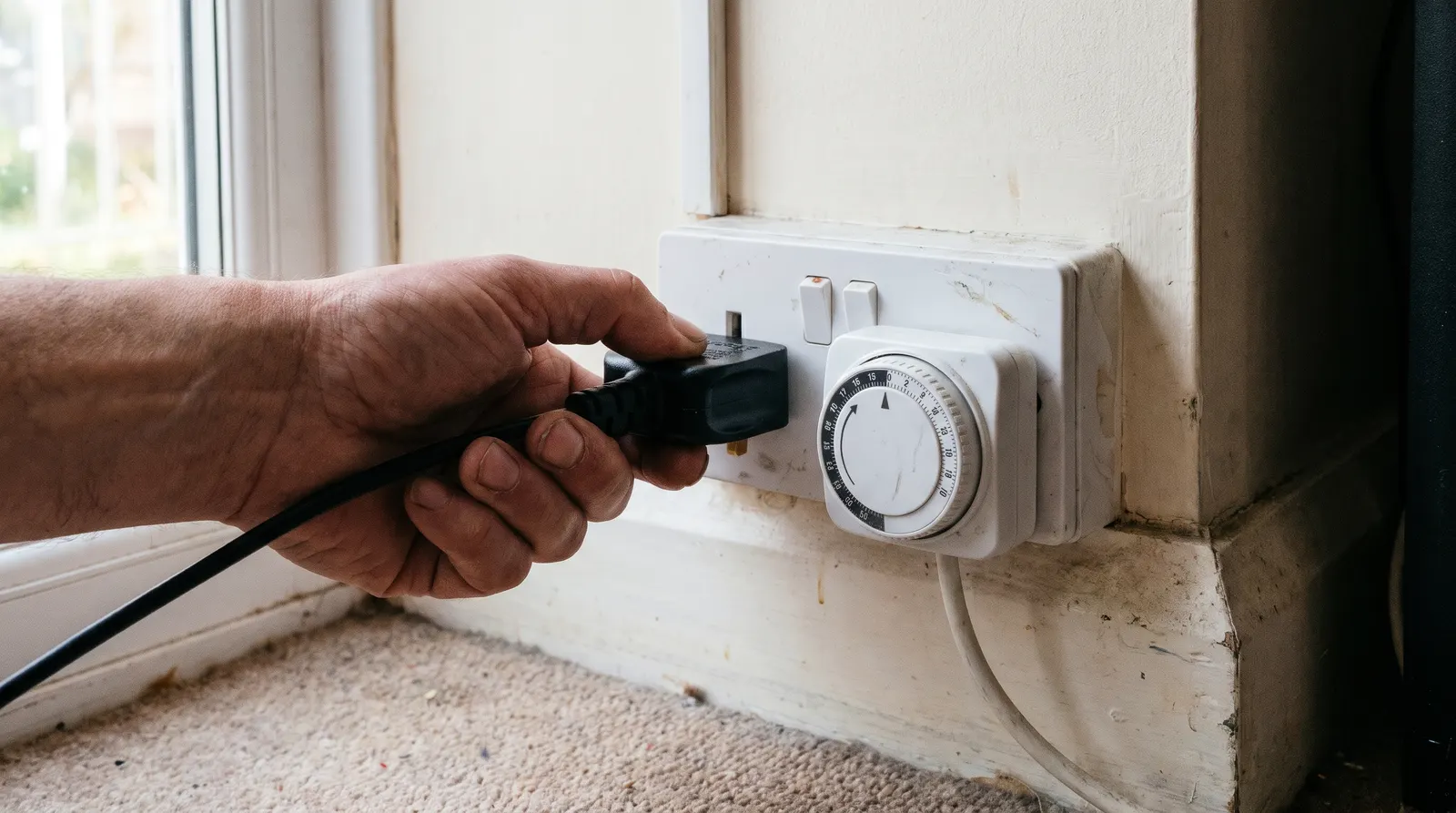
Two heaters of identical wattage can cost very different amounts to run depending on how closely their output matches what the room actually needs. A heater with a proper room thermostat cycles on and off to hold a temperature; one with a single on/off dial runs flat out until someone switches it off by hand, often well past the point the room was comfortable. A timer plug on an older heater with no thermostat of its own is a cheap way to close some of that gap.
Comparing against gas without inventing a number
Unit rates for electricity and gas move, and quoting a specific pence-per-unit figure here would be wrong within months. The honest version is this: check your own tariff on your latest bill or your supplier's app, and compare it against what the same heat would cost from your gas system if you have one. For most households the gap is real but not enormous for occasional, well-controlled use of one room — and it grows quickly if a heater is used as a substitute for fixing a cold room properly, or left running longer than it needs to.
We wire in dedicated fused spurs for fixed electric heating, and fit the sockets and timers that make a portable one cheaper to run properly, as part of general electrical work across London, Essex and north Kent. If a room is relying on a portable heater running for hours every day, that's worth a conversation about whether something fixed would actually cost less — have a look at our storage heater guide if that's the system already in the house.
If you are unsure, it is always cheaper to ask than to guess. Give us a call and we will tell you straight.