
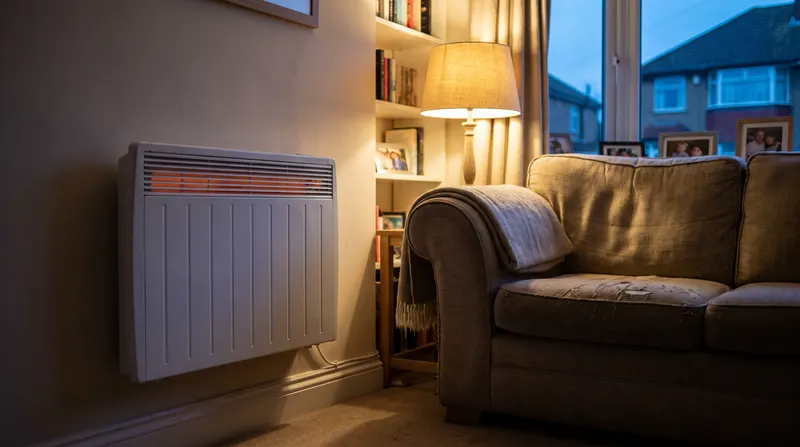
An electric radiator looks like the radiator already on your wall, but it has nothing to do with your boiler or your pipework. It is a standalone heater — usually a flat panel or an oil-filled column — that plugs in or wires into a fused spur and makes its own heat on the spot. That difference is the honest starting point, because most of what gets oversold about electric radiators comes from people comparing them to gas central heating as if the two cost the same to run.
Same electricity, same cost to make heat
Every electric radiator, whatever the branding on the box, turns electricity into heat by resistance heating — there is no model that does this more cheaply than another per unit of electricity used. A oil-filled column and a thin dry panel heater costing twice as much both convert a kilowatt into a kilowatt of heat. What differs between them is how well they hold and release that heat, and how precisely they're controlled, not the basic conversion rate.
Against gas central heating, the comparison is straightforward and not flattering to electric radiators: electricity costs more per unit of heat delivered than gas does, on almost any tariff. That is the trade a buyer is actually making — usually in exchange for not having to extend a wet heating system into a room, not for a cheaper bill.
Oil-filled, dry panel, or smart-controlled
An oil-filled radiator heats a sealed reservoir of oil, which keeps giving off warmth for a while after the element switches off — slower to respond, but it holds its heat between cycles rather like a storage heater does overnight. A dry panel heater has no fluid to heat first, so it responds faster and cools faster too, which suits a room used in short bursts rather than one kept warm all day.

Smart-controlled models add scheduling, a proper thermostat and sometimes app control instead of a single on/off dial, which closes most of the gap between a unit left running on a guess and one that only heats the room when it's actually needed. That control is where the real saving over an old plug-in heater usually comes from, not the fact that it calls itself a radiator rather than a heater.
Where they genuinely make sense
Electric radiators suit a room added after the gas system was designed — a loft conversion, a garden room, a conservatory — where extending the pipework would mean more disruption than the room justifies. They also suit a room used occasionally rather than daily, where the running cost of short bursts of electric heat is less than the cost of keeping a boiler-fed zone warm for a room that's empty most of the time.
They make far less sense as a wholesale replacement for working gas central heating across a whole house, where the running-cost gap against gas adds up room by room, day after day.
- A hardwired radiator on its own fused spur draws current more safely than several plugged into one socket or extension lead.
- Check the wattage against what the circuit it's on is already carrying — an extension heating two or three rooms is a common way a circuit ends up overloaded.
- A thermostat that reads the room, not just the radiator's own surface temperature, heats more accurately and wastes less.
- Keep the radiator clear of curtains and furniture on both sides, not just the front — the back of a panel heater gets hot too.
We wire in electric radiators on their own fused spurs as part of general heater repair and installation work across London, Essex and north Kent, and we'll say plainly if a room is better served by extending the wet system than by adding another electric heater to it. We covered the same honest running-cost question for storage heaters separately, if that's the comparison you're actually trying to make.
If you are unsure, it is always cheaper to ask than to guess. Give us a call and we will tell you straight.