
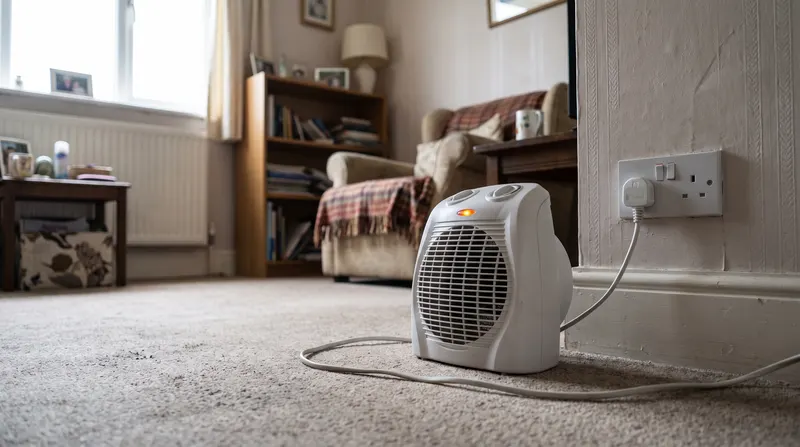
A fan heater is a simple appliance — a heating element and a fan to push the warm air out — and that simplicity is exactly why it gets treated carelessly. Most fan heater incidents come down to the same small number of avoidable habits: where it's placed, what it's plugged into, and how long it's left running unattended.
A small plug carrying a lot of current
Most portable fan heaters draw close to the maximum a standard 13A socket is rated for, which is a lot for a single appliance on its own, let alone shared with anything else. Plugging a fan heater into an extension lead or a multi-way adaptor that's already carrying other appliances is one of the quickest ways to overload that circuit, and it's worth reading what actually happens when a breaker keeps tripping before assuming a reset is the whole fix.
A fan heater on its own, plugged straight into a wall socket, is the safest way to run one. Daisy-chaining it through an extension lead to reach a socket that's further away is a sign the room needs a socket somewhere more sensible, not a reason to run the heater through a lead rated for less than it draws.
Keep it clear on every side
A fan heater needs clear air on all sides to work safely, not just space in front of the vent. Curtains, bedding, towels and clothes left to dry nearby are a genuinely common cause of house fires involving portable heaters, because fabric close enough to catch warm air can end up close enough to scorch or ignite. Nothing should be draped on or leant against a fan heater, ever, however briefly.
Bathrooms are a different question entirely
An ordinary portable fan heater is not built for a bathroom. The zone rules that govern what electrical equipment can go where in a bathroom exist precisely because water and mains electricity close together are dangerous, and a standard fan heater carried in from another room to take the chill off is exactly the kind of use those rules are written against. If a bathroom genuinely needs heating, that's a job for a fixed, properly rated heater installed in the right zone — not a portable one plugged in for the evening.
- Never leave a fan heater running in a room with nobody in it, and never overnight.
- Check the plug and cable for warmth or discolouration after use — either is a reason to stop using it and have it looked at, not a reason to keep going.
- A heater that trips the circuit more than once is telling you something; don't keep resetting the same breaker and hoping.
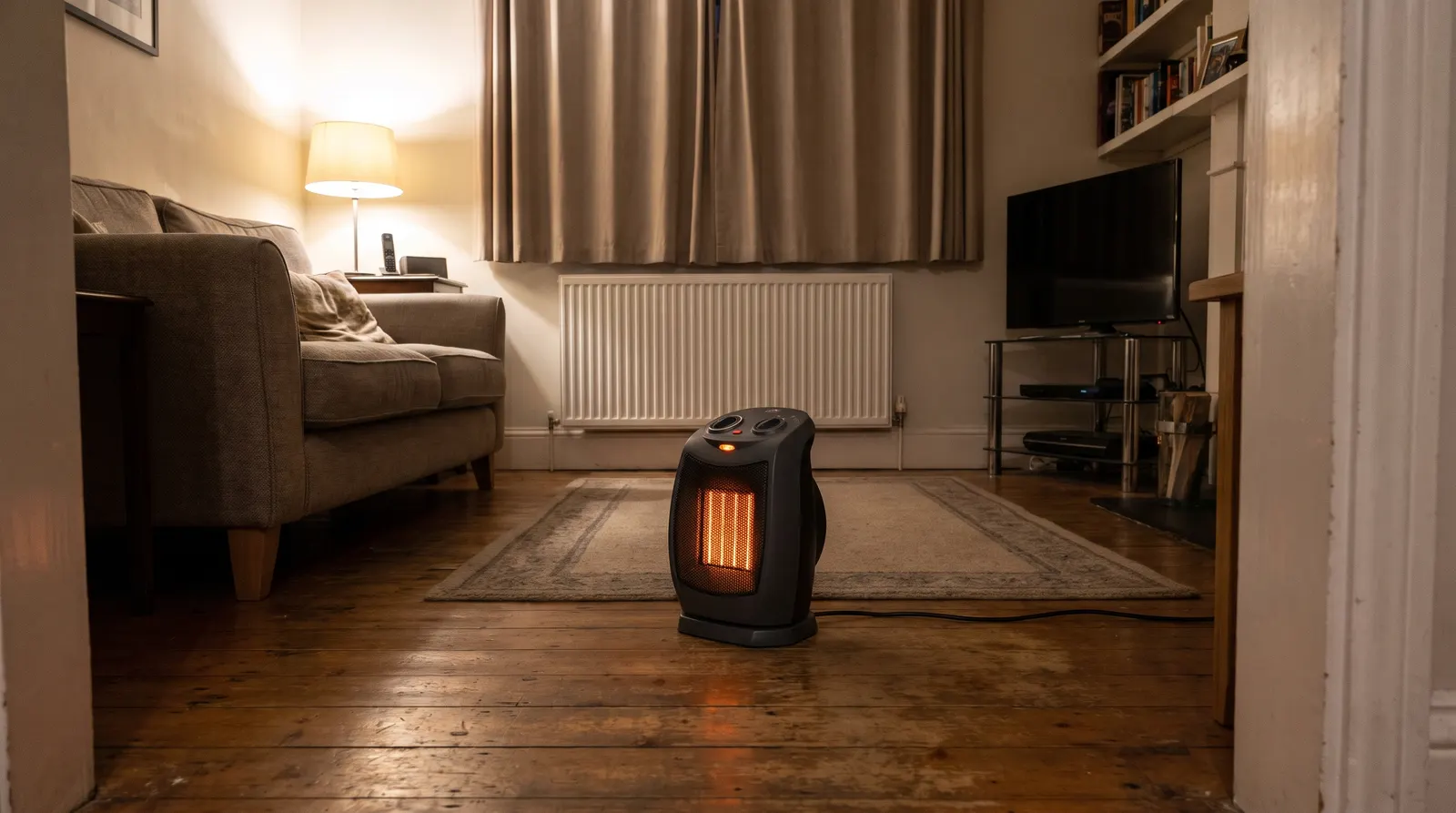
- Stand it on a hard, level, stable floor — never on carpet, a rug, or anywhere it could be knocked over.
We fit fixed heating and the sockets and spurs that supply it as part of general electrical work across London, Essex and north Kent, and we're happy to look at a room that's relying on a portable heater and say honestly whether something fixed and safer would serve it better.
If you are unsure, it is always cheaper to ask than to guess. Give us a call and we will tell you straight.