
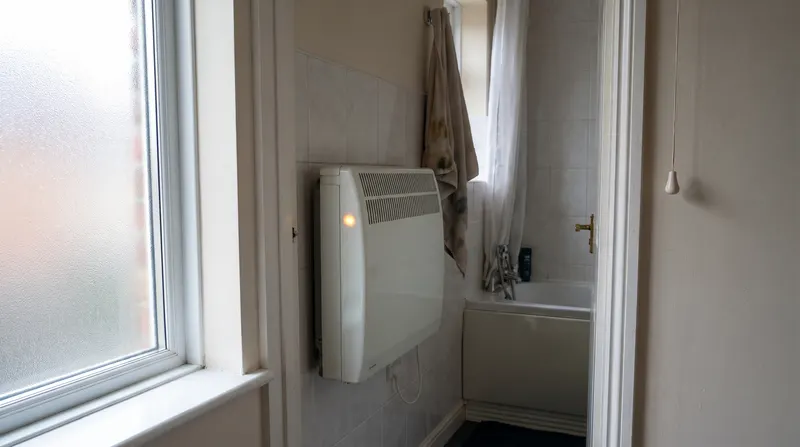
An electric bathroom radiator is not just a towel rail's bigger cousin. A towel rail is mainly there to dry towels, with warming the room as a side effect. A full-size electric radiator is often fitted to actually heat the bathroom — sometimes as the only heating in the room — and that bigger job tends to mean a bigger element, and a heavier load on whatever circuit it ends up on.
The zone rules apply the same way
We've covered the bathroom zones in detail separately, and nothing about them changes because the appliance is bigger. A radiator mounted inside Zone 1, above or beside a bath or shower, still needs the fitting and its wiring rated for that zone. The size of the heater does not buy it an exception — if anything, a radiator with a larger metal case warrants a careful look at where it actually sits relative to the zones before it goes on the wall.
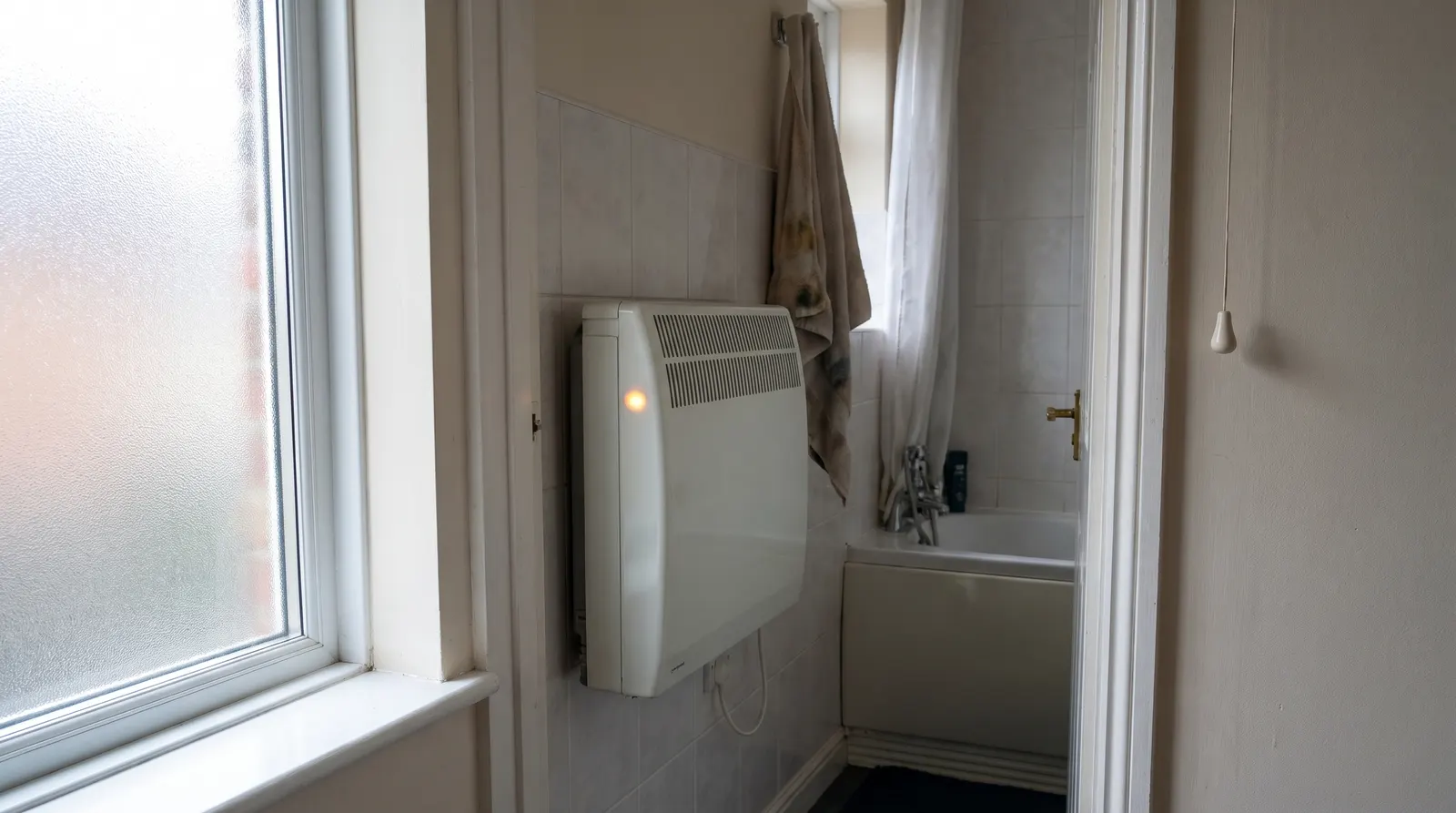
Why it goes on a fused spur, not a plug
Like the towel rails we've written about, an electric bathroom radiator is almost always wired to a fused spur rather than plugged into a socket, for the same reason: a socket is awkward to isolate safely near a bath or shower, and inside the zones themselves a socket generally has no business being there at all. Control is typically a pull cord or a switch sited just outside the room, following the same logic as the pull-cord light switches already common in bathrooms.
Check what else is on that circuit
A small towel rail can often share headroom on a circuit more comfortably than a full-size radiator putting out real heat. Before a radiator goes onto an existing fused spur that was sized for something smaller, it is worth having the circuit it will actually run from checked rather than assuming any spare spur in the room will do.
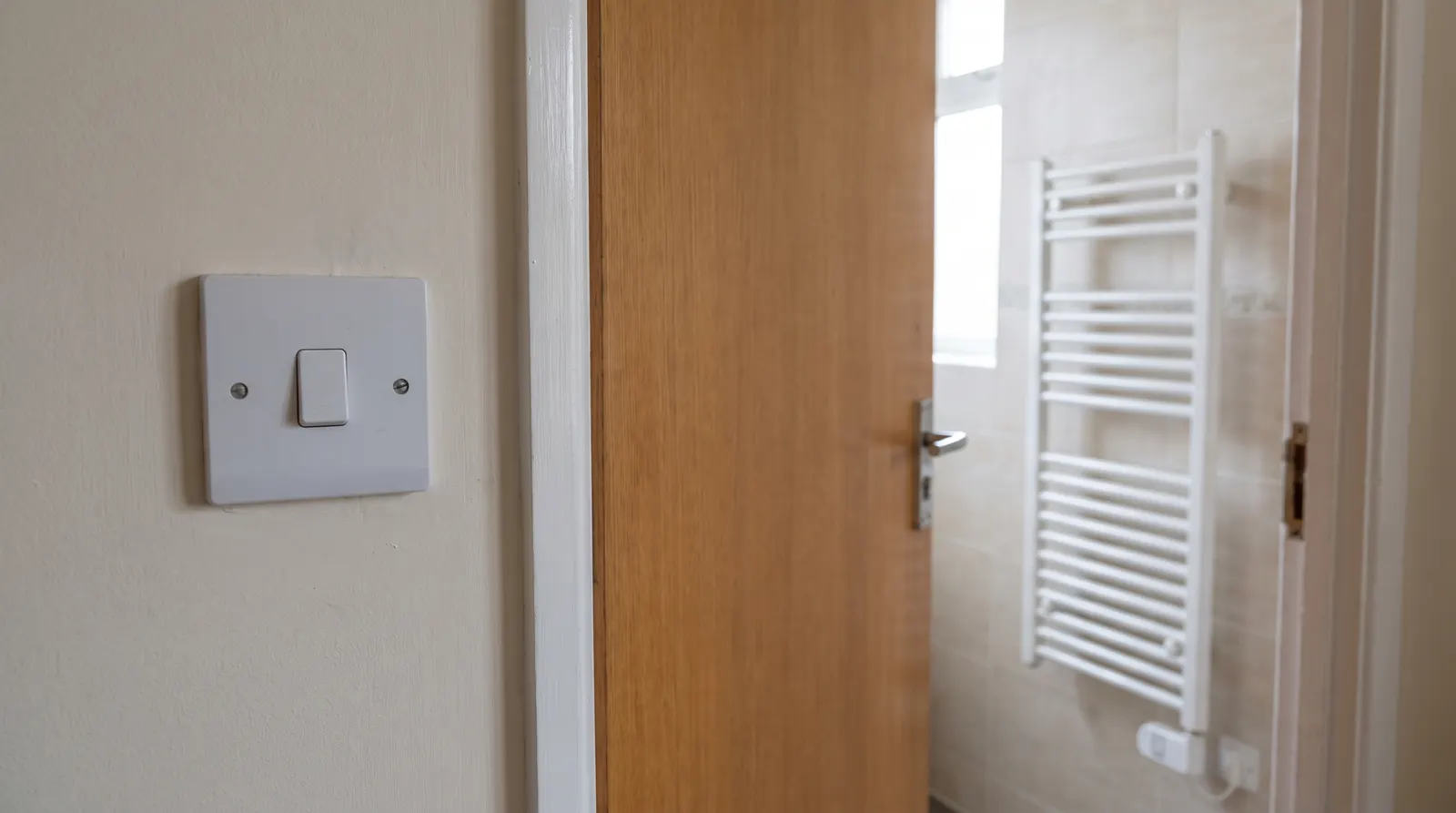
Running cost and the thermostat doing the work
We've gone through the honest running-cost comparison for electric radiators generally elsewhere, and a bathroom unit follows the same rules: the thermostat deciding how often the element fires matters more to your bill than the radiator's style or finish. A programmable or smart thermostat that only heats the room when someone is actually using it tends to cost less to run than one left on a fixed setting all day.
- Check which zone the planned position is actually in before choosing the radiator, not after.
- A fused spur with a pull cord or remote switch, not a plug, is the normal way to connect one in a bathroom.
- Have the circuit checked before putting a bigger radiator onto a spur that was sized for a smaller appliance.
- If the wall around the radiator or its switch ever feels warm, that is not normal — stop using it and get it looked at.
We fit and wire electric bathroom radiators onto properly sited fused spurs, in the zone they're actually allowed to sit in, as part of general bathroom electrical work across London, Essex and north Kent.
If you are unsure, it is always cheaper to ask than to guess. Give us a call and we will tell you straight.