
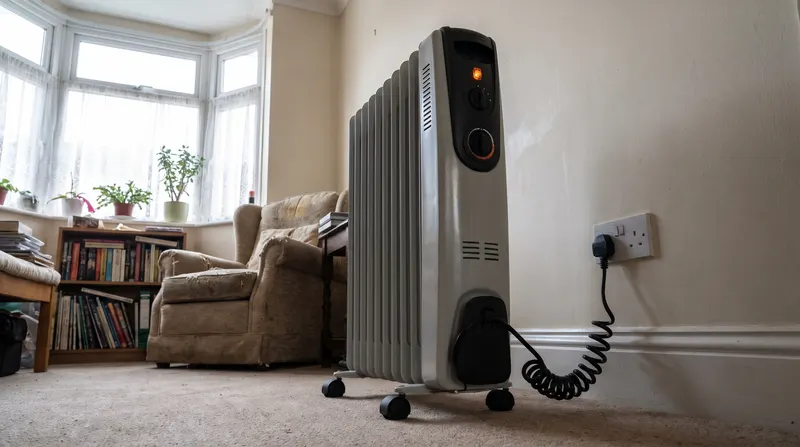
A plug-in electric radiator — oil-filled, panel, or smart-controlled, it makes no difference to the electrics — is one of the heaviest ordinary loads you can put through a standard 13A socket, often close to the socket's full rating on its own. That's manageable for one radiator in one room. It becomes a genuine risk once a cold week has two or three running around the house at the same time, each one drawing close to the maximum, often on circuits that were never designed to carry that much continuous heat.
Where the maths actually catches people out
A single radiator plugged into its own socket is rarely the problem. The risk builds when several sockets on the same circuit are each carrying a radiator, or when one radiator is run through an extension lead that is already carrying something else, such as a lamp, a phone charger, or another heater. The socket itself can usually take it; the lead, the circuit, or the connection behind an old or loose faceplate is where the strain actually shows up.
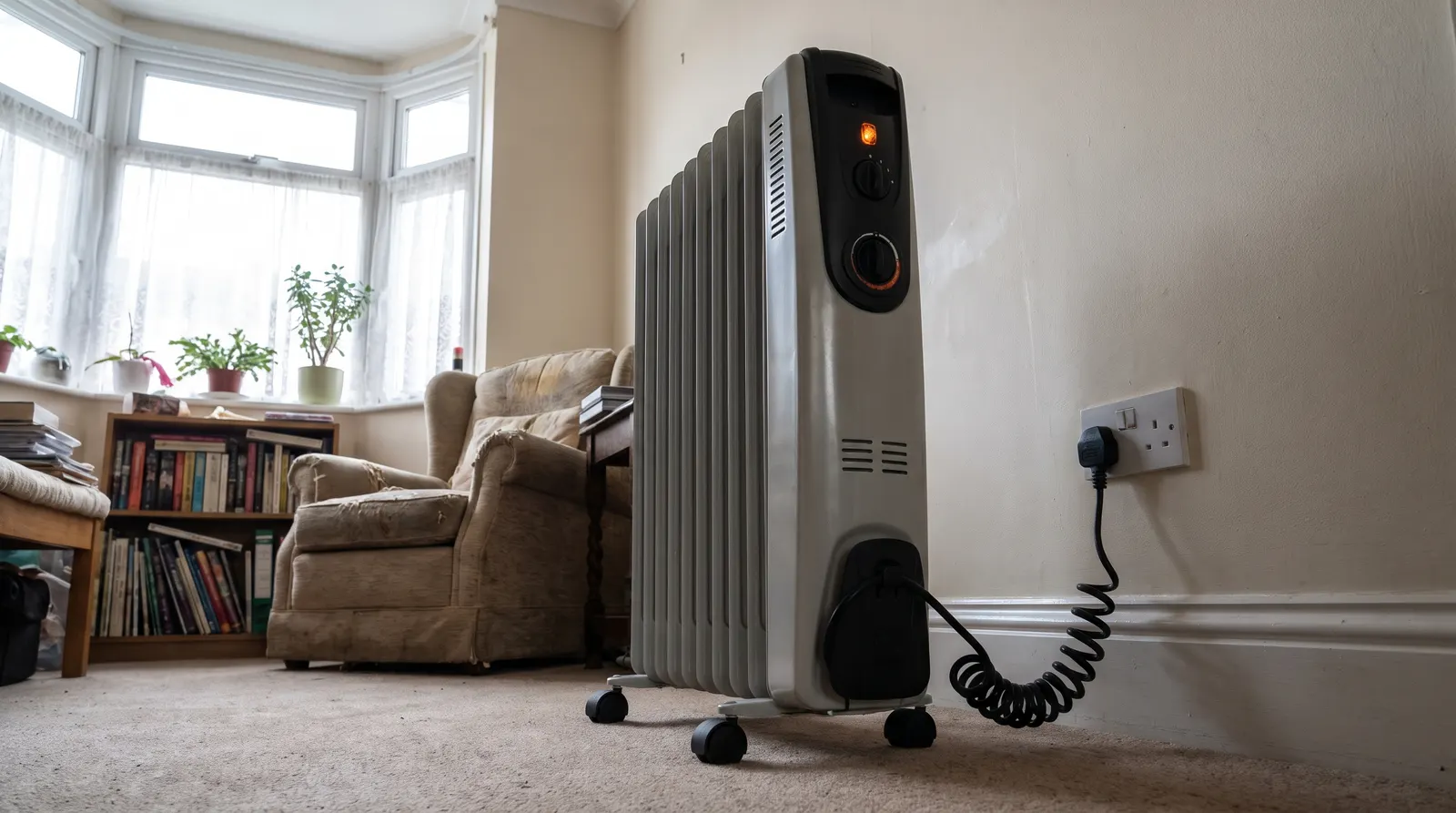
One radiator, one socket, no extension lead
The safe version of running a plug-in radiator is simple: straight into a wall socket, on its own, not through an extension lead or a multi-way adaptor carrying anything else. We've covered this same overload risk in detail for fan heaters, and it applies just as much to any radiator drawing a similar current — daisy-chaining a heavy heating load through a lead rated for general use is one of the more common causes of an avoidable overheated plug.
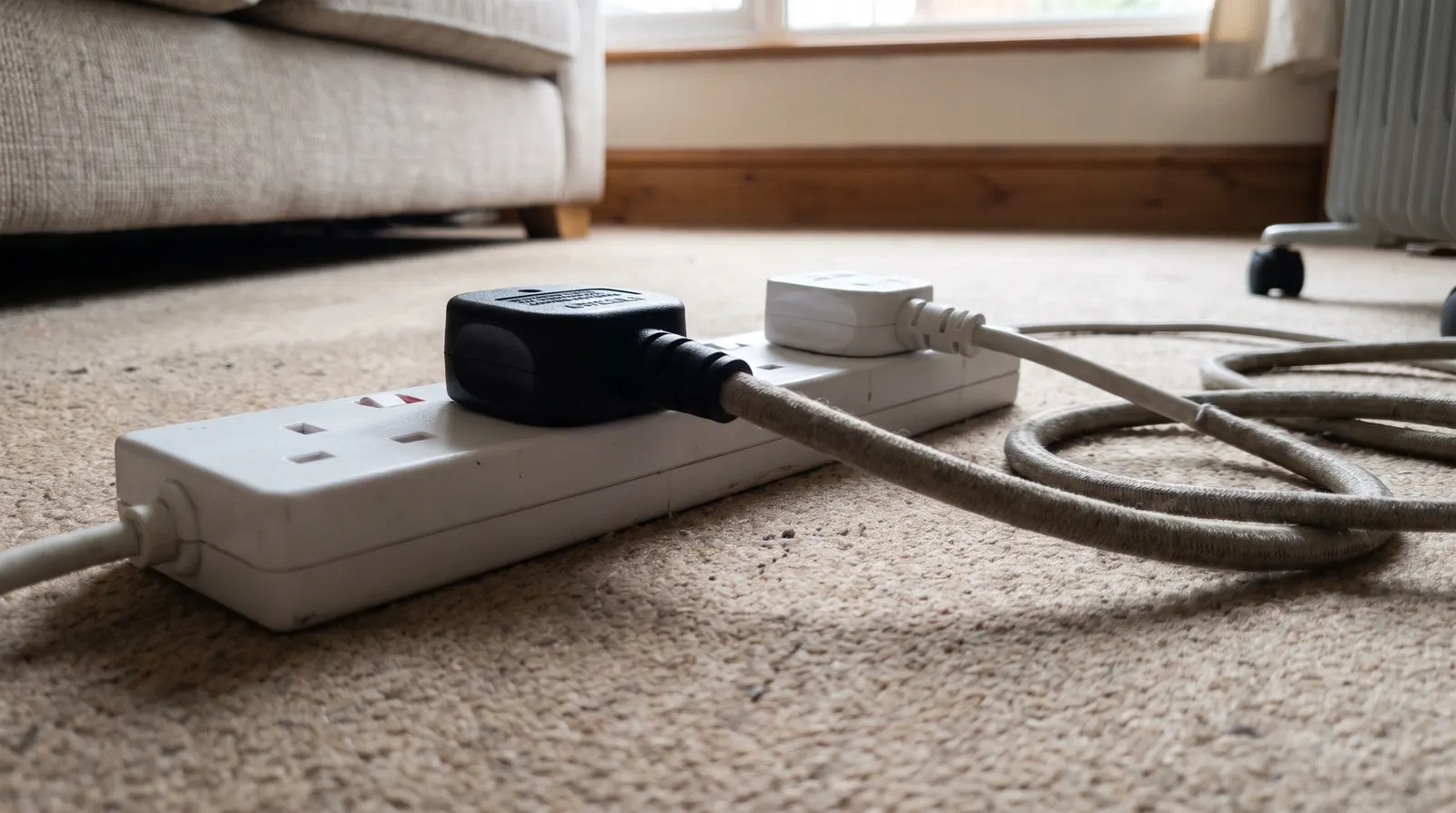
What a strained circuit actually tells you
A plug or socket faceplate that feels warm after a radiator has been running, a breaker that trips as soon as the radiator switches on, or a burning smell near a socket are not things to work around by trying a different socket and hoping. They're the circuit telling you it's already carrying more than it should, and it's worth reading how a tripping breaker actually gets diagnosed before assuming a reset has fixed anything.
When it's worth hardwiring instead
A radiator that's plugged in for the odd cold evening is a different proposition to one running for hours every day through a whole winter. If that's what a room actually needs, a hardwired radiator on its own fused spur — the setup we've covered properly elsewhere for electric radiators generally — draws current more safely than relying on a socket and a plug indefinitely, and it's worth having that conversation rather than treating a plug-in radiator as the permanent answer.
- Plug one radiator into one socket — never share a socket or run it through an extension lead already carrying something else.
- Check how many other radiators are running on the same circuit during a cold spell, not just in the same room.
- Treat a warm plug, a warm socket faceplate, or a tripping breaker as a reason to stop, not a reason to try a different socket.
- If a radiator is running for hours every day through winter, ask whether it should be hardwired to its own fused spur instead.
We wire dedicated fused spurs for electric radiators that are going to run for hours at a time, and we'll check a circuit honestly before you simply swap sockets and hope, as part of general electrical work across London, Essex and north Kent.
If you are unsure, it is always cheaper to ask than to guess. Give us a call and we will tell you straight.