
Guides
Immersion heater thermostats: the part that usually fails
By Mizan, Founder and lead engineer4 min read
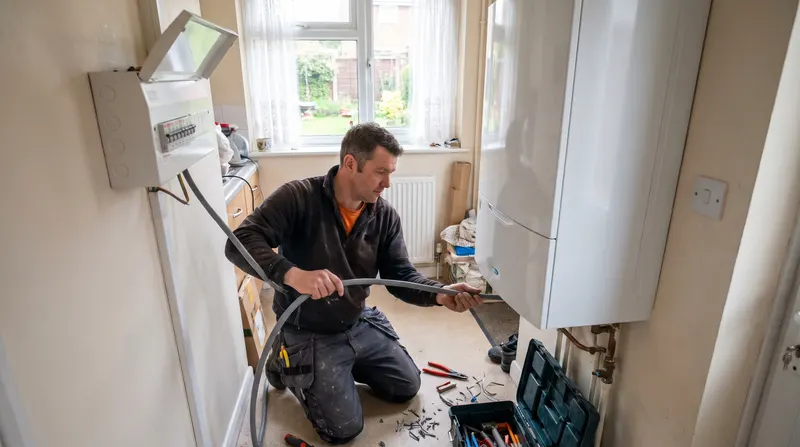
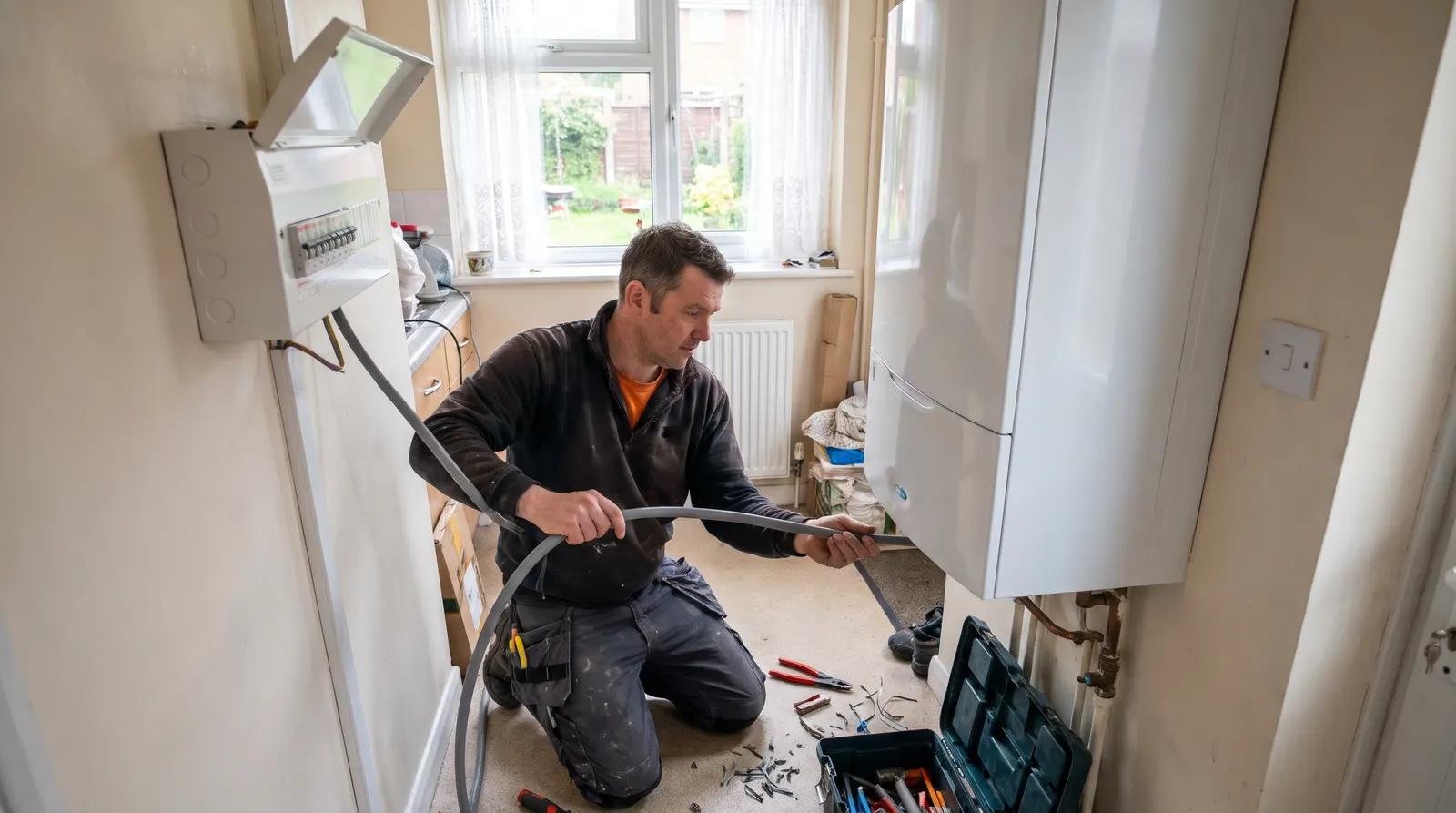
We've covered the general checklist for an immersion heater that isn't working elsewhere. Of everything on that list, the immersion heater thermostat is the part that fails most often — more often than the element it controls — so it earns a closer look of its own.
What the thermostat is actually doing
A rod-shaped thermostat sits inside the immersion heater fitting, in direct contact with the water, and switches the element on and off to hold the temperature you've set. Behind it, a separate safety cutout is there purely as a backstop, tripping if the main thermostat fails to switch off and the water keeps getting hotter than it should.
The two failure patterns
A thermostat that fails tends to do one of two things. Stuck on, it keeps heating past the set point until the water runs scalding hot and the safety cutout eventually trips to stop it going further. Failed the other way, it stops calling for heat altogether and the cylinder stays lukewarm or cold, which can look identical to a dead element from the outside. The difference usually shows up in the pattern: a failing thermostat often gives some heat before the trouble starts, where a genuinely dead element gives none at all.
The reset button that only buys a temporary fix
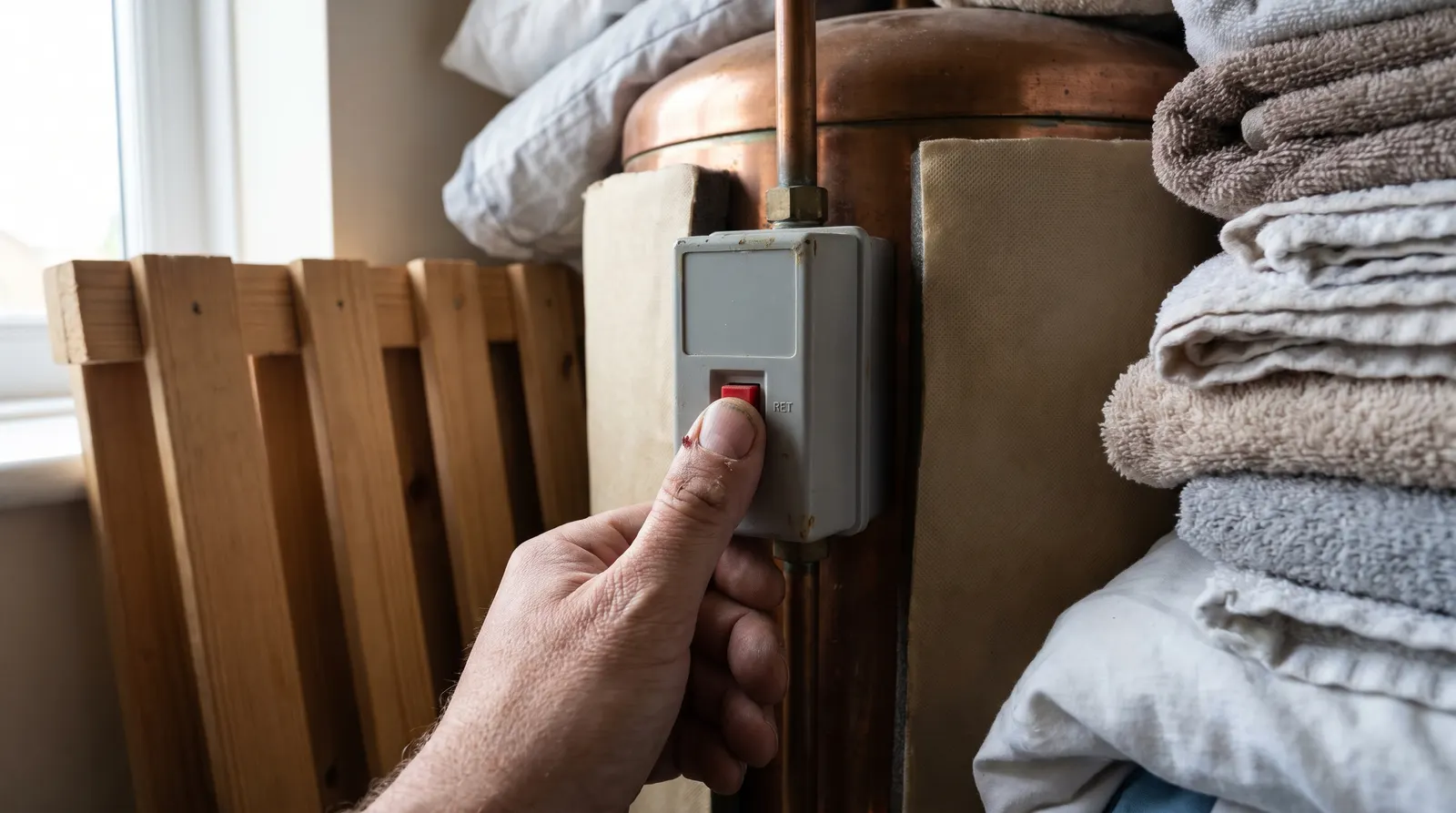
Most cylinders have a small reset button on the safety cutout, and pressing it after a trip will usually bring the hot water back for a while. That is a safety device doing its job, not a repair. If it needs resetting more than once, that is the thermostat telling you it has failed, in exactly the stop-and-call situation we've described for an immersion heater generally — not a reason to keep pressing the same button every few days.
Why this is worth checking before the element
A thermostat is a simpler, cheaper part to replace than the element it controls, and the two fail independently of each other, so it is worth having the thermostat tested properly before anything gets replaced on a guess. The circuit needs isolating before either part is touched, and depending on the cylinder, some water may need draining down first — not a job to start without knowing which part has actually failed.
- Scalding-hot water that eventually trips the cutout points to a thermostat stuck on, not a dead element.
- Water that stays cold with no heat at any point can be either a failed thermostat or a dead element — get it tested rather than guessing.
- Treat a safety cutout that needs resetting more than once as a failed part, not routine behaviour.
- Have the circuit isolated and the correct part confirmed before anything inside the cylinder is replaced.
We test and replace immersion heater thermostats and elements, and we'll tell you honestly which part has actually failed before anything gets swapped, as part of general heater repair work across London, Essex and north Kent.
If you are unsure, it is always cheaper to ask than to guess. Give us a call and we will tell you straight.