
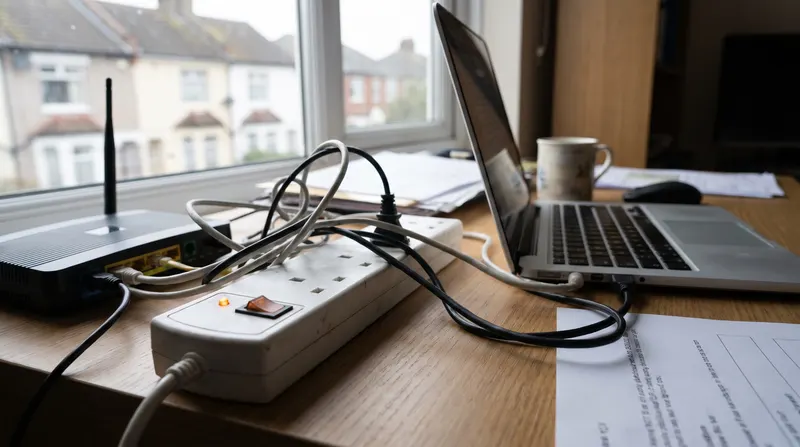
A surge-protected extension lead is built to do one specific job: absorb a brief spike in mains voltage and stop it reaching whatever is plugged into it. It is not built to make an overloaded lead any safer to use. The circuitry that gives it that protection has nothing to do with how many amps it can carry — that figure is still set by the same 13A fuse and cable rating as an ordinary lead, which we've covered separately. Whether the extra cost is worth paying depends on what you are plugging in, not on how many sockets the lead has.
What the protection inside the lead is actually doing
Sitting inside a surge-protected lead is a small component that stays completely inactive during normal use and only reacts when the voltage on the circuit briefly rises above what the supply should be delivering — a nearby lightning strike, a large motor switching off elsewhere in the building, or the supply itself glitching for a fraction of a second. When that happens, it diverts the excess away from the sockets on the lead rather than letting it pass through to whatever is plugged in, then resets itself and carries on working as an ordinary lead until the next spike.
What it protects, and what it was never going to protect
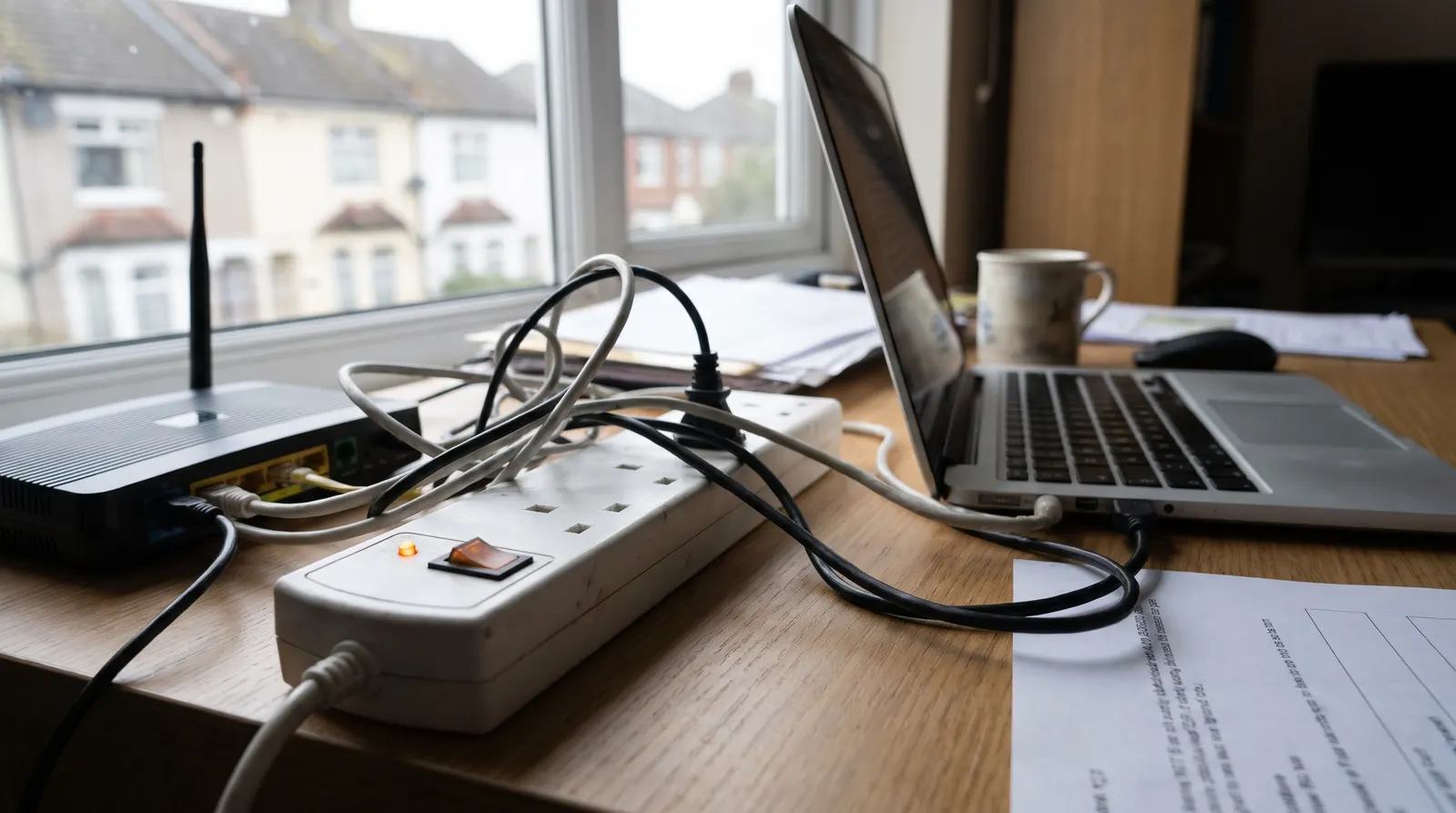
The devices worth protecting this way are the ones with delicate internal electronics that a voltage spike can degrade quietly over time, or kill outright in one event: televisions, routers, games consoles, and laptops left charging. A spike that an ordinary kettle, heater or lamp would shrug off can be the one that finishes off a smart TV's power supply. What surge protection will not do is anything about overload. Plug too much onto a surge-protected lead and it trips or overheats exactly as an unprotected one would, because that limit was never what the surge circuitry was built to manage.
When the extra cost earns its keep
- A desk or media unit carrying several electronics at once — a TV, a router, a laptop charger — where one spike could take out more than one device at the same moment.
- A property where the lights have dipped or flickered briefly for no obvious reason, which can be a sign the local supply already carries occasional spikes.
- Anything left permanently plugged in and unattended, such as a router, where a spike has longer to do damage before anyone notices.
None of that applies to a lead feeding a kettle, an iron or a space heater. Those appliances have no sensitive electronics to protect, so the premium buys nothing beyond what an ordinary lead already does.
If you are weighing this up because the lights have been flickering, something has been tripping that shouldn't, or you are not sure the socket behind the lead is up to what you want to run from it, that is worth having looked at directly rather than solved with a different lead — it's the kind of socket work we cover across London, Essex and north Kent.
If you are unsure, it is always cheaper to ask than to guess. Give us a call and we will tell you straight.