
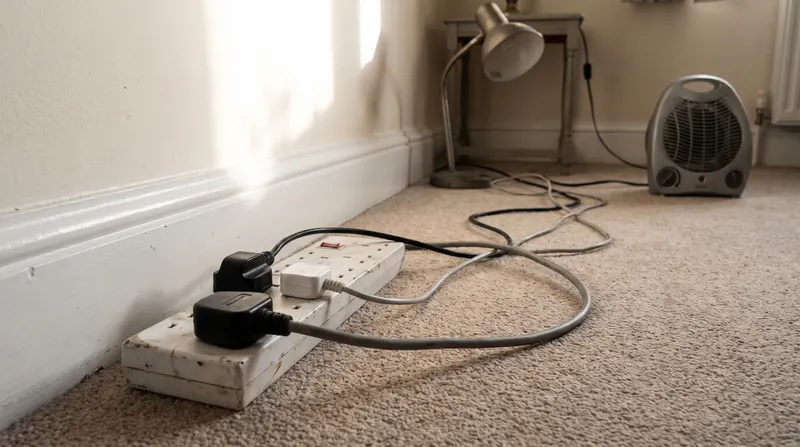
An extension lead does not create any extra power. It takes whatever current the wall socket behind it can safely deliver and splits it between however many things you plug into the end of it. Every appliance on that lead is drawing from the same supply as if it were plugged into the wall directly, and the lead itself, not just the socket, has to be able to carry all of it at once.
What the rating on the lead is telling you
A standard UK extension lead on 13A-rated cable and fitted with a 13A fused plug is built to carry up to 13 amps in total, across every socket on it — not 13 amps per socket. Add up the current draw of everything you have plugged in, and if it is anywhere near that figure, the lead is doing as much as it is designed to do. A kettle and a space heater running from the same four-way block can get there on their own, before anything else is plugged in at all.
Daisy-chaining is where the real risk starts
Plugging one extension lead into another, to reach further than either lead manages alone, does not add their ratings together — it just adds length and extra connections to the same 13 amps the first plug is still limited to, while making the far end harder to check and more likely to be overlooked when something gets hot. It is one of the most common things we are called out to after a lead has already started to fail.
A coiled lead can overheat even within its rating
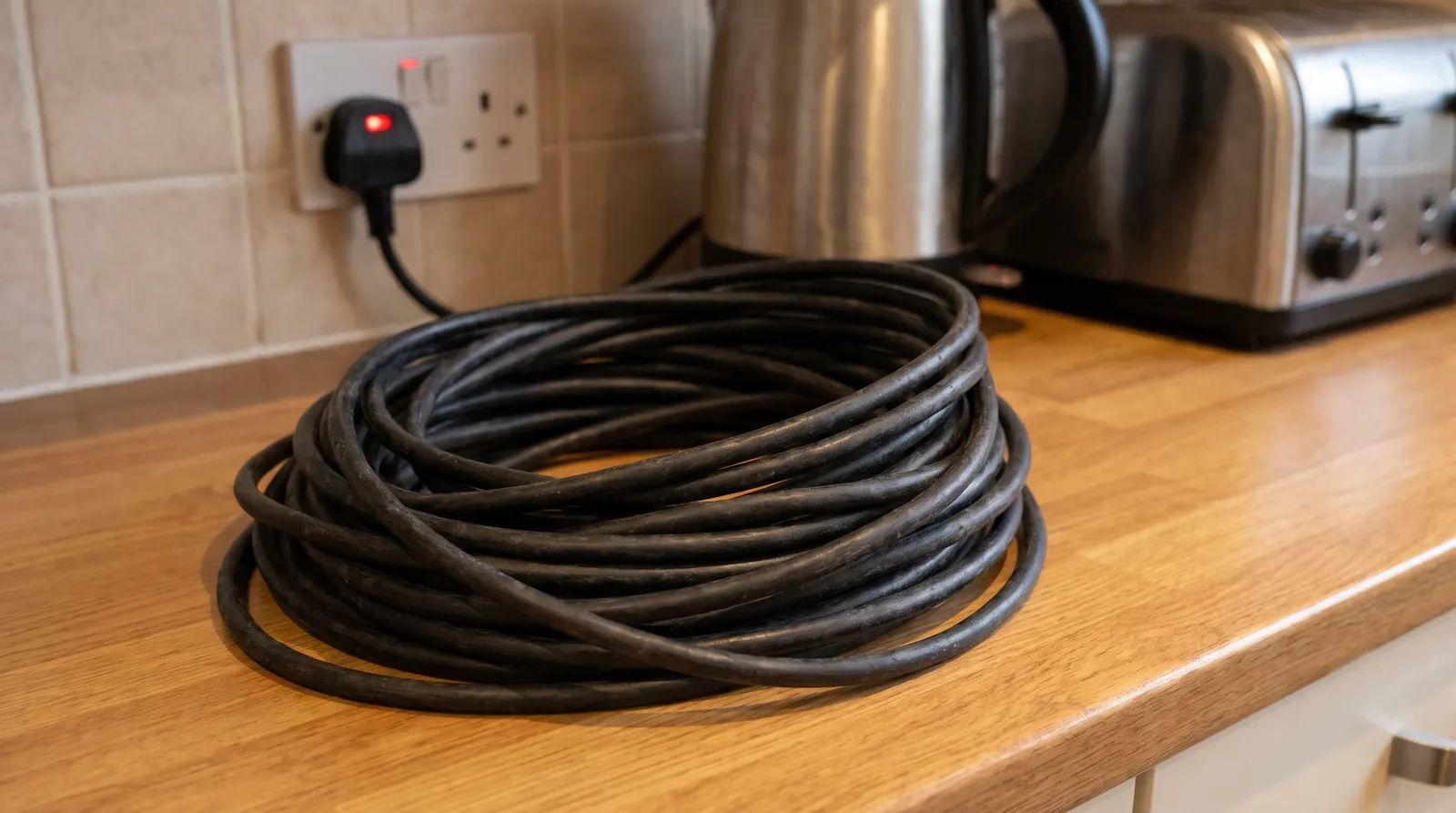
A long extension lead left wound up on its reel, or coiled tightly to tidy it away, loses its ability to shed heat the way a lead run out straight does — the windings sit against each other and trap warmth instead of letting it escape into the air. Under a heavy load for any length of time, that is enough to make an otherwise properly rated lead run hot. Unwind it fully whenever it is carrying anything more than a lamp or a charger.
A rough way to check before you plug in
- Add up the wattage printed on each appliance you plan to run from the lead at the same time, not just the ones you think draw the most.
- Divide the total by 230 to get the current in amps, and compare it against the 13A the lead and its plug fuse are rated for.
- Treat anything that heats — a kettle, a heater, an iron, a tumble dryer — as the figure that matters, since those draw far more than lighting or electronics.
- If two heat-producing appliances together get close to 13A, run one of them from a different socket instead.
If you are reaching for an extension lead because a room simply does not have enough sockets where you need them, that is usually better solved with an extra socket or a fused spur on the fixed wiring than with another lead — we cover that as part of general sockets and lighting work across London, Essex and north Kent.
If you are unsure, it is always cheaper to ask than to guess. Give us a call and we will tell you straight.