
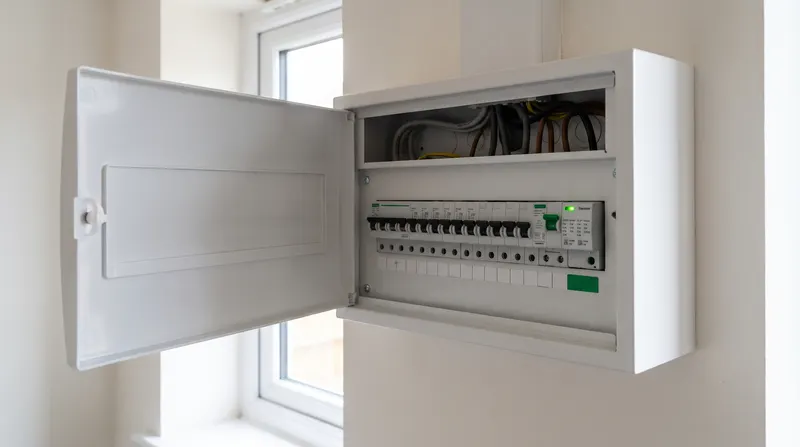
An SPD fitted in a consumer unit is a module that looks much like a circuit breaker and sits in the same row, usually at one end. It takes no action at all under normal conditions — current simply passes the installation by as if the module were not there. The moment it is built for is a brief overvoltage spike, which it diverts away from the circuits it protects before carrying on as if nothing happened.
What it is actually protecting against
The spikes an SPD is built for are transient — they last a fraction of a second rather than the sustained overvoltage a faulty supply can sometimes deliver. A nearby lightning strike, a large piece of equipment switching off elsewhere on the network, or a fault on the supply network itself can all send one of these brief spikes down the line into a property. Without protection, that spike reaches every circuit in the installation at once.
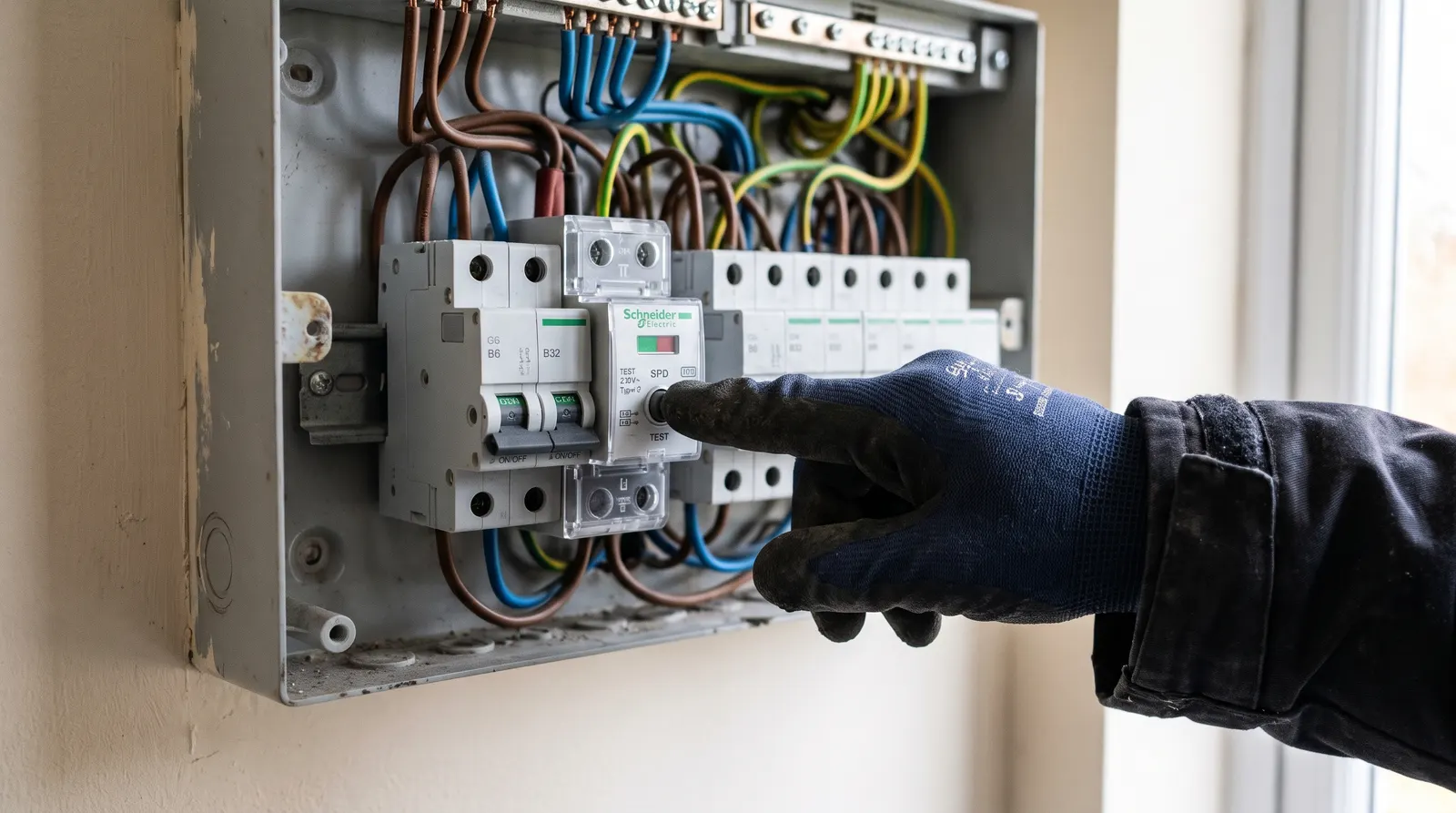
The indicator window is the only way to know it still works
Most SPD modules carry a small indicator window, usually showing green when the device is healthy. After absorbing enough surge activity, or occasionally after one serious event, the internal component can wear out and the indicator will show it has failed — the module stops protecting anything from that point, while the rest of the consumer unit carries on working normally, which is exactly why nobody notices without checking.
What it does not replace
- A surge-protected extension lead on sensitive electronics — the SPD in the board protects the whole installation from a large transient, but is not a substitute for local protection on a specific device.
- RCD and RCBO protection, which exist to protect people from shock and circuits from fault current, not from voltage spikes — an SPD does a different job entirely.
- Checking the installation after an electrical storm if anything has stopped working as expected, rather than assuming the module caught everything.
We check SPD modules as a matter of course whenever we are working inside a consumer unit — it takes a moment and tells you something you cannot see from outside the board. That is part of the fuse board work we carry out across London, Essex and north Kent.
If you are unsure, it is always cheaper to ask than to guess. Give us a call and we will tell you straight.