
Guides
Socket testers: what they tell you, and what they miss
By Mizan, Founder and lead engineer4 min read
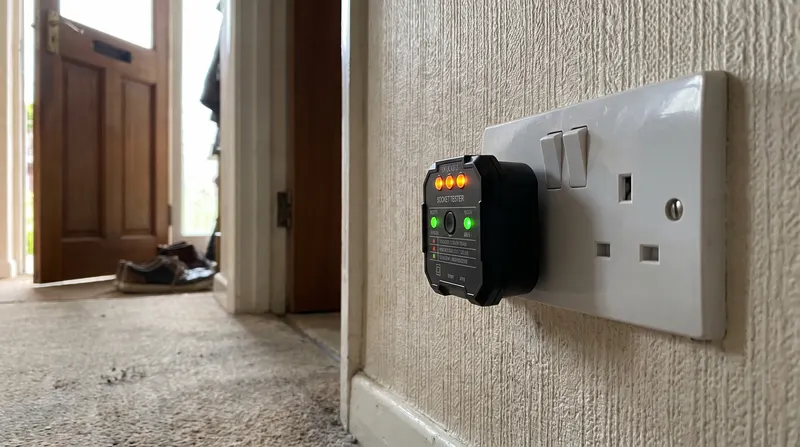
A plug-in socket tester is a small device with a handful of indicator lights that you push into a wall socket to check the basic wiring behind it is connected the way it should be. It tells you, in seconds, whether the live, neutral and earth are present and in the right place. It does not tell you anything about the condition of the cable running to that socket, how the circuit behaves under fault conditions, or whether the installation as a whole is safe — and treating a row of correct lights as a clean bill of health is the mistake that catches people out.
What the lights are actually checking
Inside a socket tester are three simple contacts that match the live, neutral and earth pins of a plug, wired to a set of LEDs that light in different combinations depending on what they find. A correctly wired socket lights one pattern; a swapped live and neutral, a missing earth, or a neutral that is not connected at all each light a different pattern, and the leaflet that comes with the tester decodes them. It is a wiring check at one point, nothing more.
What a row of correct lights does not tell you
A socket tester has no way to measure the condition of the cable feeding that socket, how hot a connection runs under load, how quickly the circuit's protective device would clear a fault, or whether the earthing elsewhere in the installation is adequate. Those need the kind of calibrated test equipment an electrician brings to a proper inspection, which measures things like earth loop impedance and insulation resistance rather than simply confirming three pins are present. A socket can pass every light on a plug-in tester and still sit on a circuit carrying a fault the tester was never built to find.
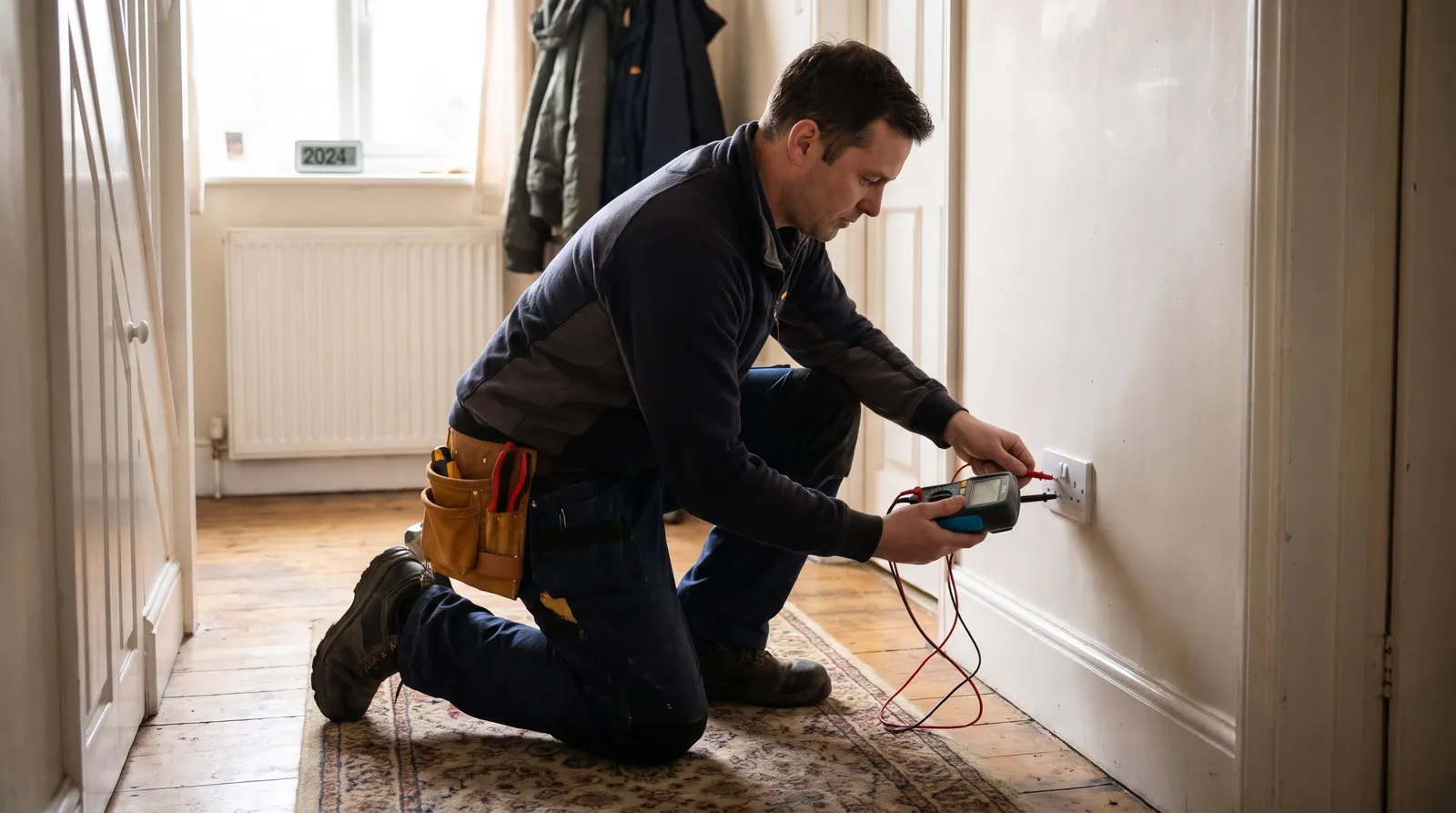
When a plug-in tester is actually useful
Where it earns its place is as a quick first check, not a verdict: moving into a new rental, wanting reassurance after a DIY job, or spot-checking a few sockets around a property before deciding whether to call someone. A fault it does catch — reversed polarity, a missing earth, a dead socket — is a real fault and worth acting on straight away. It just is not the test that tells you a socket showing all the right lights is actually safe.
If a socket tester has flagged something, or you simply want to know what condition the wiring behind your sockets is actually in, that is the kind of check we carry out as standard across our sockets and lighting work and our EICR inspections in London, Essex and north Kent.
If you are unsure, it is always cheaper to ask than to guess. Give us a call and we will tell you straight.