
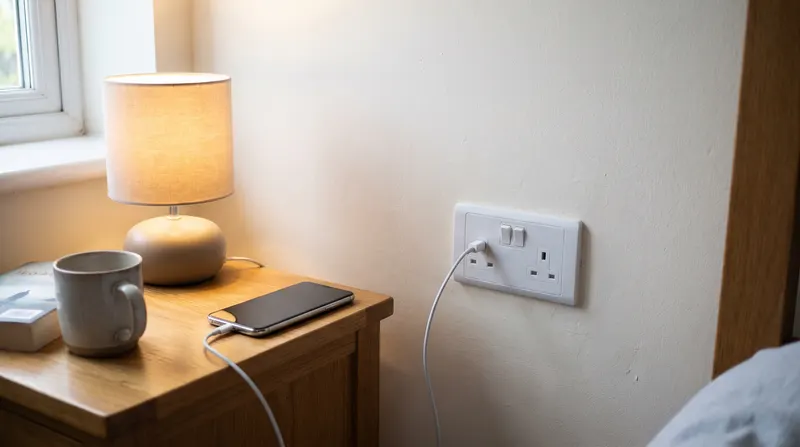
USB sockets built into a regular wall plate let you charge a phone or tablet directly, without a charger block taking up one of the socket's two outlets. They're a genuinely useful upgrade in a bedroom, hallway or kitchen — but the output printed on the faceplate is the detail worth checking before you buy one, because it varies a lot between products that otherwise look identical.
What the output figures actually mean
A USB socket's output is given in amps or watts per port, and as a combined total across both ports if you use them at once — a socket rated at 2.1A on a single port but only 2.4A shared between two will charge noticeably slower with two phones plugged in together than either figure on its own suggests. Older USB-A sockets are generally slower than newer USB-C ones, and only some USB-C sockets support the higher-power fast-charging standards a modern phone can actually use.
USB-A, USB-C, or both
Most phones sold now charge fastest from a USB-C port with a cable that supports it, so a socket with at least one USB-C output is worth having wherever phones actually get charged overnight. A mix of one USB-A and one USB-C port covers an older device and a current one without needing two separate sockets.
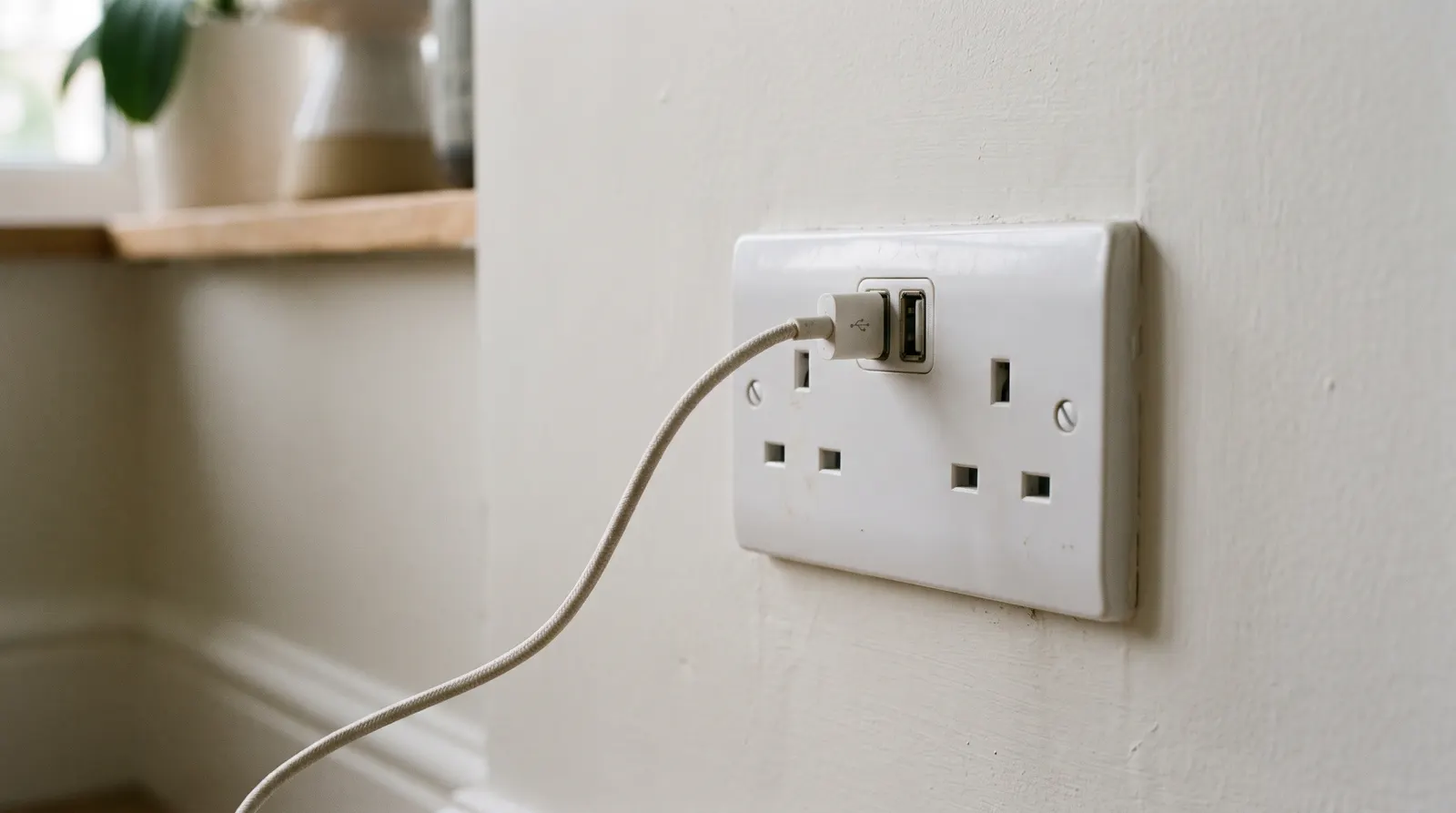
Fitting one is more than swapping a faceplate
A USB socket isn't simply a standard faceplate with extra holes — it carries its own charging circuitry behind the plate, drawing a small amount of power constantly even with nothing plugged in, and it needs a back box deep enough to house it, which an older shallow box sometimes isn't. Swapping a single socket for a USB version on an existing circuit is usually simple; fitting several as part of a wider upgrade is worth planning alongside any other socket work in the room.
We fit USB sockets as part of our general sockets and lighting work, usually alongside adding or replacing double sockets in the same room, across London, Essex and north Kent.
If you are unsure, it is always cheaper to ask than to guess. Give us a call and we will tell you straight.