
Safety
Outdoor Christmas lights: doing it without a call-out
By Mizan, Founder and lead engineer4 min read
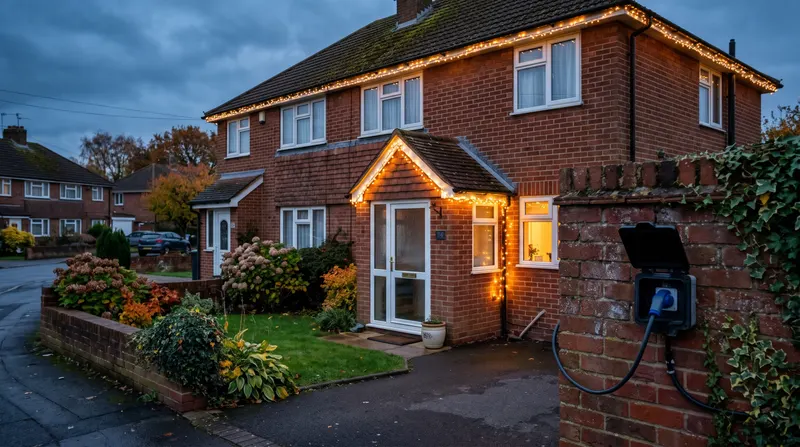
Outdoor Christmas lights cause the same handful of problems every December, and almost none of them are about the lights themselves. It's the extension lead feeding them, the socket they're plugged into, and whether any of it is actually rated to sit outside in the wet for six weeks that decides whether the display is safe or the reason for an emergency call-out.
Start with what the lights are plugged into
A set of outdoor Christmas lights should run from a socket that is both weatherproof and protected by an RCD — a device that cuts the power in a fraction of a second if current starts leaking to earth, which is exactly what damp or damaged lighting cable does first. If the socket feeding your display is an ordinary indoor one reached through a window on an extension lead, that's the setup to change before anything else.
Plug-in RCD adaptors are a reasonable stand-in
Where there's no outdoor socket to use, a plug-in RCD adaptor fitted between the indoor socket and the first extension lead gives the same protection for the season, and it's worth doing even where the indoor socket already has RCD protection built in — Christmas lighting runs for weeks at a time, outdoors, in weather no indoor circuit was ever designed to meet.
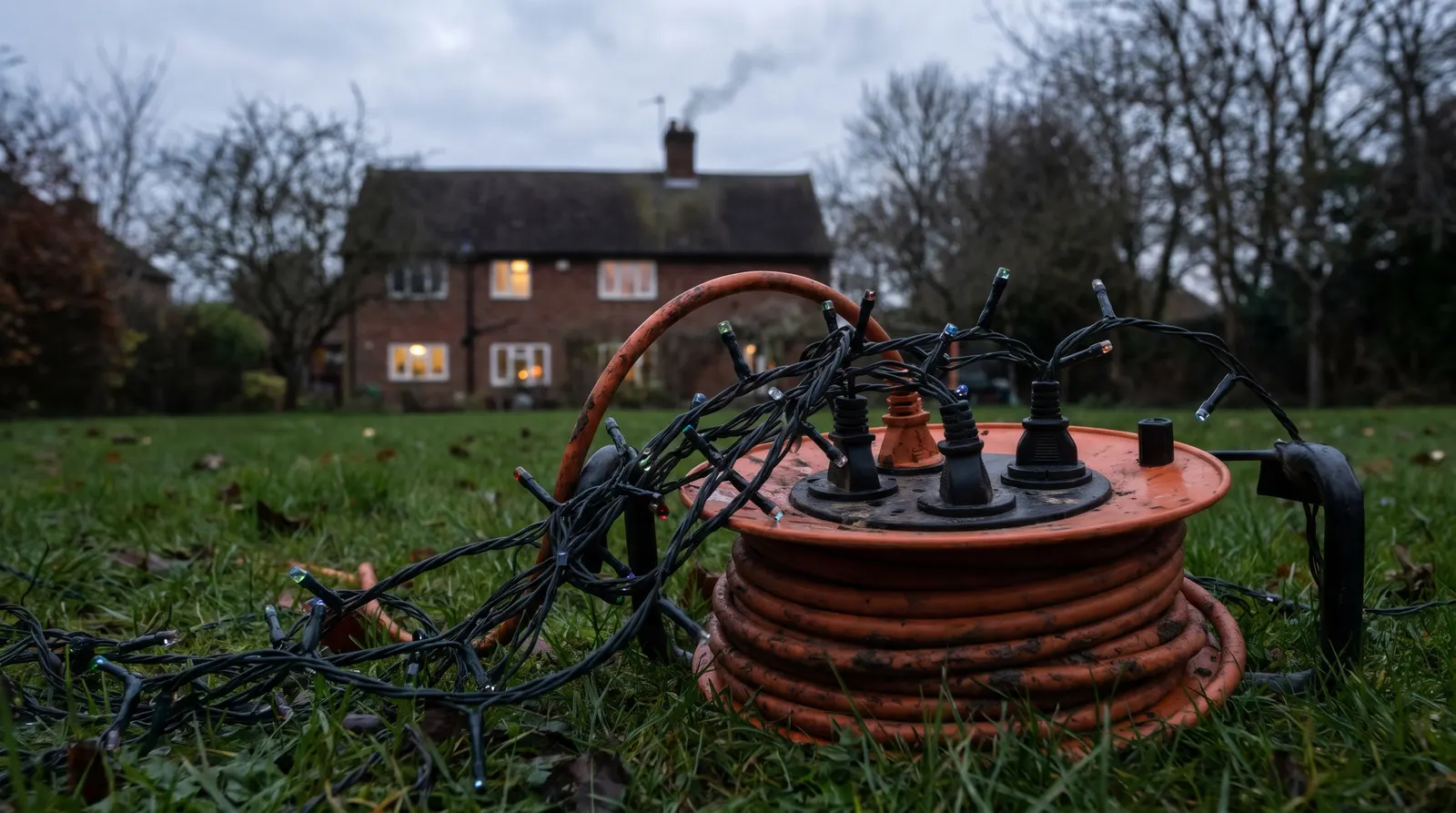
One lead feeding everything is the usual mistake
A whole house's worth of lights run back to a single extension lead, often with a second lead joined on to reach the length needed, draws more current the bigger the display grows and gets less visible to check the further it runs from the house. Each set of lights has a wattage printed on the box or the transformer; add it up before assuming one lead can carry the lot, and never daisy-chain leads to get the extra distance — run a longer single lead instead, or split the display across more than one circuit.
Keeping the display itself dry
- Use connectors and lead couplings rated for outdoor use, and keep every join off the ground rather than lying in grass or a puddle.
- Site transformers and control boxes under cover — eaves, a shed, anywhere rain doesn't fall directly — even if the box itself claims a weatherproof rating.
- Turn the display off overnight rather than leaving it live for six weeks straight; a timer plug does this without anyone having to remember.
- Check lights and leads for damage each time they come out of storage, not just the year you bought them.
We've written separately about extension lead overload generally, and about what changes when a lead is used outdoors — both apply just as much to a reel of lights as to a pressure washer or a mower, and it's work we cover across London, Essex and north Kent.
If you are unsure, it is always cheaper to ask than to guess. Give us a call and we will tell you straight.