
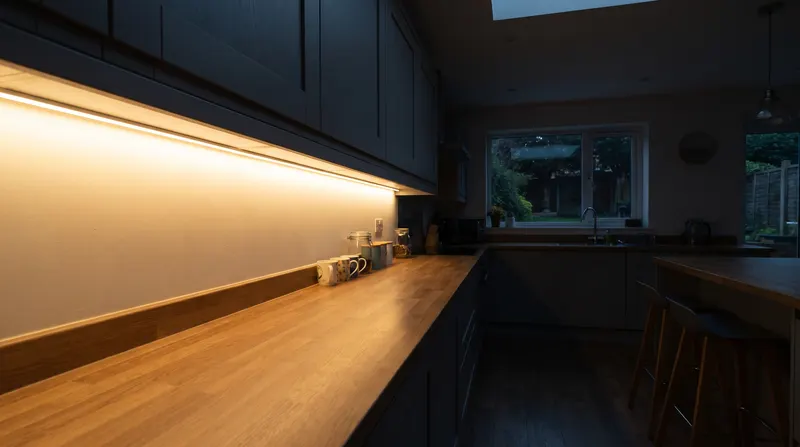
LED strip lighting is a flexible run of small LEDs on an adhesive-backed tape, used under kitchen cabinets, along coving, inside alcoves and behind a bed or TV for an indirect glow. It runs on low voltage rather than mains, which is why it feels like a DIY job — and mostly it is, provided the driver feeding it and the length of the run are matched to what you're actually fitting.
The driver is the part that gets overlooked
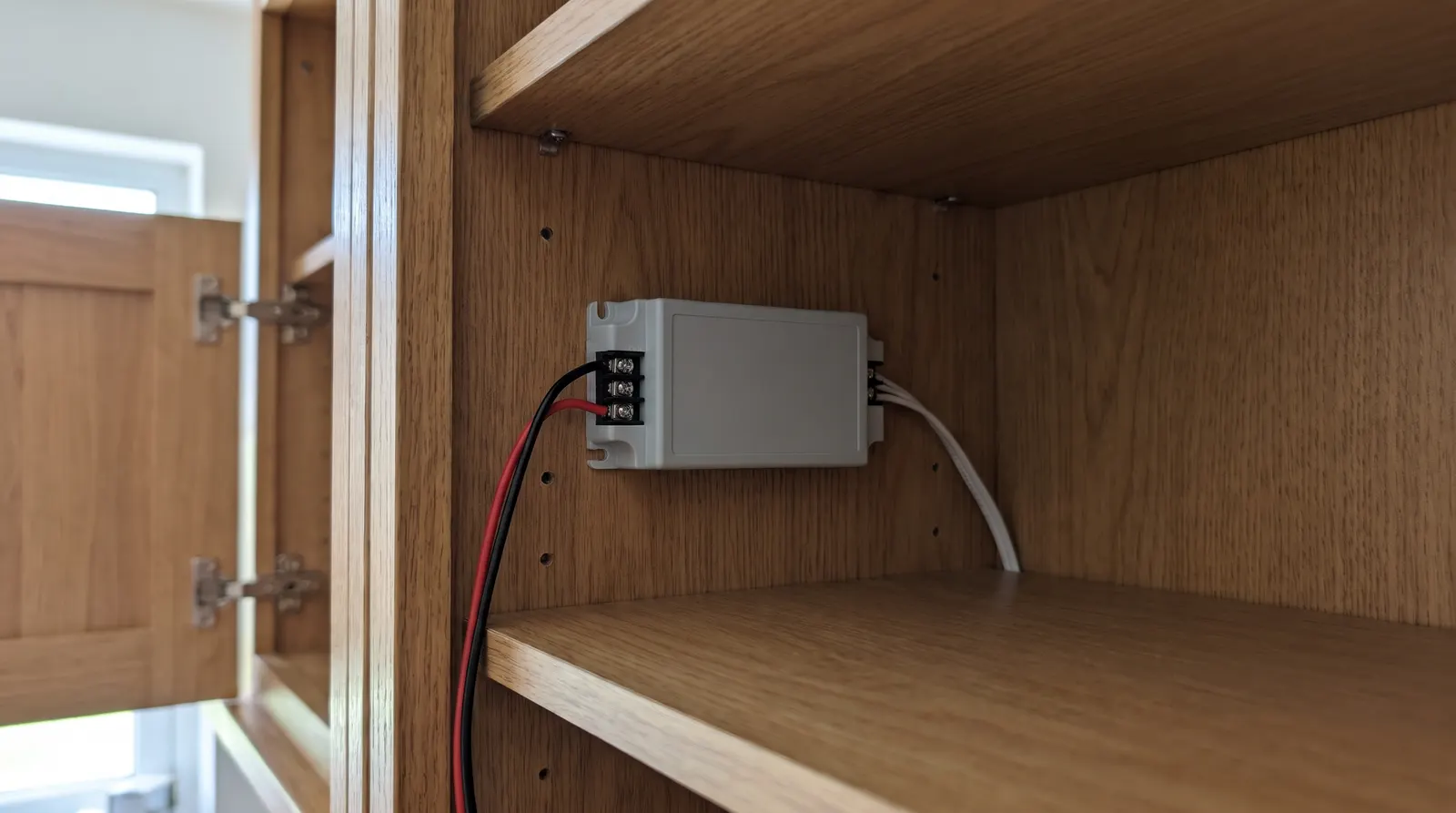
LED strip runs from a driver — a small transformer that steps the mains supply down to the 12V or 24V the strip actually uses — sized in watts to match the length and brightness of the strip connected to it. A driver sized exactly for the length you started with leaves no headroom if you extend the run later, and an undersized driver run flat out for hours at a time shortens its own life well before the strip itself fails.
Voltage drop limits how far a single run can go
Strip lighting loses voltage along its own length the further current has to travel from the driver, which shows up as the far end of a long run looking dimmer, or a slightly different colour temperature, compared with the end nearest the power. Beyond a certain length — it varies with the strip's current draw and cable size — the fix is feeding power in from both ends, or splitting the run into shorter sections from more than one driver, not just adding a longer cable.
Dimming needs matching components, not just a dimmer switch
A standard mains dimmer switch has no business controlling low-voltage strip lighting directly — dimming has to happen either at the driver or with a dedicated low-voltage dimmer built for the strip, and the two need to be compatible with each other. Mixing the wrong dimmer with the wrong driver is the most common reason a dimmable strip flickers, buzzes, or won't dim smoothly.
Where it shouldn't go without the right rating
- Bathrooms and anywhere steam or splashing reaches need a strip and driver rated for the zone, the same as any other bathroom fitting.
- Tight, unventilated spaces such as inside a sealed cabinet can let heat build up around the driver even though the strip itself runs cool to the touch.
- Anywhere the adhesive backing will be asked to hold the strip's own weight over a long unsupported run needs clips or a channel as well, not tape alone.
We fit LED strip lighting as part of general lighting work — kitchens, alcoves and feature lighting — alongside the ceiling and wall lighting we've covered elsewhere, across London, Essex and north Kent.
If you are unsure, it is always cheaper to ask than to guess. Give us a call and we will tell you straight.