
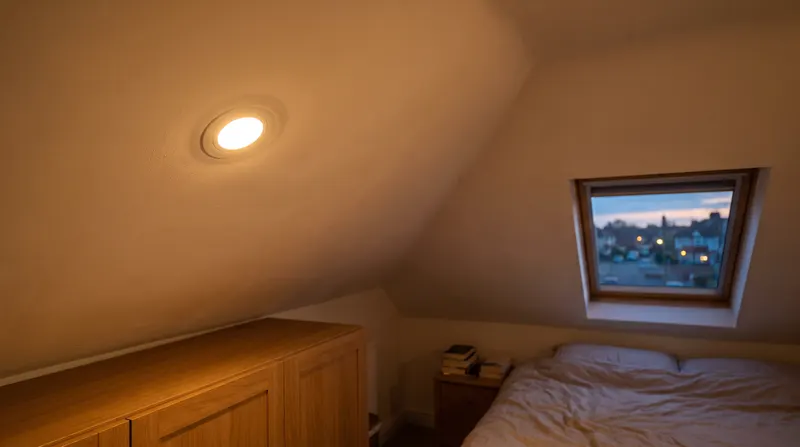
A ceiling isn't just a ceiling. Between a room and the loft or the flat above, it's also a fire barrier, built to hold back smoke and flame for a set amount of time if a fire breaks out. Cut a standard downlight housing into it and you've put a hole straight through that barrier — which is the reason "fire-rated" is a term worth understanding rather than skipping past on the box.
What the rating is actually protecting
A fire-rated downlight is built with a housing designed to maintain the fire resistance of the ceiling around it for as long as that ceiling is required to hold, rather than simply melting or opening up under heat the way an ordinary fitting will. Where that matters most is anywhere the ceiling is doing real fire-separation work: under a loft conversion bedroom, above an escape route, or between one flat and the one below it. What rating a particular ceiling needs to maintain depends on the building's own construction and use, so it's worth confirming for the specific property rather than assuming one figure covers every job.
The insulation problem
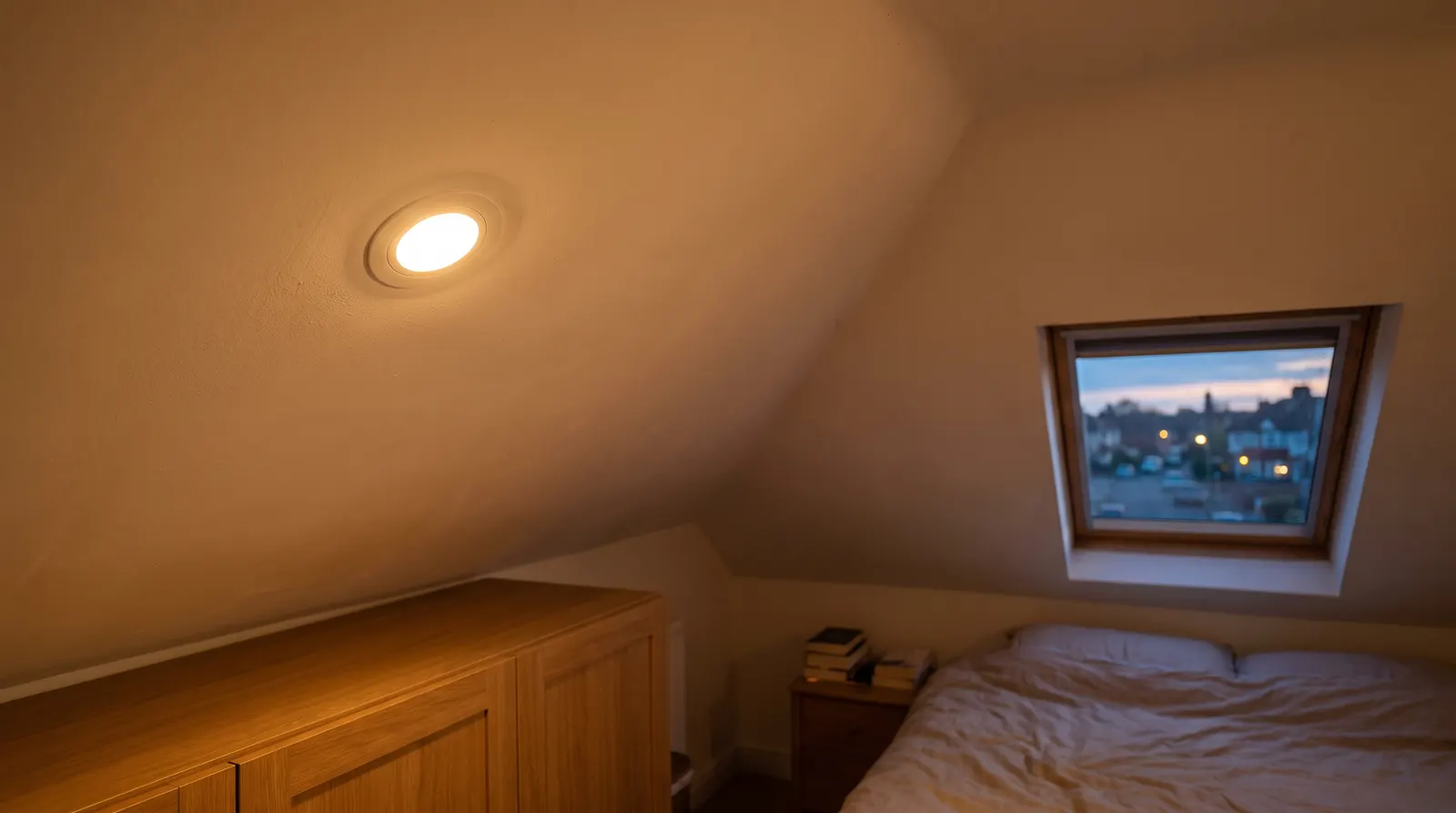
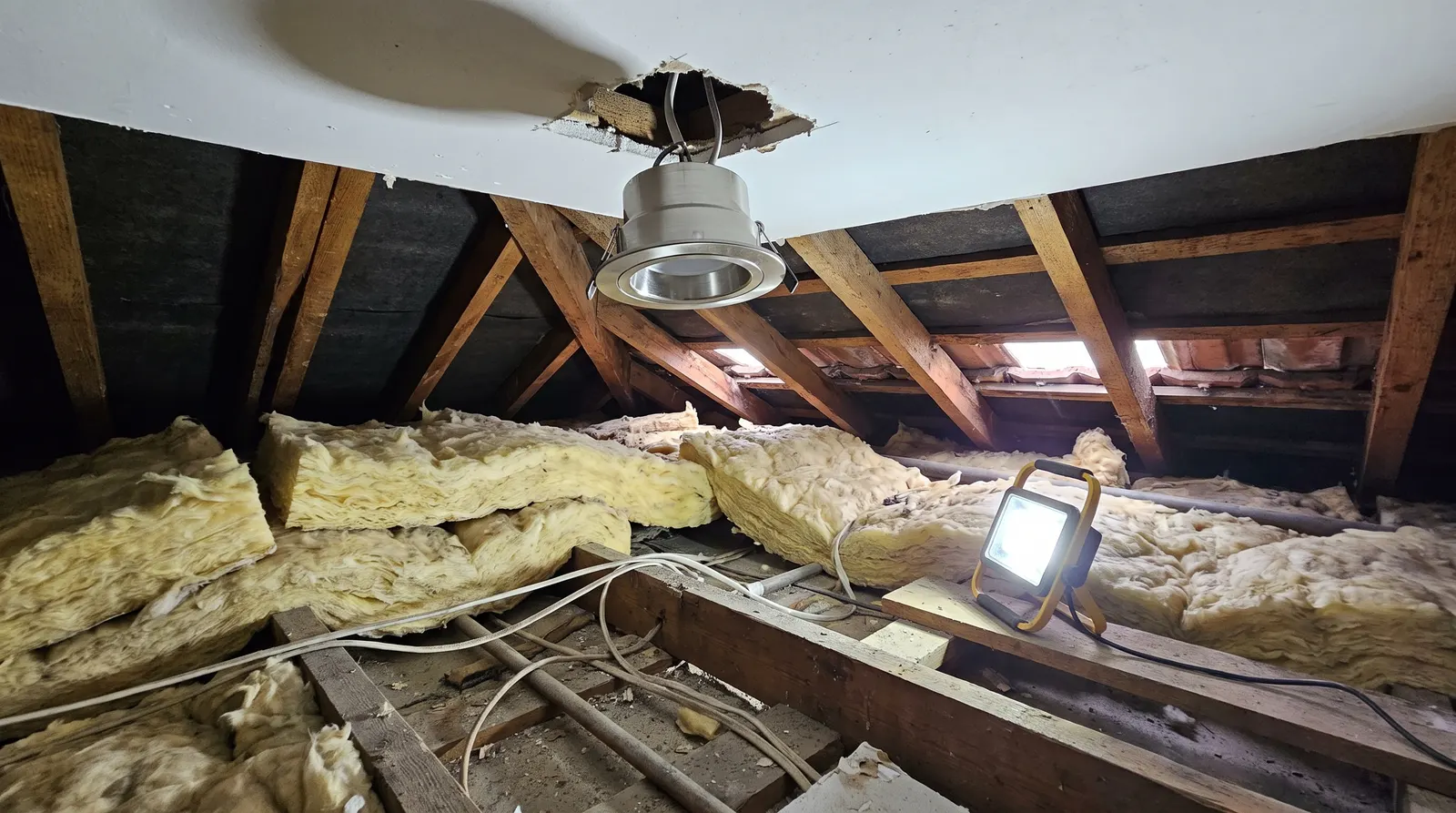
Loft insulation piled directly over an ordinary downlight housing traps the heat the fitting gives off, because the housing was never designed to have insulation sitting on top of it. That's a genuine and well-documented cause of overheating in older loft conversions. Fittings marked IC, for insulation contact, are built to have loft insulation laid straight over them safely — which matters on nearly every domestic loft job now, since building insulation right up to and around downlights is standard practice.
It isn't just the fitting
Buying a fire-rated, IC-rated downlight is only half the job. The hole it sits in has to be cut to the right size, the fitting has to seal against the ceiling properly rather than leaving a gap around the housing, and the cable feeding it has to be run and terminated correctly. A fire-rated fitting installed with a gap around the edge, or with the wrong housing for the ceiling's depth, doesn't give you the protection the box implies.
We fit downlights across London, Essex and north Kent, in kitchens, bathrooms, loft conversions and everywhere in between, and we'll always tell you which rating a particular ceiling needs rather than fitting whatever's on the van.
If you are unsure, it is always cheaper to ask than to guess. Give us a call and we will tell you straight.