
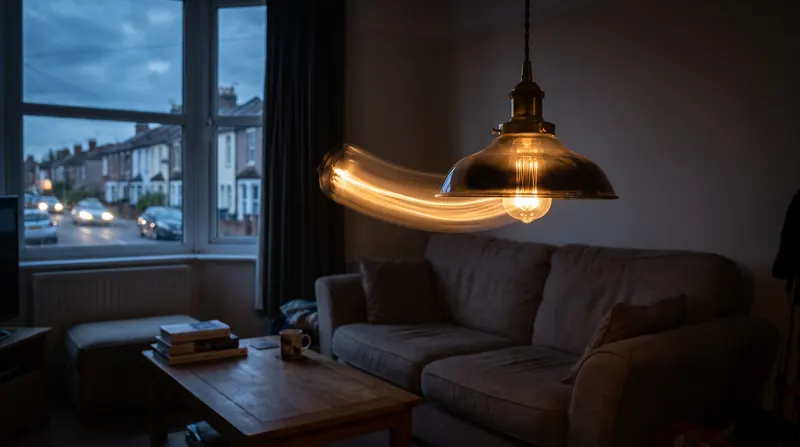
Flickering is one of those faults that can mean almost nothing or something that matters, and the difference usually comes down to one question: is it one fitting, or is it several lights across the house doing it at once?
One light, on its own
A single fitting flickering, especially one on a dimmer, is very often the bulb rather than the wiring. Older dimmer switches were designed for the way an incandescent bulb draws power, and a lot of LED bulbs do not behave the same way on that circuit — the result is flicker, especially at low brightness. A loose bulb, or a cheap driver inside a budget LED lamp, causes the same symptom for a similar reason.
Try reseating the bulb first, then try a different bulb from a different fitting in the same socket. If the flicker stops, you have your answer and it costs nothing to fix — either a firmer connection or a dimmer rated for LED loads.
Several lights, or the whole house
Multiple lights flickering together, particularly if it happens when something else switches on — a fridge, a boiler, an immersion heater — points to a voltage fluctuation rather than a single failed bulb. That is worth taking seriously rather than living with.
The usual cause is a loose or failing connection somewhere upstream of the lights themselves: at the consumer unit, in a junction box, or at the main incoming supply. A poor connection has resistance, resistance produces heat, and heat at a connection under load is the same mechanism behind why breakers keep tripping in other households — the flicker is often the first visible sign of something a proper fault-finding visit would want to catch early.
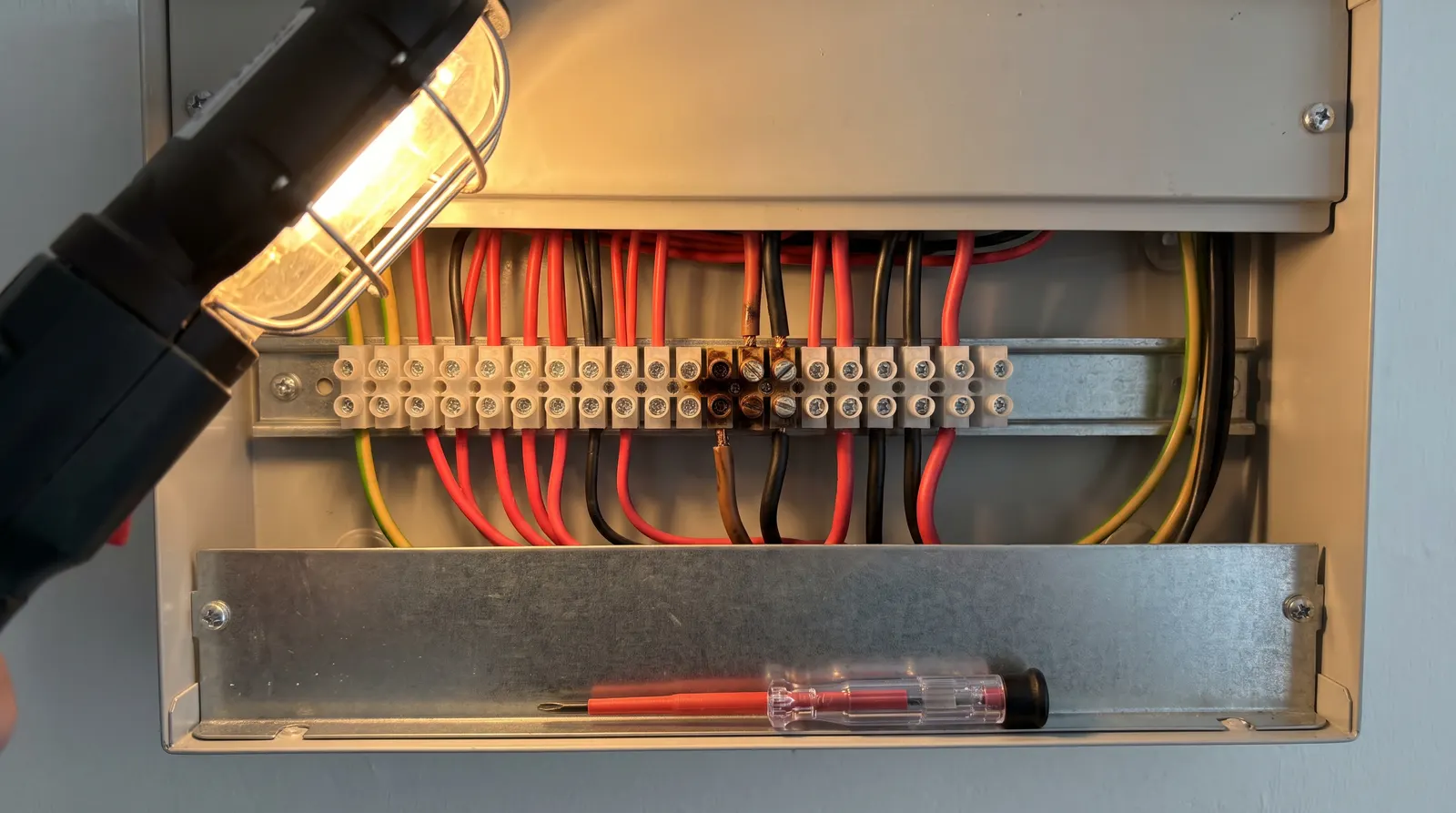
We trace flickering and intermittent faults back to the actual cause with proper circuit testing, rather than guessing at it from the symptom.
If you are unsure, it is always cheaper to ask than to guess. Give us a call and we will tell you straight.