
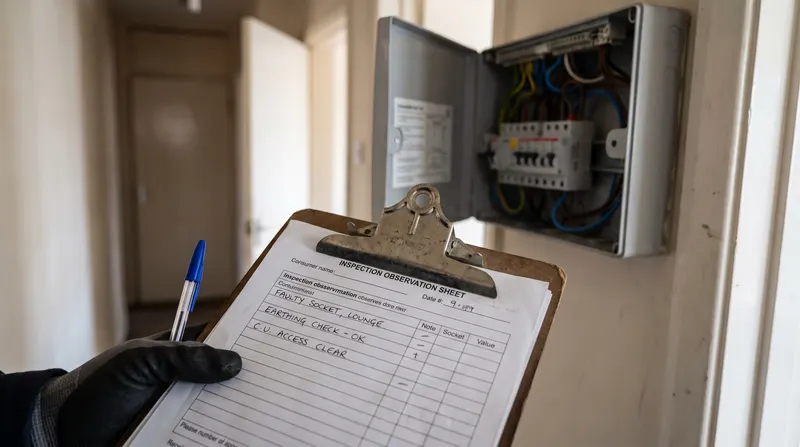
Every observation on an EICR gets one of four codes. They decide two things that matter to you directly: how quickly something has to be dealt with, and whether the report as a whole passes.
C1 — danger present
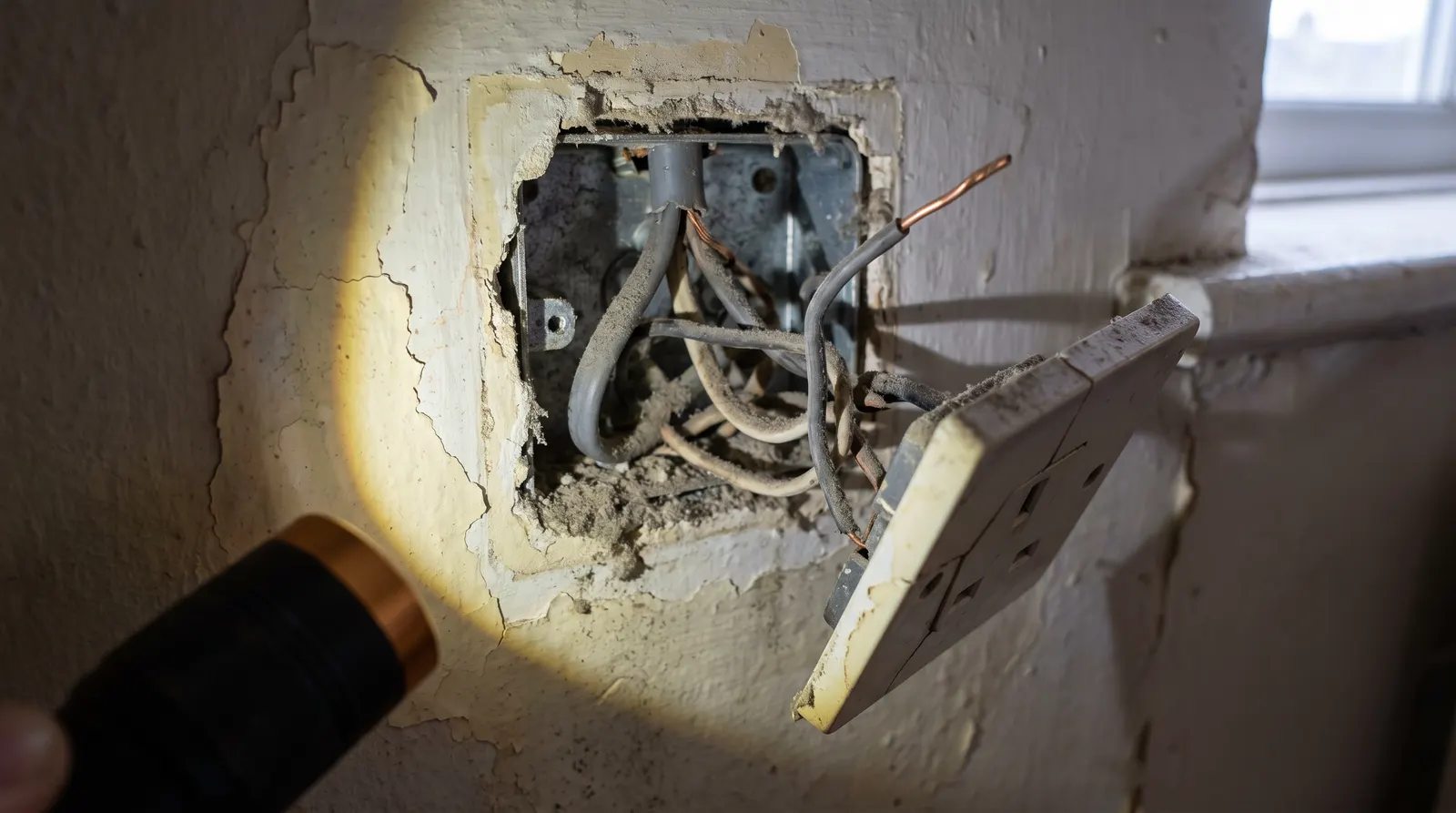
Something on the installation is dangerous right now, to someone who might touch it or use it today. This is the code that means immediate action rather than a scheduled job — exposed live parts are the classic example. An electrician finding a C1 will normally make it safe on the spot, with your agreement, rather than leave it and write it up.
C2 — potentially dangerous
Not dangerous at this exact moment, but likely to become so — missing earth bonding, or a consumer unit with no RCD protection at all, are typical C2s. These need remedial work, and for a rented property the 2020 regulations give the landlord 28 days to get it done, or sooner if the report specifies.
C3 — improvement recommended
The installation is safe as it stands. C3 is a recommendation to bring something up to a more current standard, not a fault. A report with only C3s on it still passes — this is the code most often mistaken for a failure, because it still turns up as a list of things worth doing.
FI — further investigation required
The inspector found something they could not fully assess without going further than a routine EICR allows — behind fixed panelling, for instance. FI carries the same urgency as a C2: sort it out without delay, because until it is investigated nobody actually knows what it is.
The remedial-quote trap
A report that comes back with a page of C2s can be alarming, and that is exactly when it is worth slowing down rather than accepting the first remedial quote you're handed. Ask for the quote itemised against the specific codes on your report rather than as a single lump sum, and check that what is being priced is what the report actually asked for — C3s bundled in as if they were mandatory is the most common way a remedial job gets bigger than it needed to be.
We carry out EICRs and the remedial work that follows one, coded plainly and quoted against exactly what was found — nothing more.
If you are unsure, it is always cheaper to ask than to guess. Give us a call and we will tell you straight.