
Landlords
Commercial EICR: who is responsible and how often
By Mizan, Founder and lead engineer5 min read
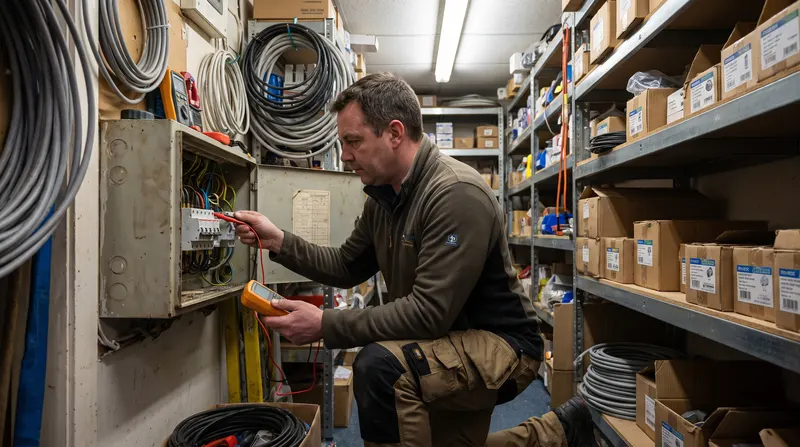
A commercial EICR — an Electrical Installation Condition Report on the fixed wiring of a shop, office or other business premises — sits under different rules to the domestic and rented-home version most people have heard of. There's no single five-year figure that applies to every commercial building, and working out whose job it is to arrange one takes reading the lease as well as the regulations.
Where the legal duty actually sits
The Electricity at Work Regulations 1989 put the duty to keep an electrical system safe on whoever has control of it — in practice, whoever is in a position to have the necessary work done. In an owner-occupied unit that's straightforward. In a let commercial property it usually comes down to the lease: a full repairing and insuring lease commonly puts the fixed installation on the tenant, while other lease structures leave it with the landlord, particularly for shared parts like a communal plant room or a landlord's own distribution board. Worth checking your own lease rather than assuming either way.
How often, and why there's no single number
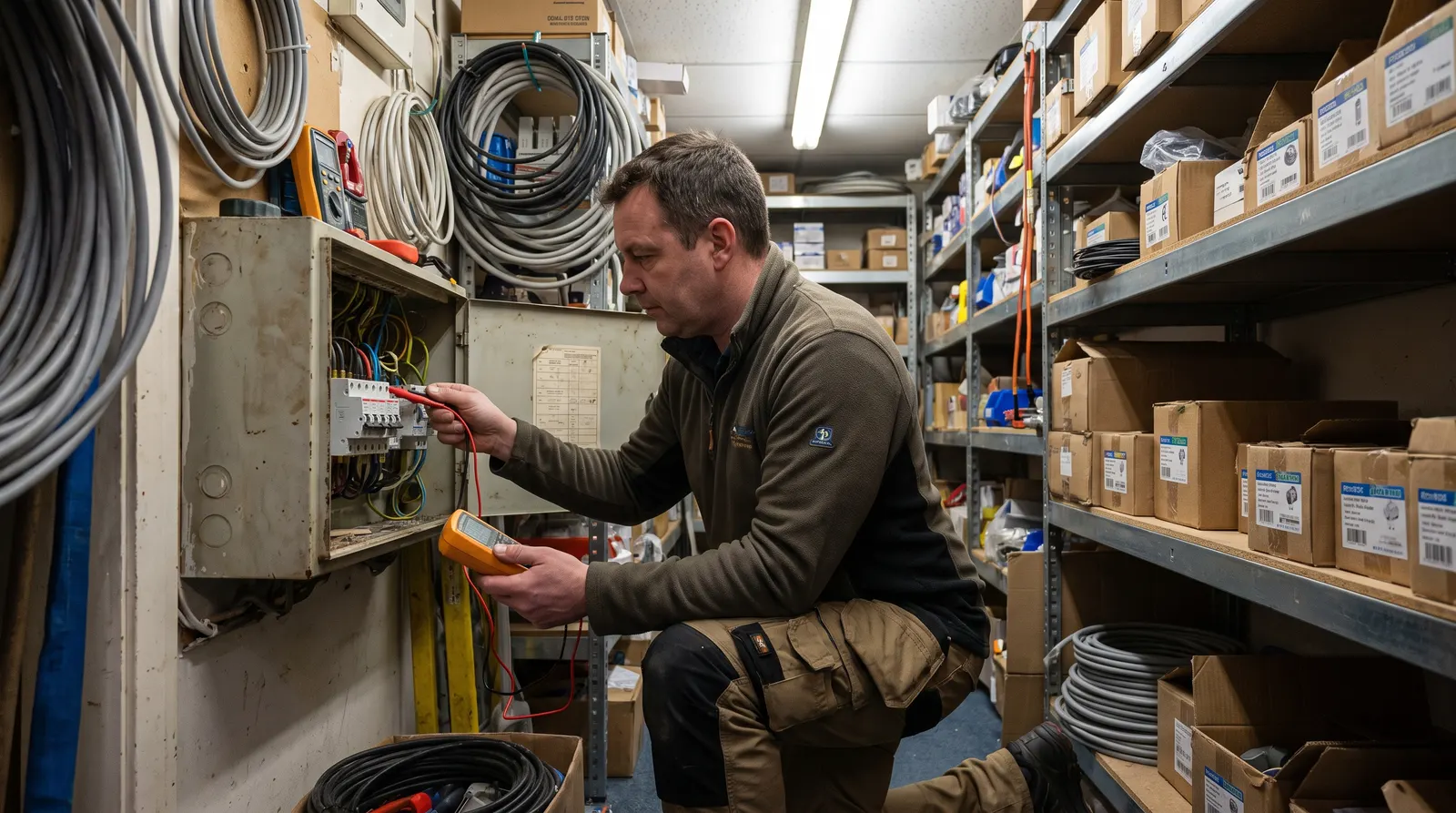
Unlike the five-year interval landlords of residential property work to, a commercial EICR's recommended interval is set by risk — the type of premises, how the installation is used, and its condition and age all feed into it. A quiet office tends to sit at the longer end, a workshop or a premises with heavier use or public access at the shorter end. The report itself states the inspector's recommended date for the next one, based on what was actually found, rather than a fixed rule that applies regardless of the building.
What it costs you if it lapses
Most commercial insurance policies expect a current, satisfactory EICR to be in place, and a claim following a fire or an electrical incident can be contested if one isn't. Beyond insurance, it's the paperwork that shows a genuine attempt was made to keep the premises safe — worth having in place before anything goes wrong, not assembled afterwards.
What's different about testing a commercial installation
A commercial EICR usually means more circuits, often three-phase supplies and distribution boards rather than the single consumer unit a house has, and equipment that runs harder and longer than domestic wiring typically does. It takes longer than a domestic test as a result, and it is usually scheduled around trading hours rather than through them.
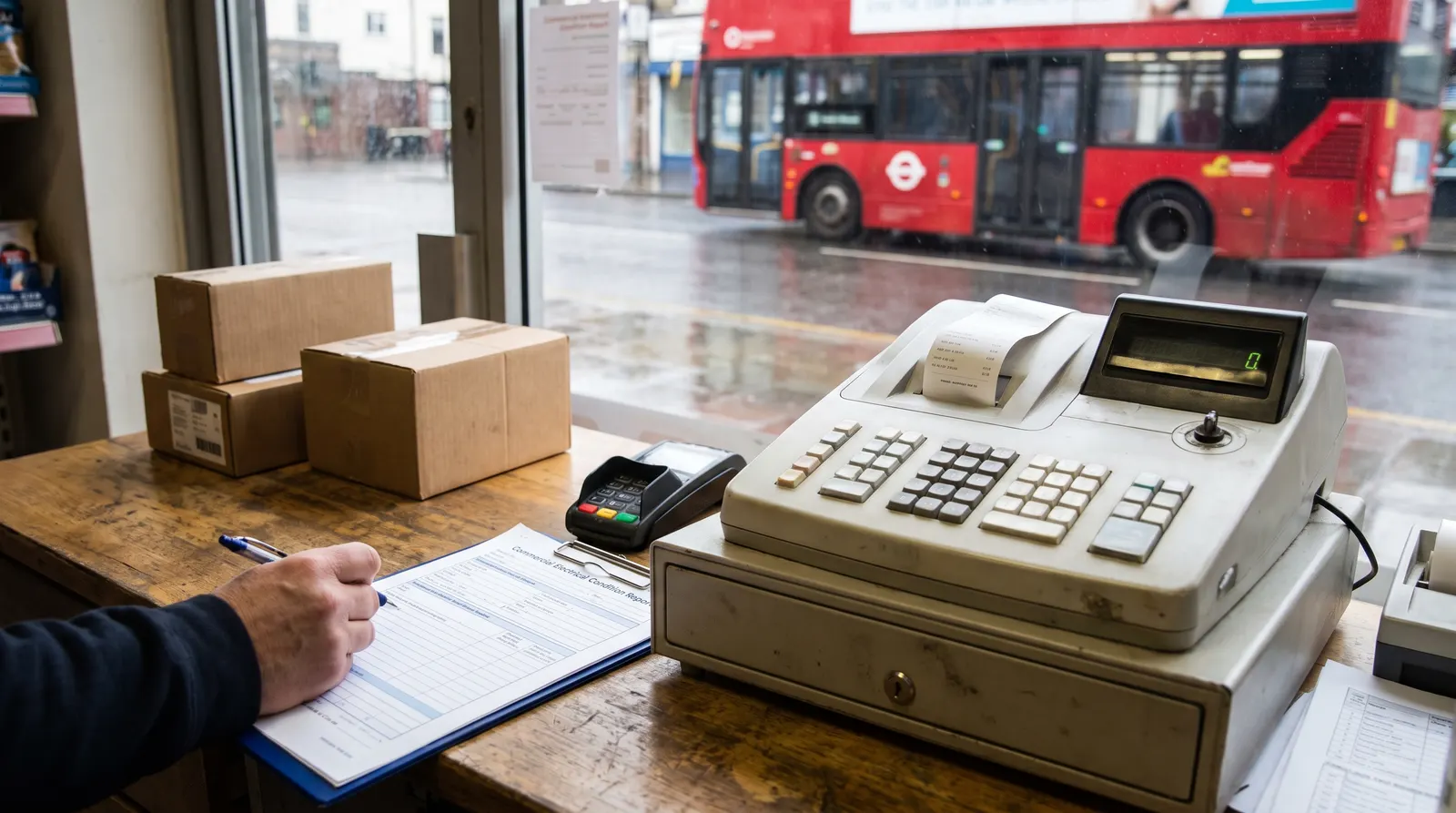
We carry out commercial EICRs for shops, offices and managed premises across London, Essex and north Kent, working around your trading hours rather than through them.
If you are unsure, it is always cheaper to ask than to guess. Give us a call and we will tell you straight.