
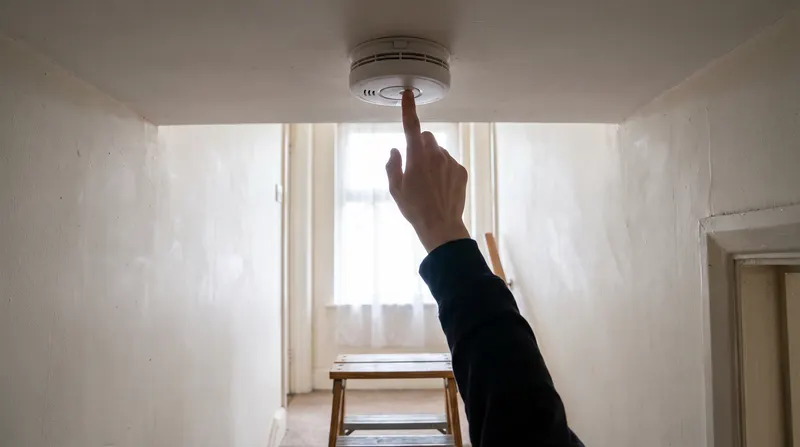
Pressing the test button once a week is the single most useful five seconds you can spend on fire safety in your own home, and most people who own a smoke alarm already know to do it. What is less well understood is what that test does and does not actually prove.
The weekly routine
Press and hold the button until the alarm sounds — most units need two or three seconds, not a tap. Do this on every alarm in the property, on the same day each week if that helps you remember. If an alarm does not sound at all, treat that as an immediate problem rather than something to check again next week.
What the button actually proves
It confirms two things: that the alarm has the power to sound, and that the sounder itself works. It does not confirm that the smoke sensor inside will actually detect smoke — dust build-up in the sensor chamber can leave a detector that passes its button test every single week while being much less sensitive to real smoke than it should be.
A light vacuum around the vents on the case every few months deals with most of that. It takes longer to find the vacuum attachment than to do it.
Changing the battery
On alarms with a replaceable battery, a low-battery warning — usually a single chirp at intervals — means change it now rather than at a more convenient time. Use the type the manufacturer specifies rather than whatever is nearest to hand; the wrong battery can leave an alarm reading as powered while not actually holding enough charge under load.
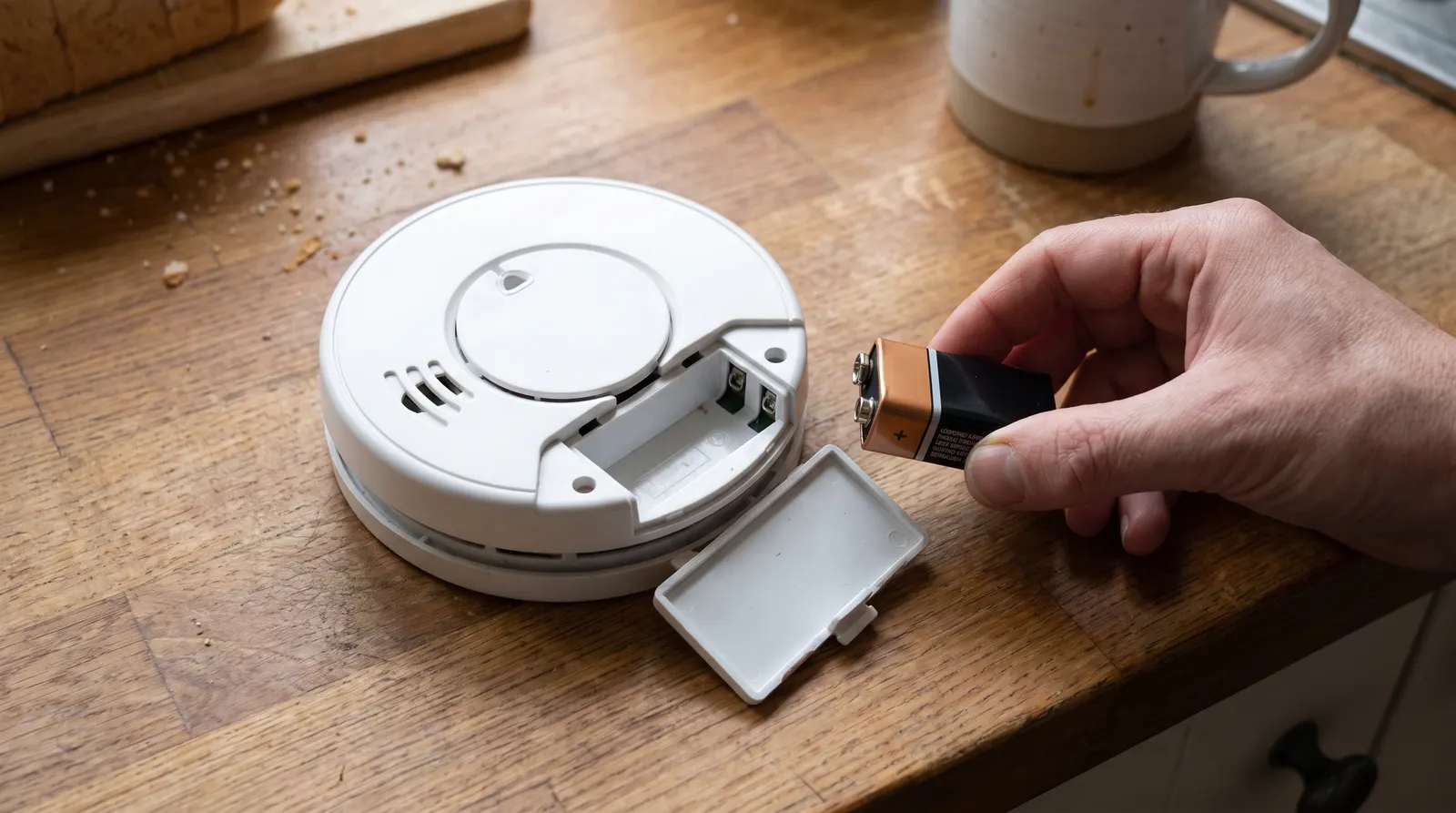
Alarms without a battery to change
Many modern smoke alarms are sealed units with a battery built in for the whole working life of the alarm, commonly ten years, after which the unit itself gets replaced rather than opened. If yours is one of those and it is chirping or showing an end-of-life warning, a new battery will not fix it — the alarm itself needs swapping.
We fit and check interlinked smoke and heat alarms across London, Essex and north Kent, including where a landlord needs a whole property brought up to standard in one visit.
If you are unsure, it is always cheaper to ask than to guess. Give us a call and we will tell you straight.