
Guides
Security lights and PIR sensors: choosing and siting them
By Mizan, Founder and lead engineer4 min read
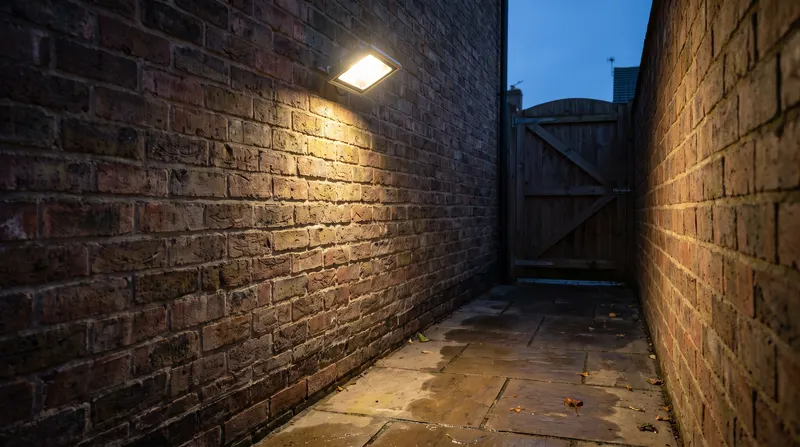
A security light only earns its keep if it comes on when something is actually there and stays off the rest of the time. Get the fitting itself and where it's aimed wrong, and you end up with the two most common complaints: a light that never triggers when it should, or one that triggers all night for nothing.
Lumens, not watts
Old halogen floodlights were rated by wattage, and people still shop for LED replacements the same way, looking for "500W equivalent" on the box. Wattage measures how much electricity a fitting draws, not how much light it puts out. Look at the lumen figure instead — a modern LED floodlight can match the output of an old 500W halogen on a fraction of the running cost, so buying by watts alone usually means paying to run something brighter than the space needs.
Where the sensor goes, and how it's aimed
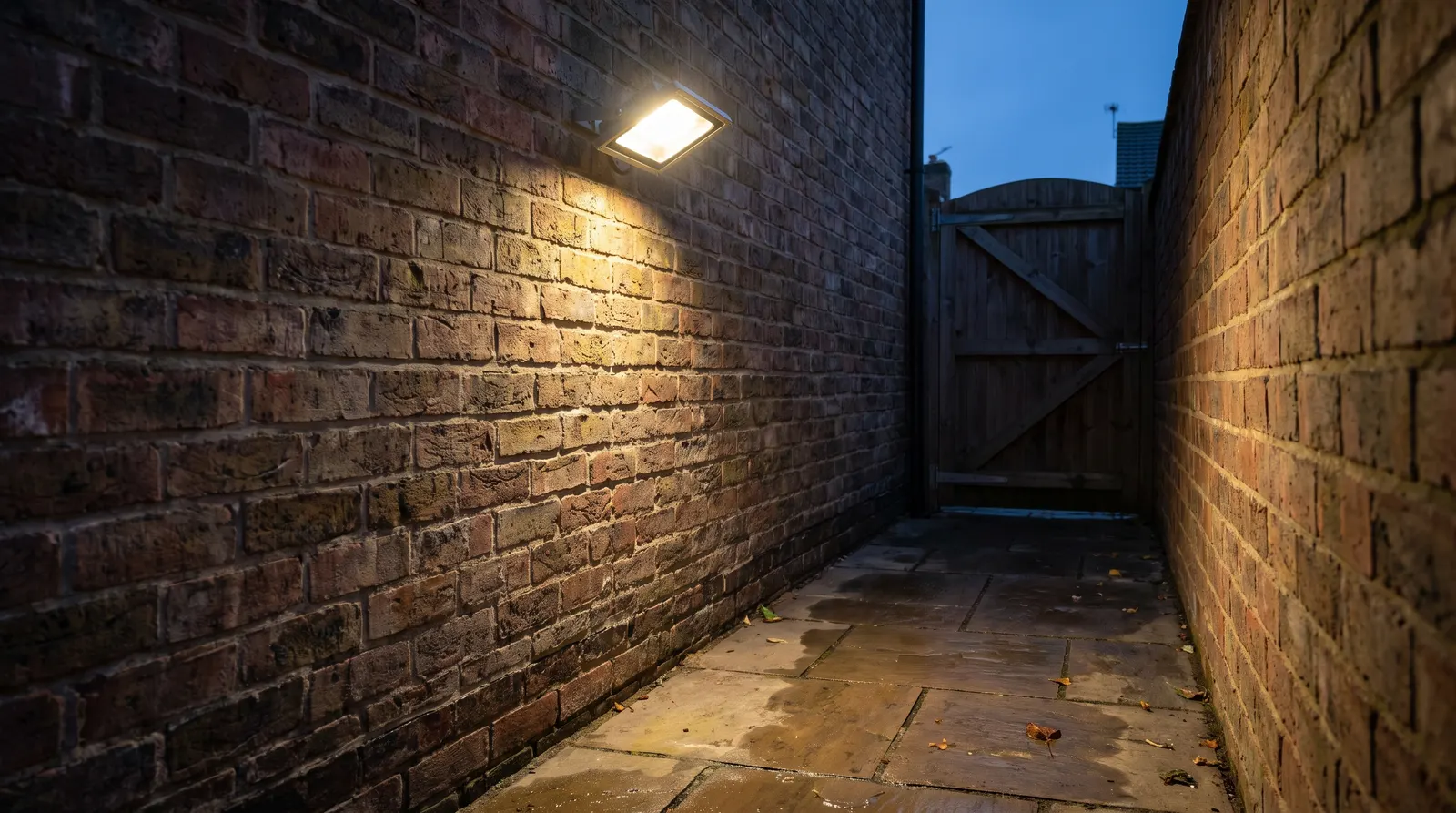
A PIR sensor works by detecting the movement of heat across its field of view, not simply brightness. Mounted too high, it misses the fine movement of someone walking directly toward the house. Aimed out over a pavement or a neighbour's garden, it will trigger on every passer-by and every car that sweeps its headlights past — which is usually what makes people give up on a security light altogether. A sensor set at around head height and angled down across the approach to the house, rather than straight out at the horizon, tends to give the most reliable read on someone actually walking in.
Why it keeps triggering when nothing's there
- Foliage — a hedge or a tree moving in the wind sits directly in a lot of sensors' field of view and reads as movement.
- Cats, foxes and other animals — lowering the sensor slightly or angling it upward can cut this out without losing genuine detection.
- Heat sources — a boiler flue, a tumble dryer vent or direct sun on the lens can all cause false triggers, because the sensor reads heat change, not what a person would call movement.
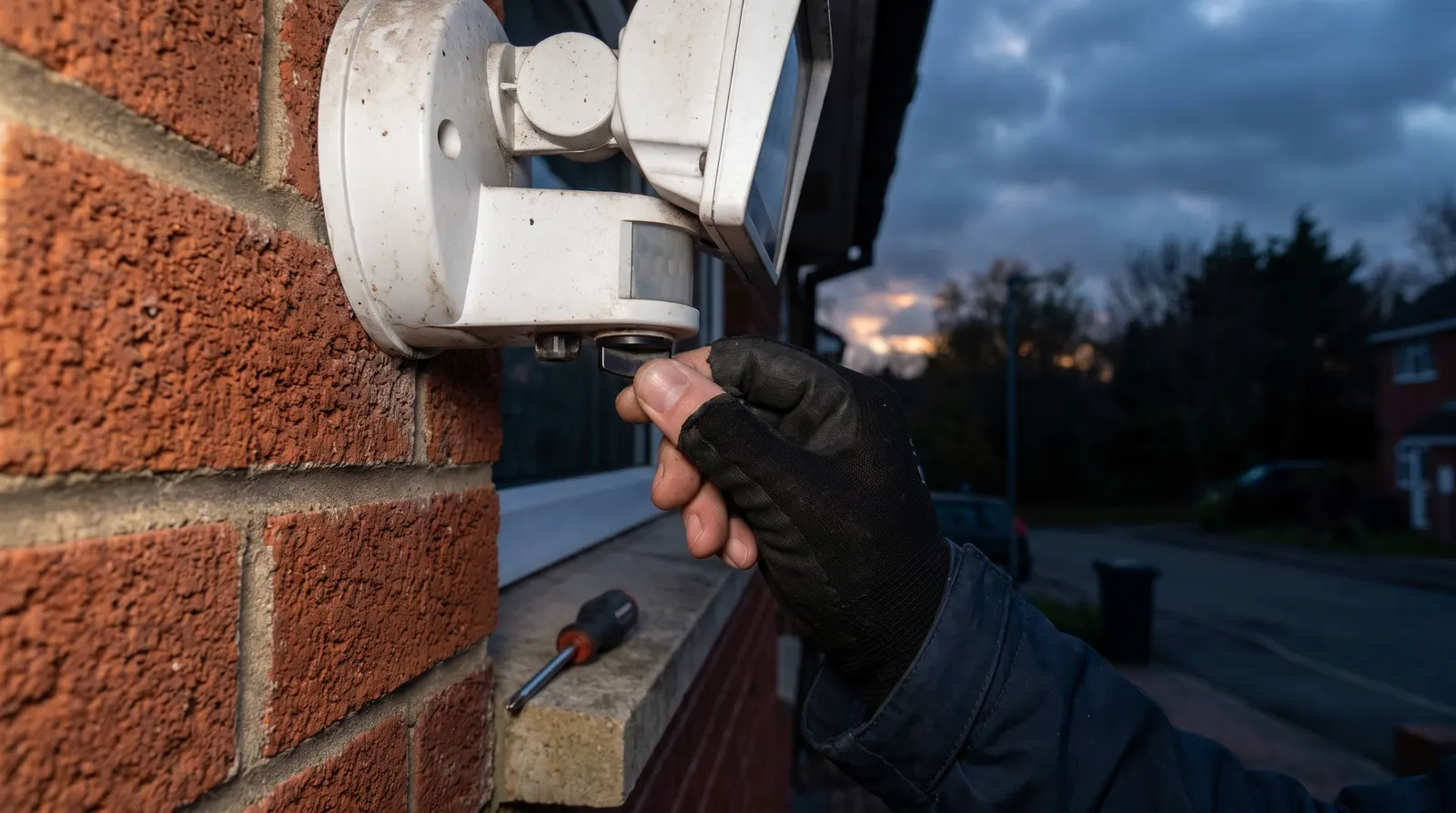
- The sensitivity, range and time dials — most PIR fittings have all three, and a sensor left on its factory settings is rarely tuned to the actual space it's covering.
Getting it wired in properly
A security light is an outdoor fitting left exposed to weather for years, so how it's connected matters as much as the fitting itself. A permanent connection on a correctly rated fused spur, run in outdoor-rated cable and terminated in a proper weatherproof accessory box, is how this is meant to be done — not an extension lead run out through a window. The fitting itself needs an IP rating suited to standing outside in the rain, not just the odd splash.
We fit and site security lighting across London, Essex and north Kent, and where a fitting has already gone in and isn't behaving, we'll usually sort the aim and sensitivity on the same visit rather than replace something that only needed adjusting.
If you are unsure, it is always cheaper to ask than to guess. Give us a call and we will tell you straight.