
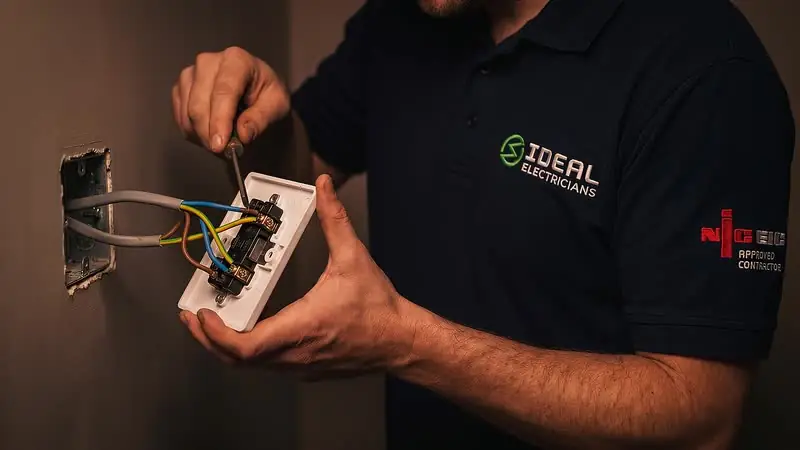
Sockets, switches & lighting
Extra power points, USB sockets, downlights, dimmers and outdoor lighting, installed neatly and properly tested.
- Indoor and outdoor lighting
- Additional power points
- Cable chased in and made good
No call-out fee. Charged by the hour, with a rough estimate before we start.
Adding a socket is rarely just adding a socket. Whether a point can be spurred off an existing circuit or needs a new one depends on what that circuit is already carrying.
The jobs this usually means
Most of these are done in a single visit.
An extra socket, or a double where a single is
Spurred or run properly from the ring, depending on what the circuit allows.
Outdoor sockets
Weatherproof, RCD protected, and on a circuit that can carry it.
Downlights and ceiling lights
New points, or replacing what is there with something that will not cook itself.
Dimmers and smart switches
Matched to the lamps, which is what stops the flicker and buzz.
USB sockets
A straight swap in most cases, provided the back box is deep enough.
Moving a switch or socket
Chased in and made good ready for decorating.
Tell us what you are after and we will tell you what it involves.
Speak to an electrician07502 396654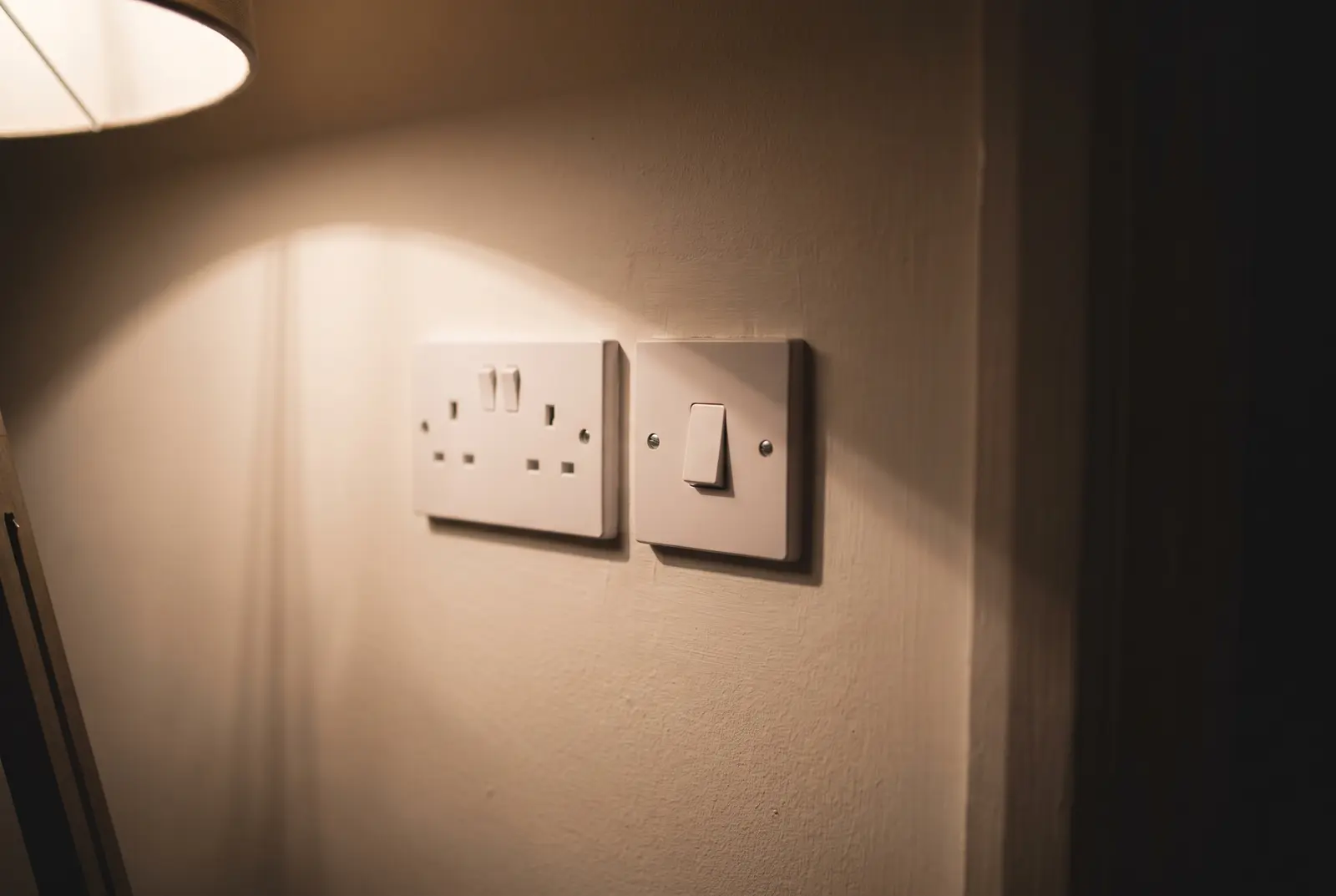
The detail
A ring final circuit can take one unfused spur per socket point, but there is a limit to what any circuit should serve. Adding load to a circuit already close to capacity is how nuisance tripping starts, so the honest answer is sometimes a new circuit rather than an extension of an old one.
Cable buried in a wall has to run in the permitted safe zones — vertically or horizontally from the accessory it serves — so that anyone drilling later has a reasonable chance of avoiding it. Cable outside those zones needs additional mechanical protection or RCD protection.
Most socket and lighting circuits in a modern installation require RCD protection under the current wiring regulations. Where an older installation has none, adding new points is often the moment to address it.
Want sockets, switches & lighting doing?
Tell us what you are after and we will tell you what it involves. No call-out fee, and the line is answered whatever the hour.
What people say
Mizan is very professional. He arrived at the time he said and called me 30 minutes before arrival. He done the works very well and cleaned up after himself. Very satisfied and I will use him again.
Nasrin B. — Scheduled work This is the third time I’ve used this gentleman. I would highly recommend him — each time he was here within the hour.
Charles T. — Repeat customer
4.9 from 181 reviews on Google.
One number, answered around the clock.
NICEIC approved, fully insured, and every job tested and certified.
Sockets, switches & lighting: common questions
The things people ask us on the phone about this one.
Not covered here? Ring 07502 396654 and ask.
Can you add a socket where I want one?
Nearly always. The question is the route rather than the socket, and on solid walls or in a conversion the honest answer is sometimes surface containment rather than damage to fabric that cannot be put back.
Do I need an electrician to add a socket?
A new circuit is notifiable work under Part P in England, and so is anything in the space around a bath or shower. Adding a socket to an existing circuit elsewhere is not notifiable, but it still has to be tested and certified — an extra socket is only as safe as the circuit behind it, which is worth establishing before adding load to it.
Why do my downlights keep failing?
Usually heat, a failing driver, or too many fittings on a circuit that was not designed for them. Replacing lamps repeatedly treats the symptom rather than the cause.
Can I have metal light switches?
Only if the lighting circuit has an earth at the switch, and in older houses it frequently does not. That is checkable in a few minutes and decides the answer.